
The landscape of artificial intelligence has evolved dramatically by 2026, moving beyond simple chatbots and code assistants into the era of autonomous AI agents. These sophisticated systems can now plan, execute, and complete complex multi-step tasks with minimal human intervention. Building an effective agentic workflow requires careful consideration of architecture, tool selection, and implementation practices. This guide explores the essential components and strategies for creating robust AI agentic systems in the current year.
The Core Components of an AI Agentic Architecture
Modern AI agentic workflows typically consist of several interconnected components that work in harmony. At the heart lies the planning module, where the agent breaks down complex objectives into actionable steps. This is followed by the execution layer, where the agent interfaces with various tools and APIs to perform tasks. The reflection component allows the agent to evaluate its progress and adjust strategies when encountering obstacles. Finally, the memory system enables the agent to learn from past experiences and maintain context across sessions.
Unlike earlier implementations, contemporary agentic systems emphasize modular design, allowing teams to swap out components as technology evolves. This approach future-proofs investments while enabling specialization—different agents can excel at specific tasks while collaborating within a larger ecosystem. The most successful architectures incorporate fail-safes and human oversight mechanisms to ensure responsible operation, especially when dealing with sensitive operations or critical business functions.
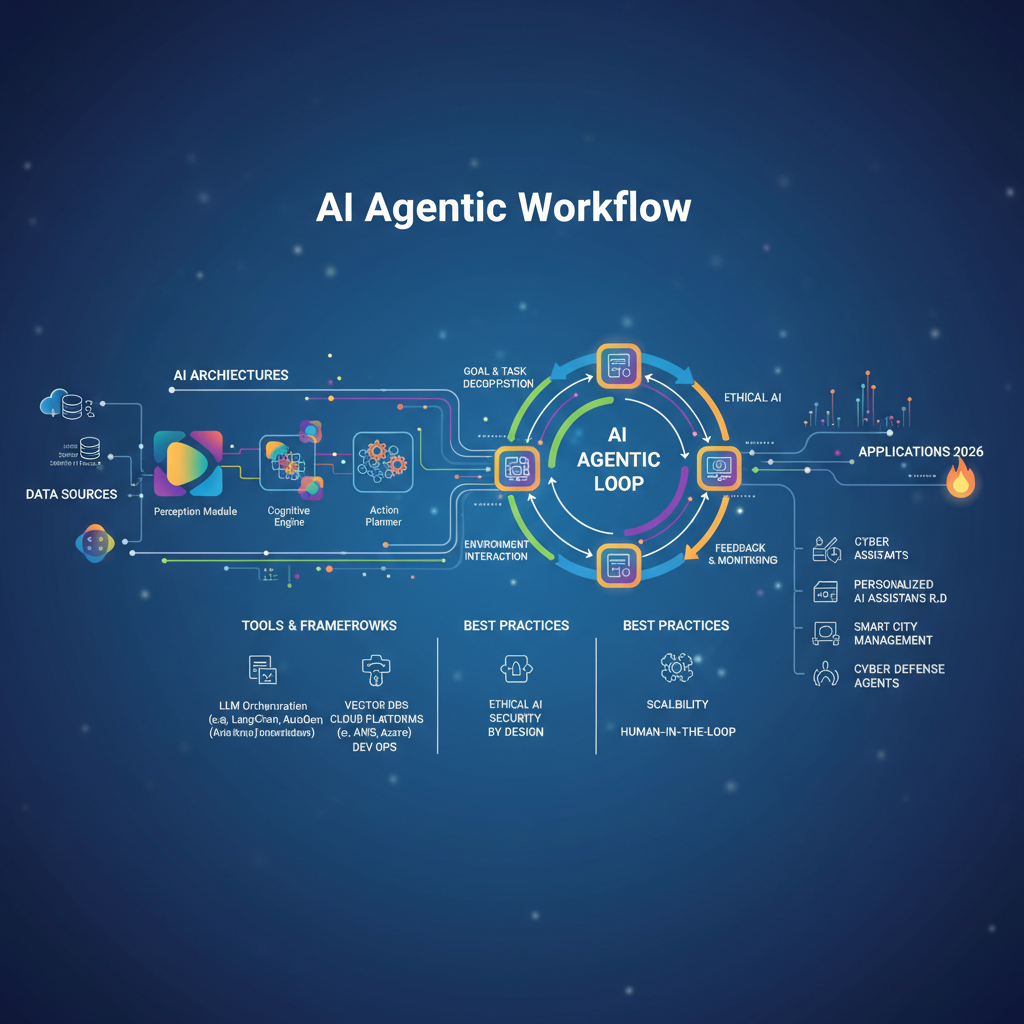
Image: AI-generated
Essential Tools for Building AI Agents in 2026
The tooling ecosystem for AI agent development has matured significantly, offering developers robust options across various specializations. For workflow automation and integration, platforms like n8n provide visual interfaces for connecting AI components with existing business systems. These tools enable the creation of complex automation chains that can handle everything from data processing to customer interactions.
For developers building coding-focused agents, modern IDE platforms like Cursor offer integrated agentic capabilities that understand codebase context and can perform sophisticated refactoring and development tasks. These tools have become indispensable for teams looking to maintain velocity while managing technical debt.

When it comes to model selection and routing, services like OpenRouter provide access to multiple AI models through a unified API, allowing agents to select the most appropriate model for each specific task based on cost, capability, and latency requirements. This flexibility is crucial for building cost-effective agentic systems that can adapt to changing requirements.
Best Practices for Implementation and Deployment
Successful AI agent implementation begins with clear scope definition. Rather than attempting to build a general-purpose agent, focus on specific, well-defined problems where automation can provide tangible value. Start with a pilot project that addresses a pain point with measurable outcomes, then expand functionality based on lessons learned.
Security and privacy considerations must be integrated from the earliest design stages. Implement strict access controls, audit logging, and data sanitization procedures. Be mindful of how your agent handles sensitive information, especially when using external APIs and services. For guidance on protecting your data, our article on preventing AI tools from training on your chat history offers valuable insights.
Monitoring and evaluation frameworks are essential for maintaining agent performance over time. Establish metrics that measure both efficiency gains and error rates. Implement fallback mechanisms that allow human operators to take control when the agent encounters unfamiliar scenarios or produces unsatisfactory results.
Overcoming Common Challenges
Even with advanced tools, building effective AI agents presents several challenges. Context maintenance remains difficult across extended interactions, requiring sophisticated memory management systems. Hallucination and confidence calibration continue to be areas of active development, with the best systems incorporating verification steps for critical outputs.
Cost management is another significant consideration, as complex agentic workflows can generate substantial API usage expenses. Implementing caching, result reuse, and smart model selection can help control costs while maintaining performance. The recent reduction in OpenAI API prices has made sophisticated agentic workflows more accessible to smaller organizations.
Integration with existing systems often presents technical challenges, particularly when dealing with legacy infrastructure. Agentic systems must be designed to work within existing security and compliance frameworks, which may require custom adapters and careful permission management.
Future-Proofing Your Agentic Workflow
The AI landscape continues to evolve rapidly, making future-proofing an essential consideration. Build your systems with modularity in mind, allowing components to be upgraded or replaced as new technologies emerge. Stay informed about emerging standards and protocols that might affect how your agents operate.
Consider the infrastructure requirements of your agentic systems, as computational demands can be substantial. The ongoing competition for computational resources highlights the importance of efficient architecture design. For smaller deployments, cost-effective hosting solutions like Contabo VPS can provide the necessary infrastructure without excessive expense.
As agentic systems become more capable, ethical considerations and liability issues gain importance. The recent discussions around AI agent liability underscore the need for clear accountability frameworks and operational boundaries.
Getting Started with Your First Agentic Workflow
Beginning your agentic journey doesn’t require massive investment or expertise. Start with a simple workflow automation using accessible tools, then gradually increase complexity as you gain experience. Many organizations find success beginning with internal productivity tools before expanding to customer-facing applications.
Focus on use cases where AI agents can provide immediate value, such as document processing, customer support triage, or code review assistance. Measure the time and cost savings achieved through automation to demonstrate ROI and secure resources for more ambitious projects.
As you expand your agentic capabilities, consider how different AI models might specialize in various tasks. Our comparison of multimodal AI capabilities can help you select the right tools for vision, language, and reasoning tasks within your workflows.
Ready to Build Your AI Agentic Workflow?
Start experimenting with AI agent development today using OpenRouter, which provides access to multiple AI models through a unified API. Their platform simplifies model comparison and routing, making it easier to build robust agentic systems that leverage the strengths of different AI providers.
As the landscape for AI agentic tools continues to evolve rapidly, developers and organizations should consider several key factors when evaluating potential solutions. The stability and longevity of the underlying platform have become increasingly important considerations. Beyond technical capabilities, teams should assess how well different agentic systems integrate with existing development workflows and security protocols. The ability to maintain context across complex coding tasks while ensuring reliable performance remains a critical differentiator among available options.
What to Read Next
- Goldman Sachs Pulls Claude Code From Bankers: An Enterprise AI Risk Management Guide for 2026
- Nvidia Launches Investigation Into CEO Jensen Huang and Alleged Chinese Spy Relationship
- Claude Code Password Leak 2026: How to Secure Your GitHub Repos After the “Don’t Ask Again” Exposure
- Optimizing Developer Workflows with AI in 2026: A Guide to Beyond-Copilot Efficiency
- Browse all AI Stack Digest articles
Bookmark aistackdigest.com for daily AI tools, reviews, and workflow guides.
This article was produced with the assistance of AI tools and reviewed by the AIStackDigest editorial team.