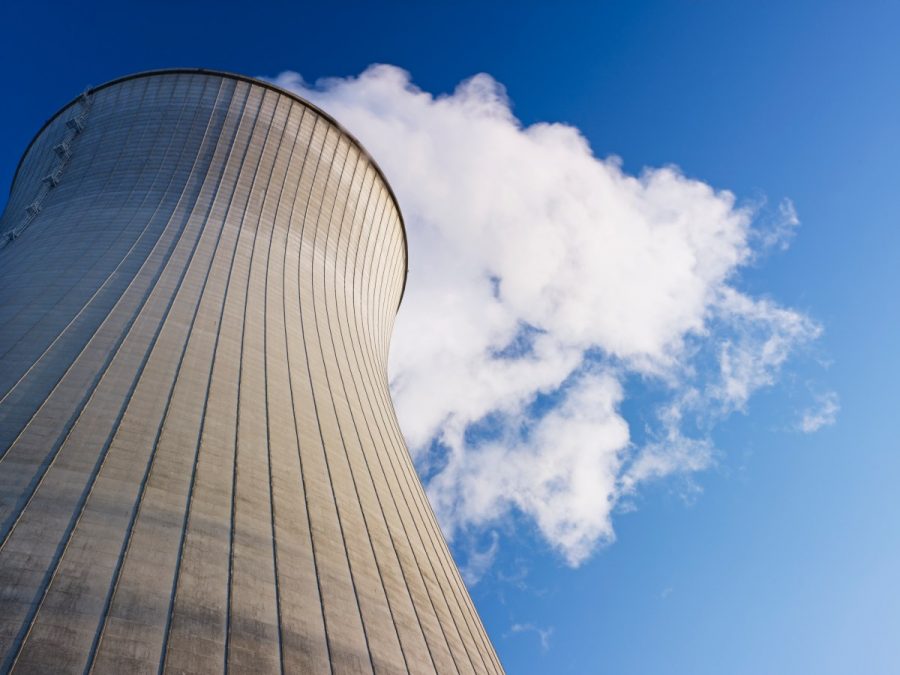
The race for AI infrastructure just entered a new era. The Trump administration is backing nuclear power expansion with $5 billion in federal loans to Constellation Energy, a move that signals AI compute demand has become so critical that government is now underwriting the energy infrastructure to support it. Google, Meta, and Amazon have already claimed the lion’s share of the new capacity—a stark reminder that whoever controls the power supply controls the future of AI.

Image: TechCrunch
What Happened
On October 27, 2026, the U.S. Department of Energy announced a conditional loan commitment of up to $5 billion to Constellation Energy to support nuclear uprates—a process that increases power generation from existing reactors by upgrading equipment and often using higher-enriched fuel. The loans are intended to finance capacity additions across eight nuclear facilities: six in Illinois (Braidwood, Byron, Clinton, Dresden, La Salle, and Quad Cities), one in Maryland (Calvert Cliffs), and one in Pennsylvania (Limerick). The plan targets an expansion of approximately 1.1 gigawatts of nuclear capacity, with Constellation already having committed to spending over $7 billion in private capital on these projects. Most or all of this additional power has already been claimed by hyperscalers: Google has secured electricity from the Pennsylvania facility and four Illinois plants, Amazon is purchasing power from the Maryland site, and Meta has effectively locked in the entire Clinton facility in Illinois. The Department of Energy framed the loan as part of its UPRISE program—Utility Power Reactor Incremental Scaling Effort—aimed at maximizing electricity output from America’s existing nuclear fleet while maintaining reliable, around-the-clock power generation.
Why This Matters
This deal represents a fundamental shift in how AI infrastructure is developed and financed. For years, the bottleneck in AI scaling has been compute—GPUs, TPUs, and data center capacity. But the real constraint has quietly become power. Training large language models, running inference at scale, and hosting multimodal AI workloads consume extraordinary amounts of electricity. Data centers can draw tens of megawatts per facility, with some consuming as much power as small cities. The renewable grid wasn’t built for this demand, and fossil fuels don’t align with corporate sustainability commitments. Nuclear emerged as the only realistic solution: it provides baseload power (24/7, unlike solar and wind), has near-zero carbon emissions, and can be dramatically scaled by “uprating” existing plants rather than constructing new ones from scratch. By backing this with federal loans, the Trump administration is effectively saying: AI companies are so strategically important to America that the government will help finance their energy foundations. For Google, Meta, and Amazon, this translates to lower capital costs and faster project timelines. For developers and AI practitioners, it means the infrastructure supporting their work is being explicitly prioritized by policy. For everyone else, it raises uncomfortable questions about who gets access to affordable electricity and whether power grids designed for universal service should be partially devoted to hyperscale AI operations.
The Bigger Picture
This nuclear-AI nexus didn’t emerge overnight. Over the past 18 months, tech giants have been frantically acquiring or contracting for power sources. Microsoft signed a deal to revive Three Mile Island. Google entered 20-year power purchase agreements with Constellation. Amazon committed to nuclear expansions. These weren’t casual corporate decisions—they were existential moves. The challenge is that electricity grids in most developed countries were designed assuming demand would grow slowly and predictably. AI demand is neither slow nor predictable. A single large language model training run can consume gigawatt-hours. The inference workload for a service like Perplexity or ChatGPT scales with usage, creating spiky but massive draw. Battery technology hasn’t caught up to storage demand, and grid transmission infrastructure is aging. So far, tech companies have absorbed the cost of this mismatch through premium pricing on power contracts. Federal support changes that equation. By subsidizing nuclear expansion with public money, the government is essentially socializing part of the AI infrastructure cost while privatizing the returns. Constellation benefits from lower financing costs. The hyperscalers benefit from faster capacity additions and reduced capex. Meanwhile, state and local utilities—the ones responsible for serving residential and small-business customers—compete for the remaining grid capacity at market rates. This could accelerate a two-tier energy economy: premium baseload power for AI, whatever’s left for everyone else. It also means nuclear technology becomes intertwined with geopolitical AI competition. Countries that can expand nuclear fastest will have a materials and compute advantage in the AI race. The Department of Energy’s framing of this as part of “American nuclear renaissance” and competitive positioning against China is no accident.
What to Watch Next
Several critical questions remain. First: will these loans actually get finalized and deployed? The Constellation announcement says the commitment is “conditional” and subject to due diligence and regulatory approval. Nuclear uprates are complex undertakings—they require NRC approval, involve safety assessments, and depend on vendors being able to deliver components and expertise at scale. Delays are common. If even half of the planned 1.1-gigawatt expansion comes online by 2029, that’s still a massive win for the hyperscalers but represents a slower timeline than tech companies are hoping for. Second: what’s the total cost and true subsidy amount? The $5 billion in loans lowers Constellation’s financing costs, but the total capex is $7+ billion. At current rates, the subsidy effect is probably valued in the hundreds of millions—not trivial, but also not transformative. However, if the administration expands this program or offers additional loan tranches, the subsidy dynamic changes. Third: will other utilities and regions follow? Dominion Energy, Exelon, and other major nuclear operators could petition for similar federal support. This could either accelerate a nationwide AI energy buildout or create a political backlash if critics frame it as using taxpayer money to subsidize billionaire-backed tech companies. Fourth: how will this affect AI accessibility? If hyperscalers lock in long-term power contracts backed by federal subsidies, and smaller AI companies or startups must compete on the open market, we could see a widening of the moat between frontier AI labs and everyone else. Already, access to GPUs is concentrated. If power becomes an additional scarce resource controlled by a few players, that concentration deepens. Finally: what’s the environmental impact? Nuclear power is low-carbon, but uprates accelerate fuel consumption and create longer-term waste storage challenges. If this enables AI workloads that would have been deemed too energy-intensive under normal market conditions, the net environmental benefit is unclear. Policymakers haven’t publicly grappled with this question yet.
The Bottom Line
The $5 billion nuclear loan deal is not a small story. It signals that AI infrastructure has crossed the threshold from corporate priority to national strategic interest. The hyperscalers have effectively captured a slice of the public energy grid, backed by federal financing. For AI practitioners and companies, this means frontier models and large-scale services won’t be constrained by power availability—at least not at the scale of the biggest three players. For everyone else, it means the energy equation just shifted. Power is no longer a commodity competing fairly across uses; it’s a strategic asset. And in the AI era, whoever controls the power supply controls the future. Watch closely how this plays out over the next two years, because it will define the infrastructure landscape for the next decade of AI development.
What to Read Next
- Claude Code Email Privacy: How to Stop Websites from Tracking Your Address in 2026
- How to Build a Modern AI Agentic Workflow in 2026: Architectures, Tools, and Best Practices
- Data Center Backlash Echoes in Florida Elections: A Bellwether for AI’s Future
- GGUF vs GPTQ vs AWQ: Which Quantization Format Should You Use?
- Browse all AI Stack Digest articles
Bookmark aistackdigest.com for daily AI tools, reviews, and workflow guides.
This article was produced with the assistance of AI tools and reviewed by the AIStackDigest editorial team.