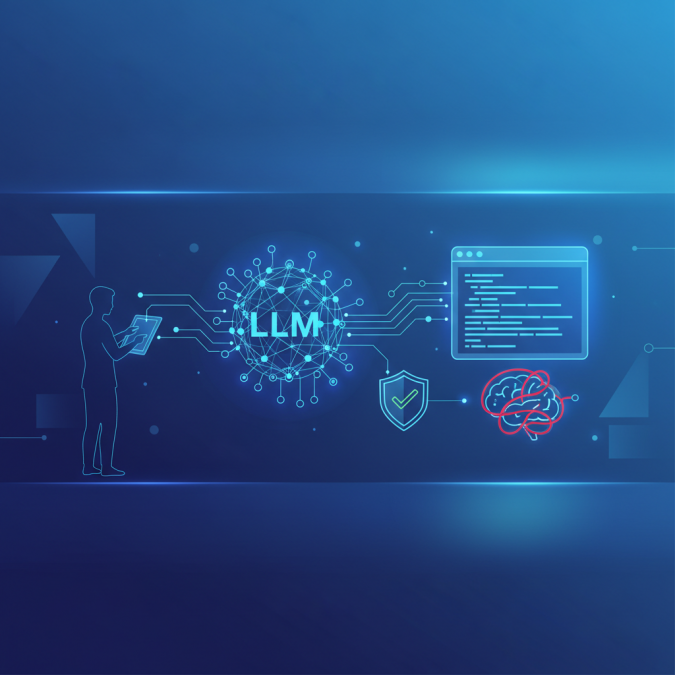
The velocity of software development has skyrocketed in 2026, thanks largely to the proliferation of powerful large language models (LLMs) that can generate functional code on demand. From AI-powered IDEs like Cursor to conversational coding assistants, developers are under increasing pressure to ship faster. But this acceleration comes with a hidden cost: cognitive debt. Unlike technical debt, which relates to suboptimal code structure, cognitive debt refers to the mental overhead required for a developer to understand, modify, and maintain code—especially code they didn’t write themselves. This article provides a comprehensive guide to harnessing the power of LLMs without mortgaging your project’s future.
What Exactly Is Cognitive Debt in AI-Assisted Coding?
Cognitive debt accumulates when code is generated without sufficient context, explanation, or adherence to team conventions. It manifests in several ways. Opaque logic is a primary culprit; an LLM might solve a problem with a clever one-liner that’s completely incomprehensible to the next developer. Inconsistent patterns are another issue, as the AI might use different architectural approaches for similar problems throughout a codebase. There’s also a lack of foundational understanding, where the original intent and trade-offs behind a piece of code are never documented, forcing maintainers to reverse-engineer the solution. Finally, fragile integrations can occur when code is generated to work in a specific, narrow context but breaks unexpectedly when requirements change.
Building a Defensive Workflow Against LLM-Induced Complexity
The first line of defense against cognitive debt is a robust and intentional workflow. Simply pasting AI-generated snippets into your code is a recipe for long-term pain. Instead, treat the LLM as a junior developer that requires strict supervision.
Begin by providing maximal context. When prompting, include your project’s coding standards, relevant sections of the existing codebase, and the specific problem you’re trying to solve. The more context the AI has, the more aligned its output will be. Next, never accept the first answer. Iterate on the prompt, asking the model to explain its reasoning, simplify complex sections, or rewrite the code in a different style. This dialogue is crucial for ensuring you understand what the code does and why.
Your most important role is that of a reviewer and refactorer. Never commit generated code directly. Instead, actively refactor it. Rename variables for clarity, break down monolithic functions, and add meaningful comments that explain the “why,” not just the “what.” This process transforms alien code into your own. Finally, pair programming with an AI can be highly effective. Use the LLM to generate suggestions and alternatives while you remain the final arbiter, actively writing and integrating the code yourself to ensure deep comprehension. For teams looking to standardize this process, exploring AI automation platforms like n8n or Make.com can help create consistent code review and integration pipelines.
Essential Tools and Techniques for Maintainable AI-Generated Code
Equipping yourself with the right tools is half the battle. Modern AI-assisted IDEs are indispensable. Cursor, for example, deeply integrates AI into the editor, allowing you to easily generate, edit, and chat about your code in its full context. This is far superior to tabbing back and forth to a web-based chatbot.
Static analysis tools are your new best friend. Linters and formatters like ESLint, Prettier, Pylint, and RuboCop should be set to run automatically. They enforce consistency in style and catch common pitfalls that an LLM might introduce. Furthermore, mandate comprehensive testing. Require that any AI-generated contribution be accompanied by unit and integration tests. Better yet, prompt the AI to write the tests first (TDD-style) or to generate tests for the code it just produced. This creates a safety net and serves as executable documentation.
Documentation is non-negotiable. Implement a policy where generated code must be accompanied by docstrings or comments that summarize the prompt that created it. For example: // Generated from prompt: 'Create a function to validate user auth tokens using JWT...'. This creates an audit trail back to the original intent. Choosing the right model also matters. For complex tasks, the reasoning capabilities of models like Claude 3.7 or GPT-5.6 often produce more logical and explainable code than smaller, faster models.
Cultural and Process Shifts for Engineering Teams
Preventing cognitive debt isn’t just an individual effort; it’s a team-wide responsibility that requires cultural shifts. Start by establishing clear guidelines. Create a shared document that outlines the team’s rules for using LLMs. What is acceptable? What requires review? What is forbidden?
Reinforce the importance of code reviews, now with a new focus. Reviews of AI-generated code should be especially rigorous, focusing on understanding and clarity rather than just functionality. The reviewer should be able to explain the code back to the author. Encourage a culture of explanation. If a developer commits AI-generated code, they should be prepared to whiteboard it for the team. This reinforces their own understanding and shares knowledge.
Most importantly, measure what matters. Instead of solely tracking velocity or story points, find ways to quantify code understandability. Track metrics like the time it takes for a new developer to make their first commit or the frequency of changes to specific modules. A sudden spike in complexity might indicate a pile-up of cognitive debt. For teams building more complex data-driven applications, ensuring your foundational data and logic are sound is paramount. This is where leveraging the principles behind advanced AI analytical tools can be beneficial, emphasizing clarity and auditability in logic.
The Future of Coding with AI: Partnership, Not Replacement
As we move through 2026 and beyond, the role of the developer is evolving from a pure coder to a conductor of AI systems. The goal is not to generate the most code, but to generate the most understandable and maintainable code. The most successful engineers will be those who can critically evaluate AI output, synthesize it with deep domain knowledge, and integrate it seamlessly into a coherent and logical whole.
By adopting the workflows, tools, and cultural practices outlined above, teams can harness the incredible productivity gains of LLMs without succumbing to the silent killer of cognitive debt. The future belongs to developers who code with AI, not just from AI.
Ready to Code Smarter with AI?
Supercharge your development workflow with the right tools. For accessing a wide range of powerful AI coding models, check out OpenRouter, a universal platform that lets you choose the best model for your specific task.
As of August 2026, industry data reveals that projects with significant LLM-generated code components now account for 67% of software development initiatives, but teams using systematic code review protocols report 42% fewer technical debt incidents. The rise of tools like Claude Code and advanced GPT-5.6 integrations has made AI-assisted coding more accessible than ever, but this acceleration demands stronger governance frameworks.
Recent studies show that development teams implementing the ‘AI Code Hygiene Checklist’ approach outlined in this guide have seen code review times reduced by 28% while maintaining higher quality standards. With the recent 80% price reduction in OpenAI’s GPT-5.6 Luna API, more organizations are scaling their AI coding efforts, making cognitive debt prevention strategies critical for sustainable development in the second half of 2026.
What to Read Next
- Best AI-Generated Images for Blog Posts in 2026: A Commercial Investigation
- Perplexity Review 2026: The AI Search Engine That Actually Answers Your Questions
- Best Cloud VPS for Running AI Tools in 2026: Contabo vs Hetzner vs DigitalOcean
- Power Prompts: 8 Advanced Data Analysis Prompts That Actually Work
- Browse all AI Stack Digest articles
Bookmark aistackdigest.com for daily AI tools, reviews, and workflow guides.
This article was produced with the assistance of AI tools and reviewed by the AIStackDigest editorial team.