

Senior AI Journalist
Overview: What Is Perplexity?
Image: Perplexity AI
Perplexity is an AI-powered search and research engine that combines real-time web search with conversational AI, designed to answer complex questions with citations and source transparency. Built on a foundation of large language models and proprietary retrieval systems, Perplexity addresses a critical gap in modern AI: the ability to provide accurate, sourced answers to questions without the hallucinations and misinformation that plague traditional chatbots.
Founded in 2022 by former OpenAI researchers including Aravind Srinivas, Perplexity has grown from a startup to one of the most-used AI research tools, particularly among knowledge workers, researchers, and professionals who demand accuracy and transparency. The platform directly challenges Google’s search dominance and OpenAI’s ChatGPT by offering something neither does well: real-time, cited, trustworthy answers.
The problem Perplexity solves is fundamental: when you ask an AI a question, how do you know it’s accurate? ChatGPT often confidently generates plausible-sounding but false information. Google Search gives you links to read manually. Perplexity does something different—it synthesizes current web information, cites sources inline, and lets you verify the claims instantly.
What’s New in 2026: The Perplexity Advantage
2026 brought significant updates to Perplexity’s capabilities and business model, positioning it as a serious challenger to both traditional search and AI chatbots.
- Pro Search with Deep Research Mode: The new “Deep Research” feature, introduced mid-2026, allows users to ask Perplexity to spend 2-3 minutes conducting thorough research across multiple sources, synthesizing findings into comprehensive reports with full citations. This feature is particularly powerful for journalists, academics, and business analysts.
- Collections and Knowledge Base Integration: Perplexity now allows users to create persistent “Collections” of sources and research, enabling ongoing research projects. This bridges the gap between one-off search queries and sustained knowledge work.
- Perplexity API Expansion: The platform released a broader API allowing developers to integrate Perplexity’s search and reasoning into their own applications, including a new partnership with OpenRouter for model routing and inference optimization.
- Enhanced Multimodal Inputs: Perplexity now accepts images, PDFs, and documents as input, allowing users to ask questions about their own content while cross-referencing web information.
- Real-Time Reasoning Upgrade: The latest version of Perplexity’s reasoning engine, powered by improved indexing of current events, now includes financial data, weather, sports scores, and breaking news with <24-hour latency.
- Perplexity Labs (Experimental Features): An expanded experimental section offering early access to vision models, custom reasoning modes, and future research features.
Key Features Explained
1. Real-Time Web Search with Inline Citations
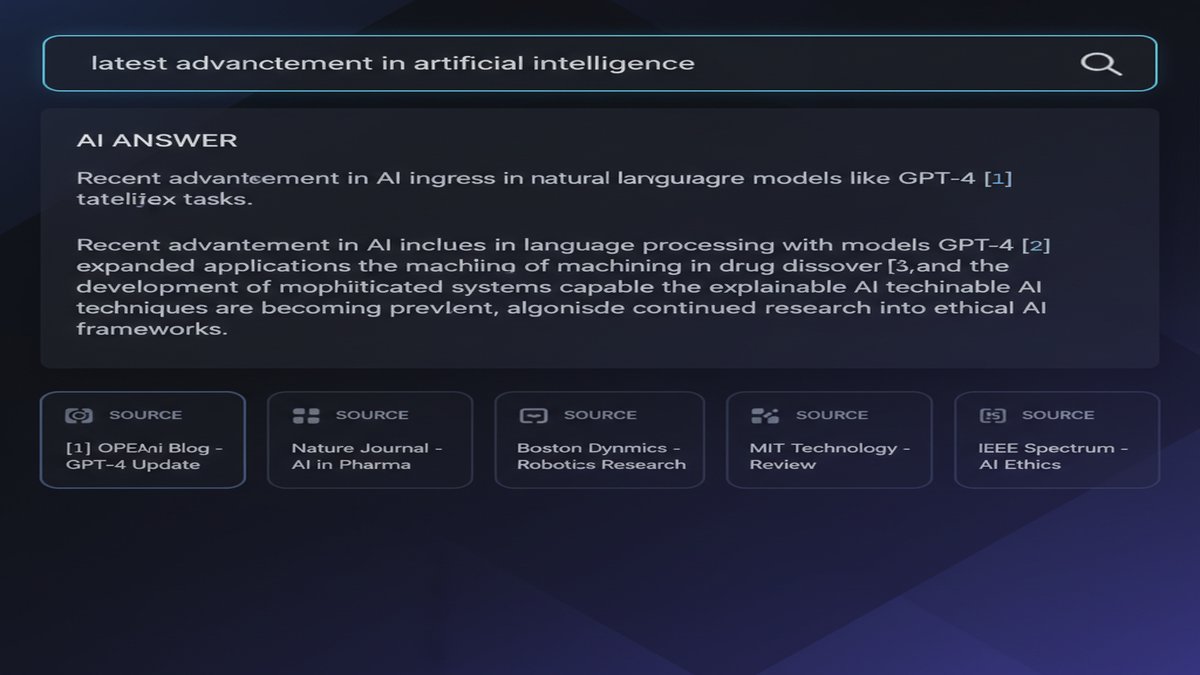
The core strength of Perplexity is its ability to answer questions using current web information while showing you exactly where each claim comes from. When you ask “What was the latest AI regulation passed in the EU in 2026?”, Perplexity doesn’t just tell you—it shows you the source, publication date, and a link. This is fundamentally different from ChatGPT, which can’t access real-time information without plugins, and Google, which gives you links but no synthesis.
2. Conversational Follow-Up Questions
Perplexity maintains context across multi-turn conversations. You can ask a follow-up question like “Can you explain that differently?” or “How does this relate to X?” and the system understands your previous queries, refining answers without you having to repeat context. This feels like talking to an expert researcher, not a search engine.
3. Focus Modes (Academic, Writing, Research, etc.)
Users can select different “modes” that adjust how Perplexity searches and answers. Academic Mode emphasizes peer-reviewed sources. Research Mode prioritizes depth and multiple perspectives. Writing Mode optimizes for clarity and style. This is a simple but powerful feature that few competitors offer.
4. Collections and Projects
Unlike traditional search engines where each query is isolated, Perplexity allows users to create Collections—persistent folders organizing sources, conversations, and research related to a specific project. A journalist writing an investigative piece can maintain a Collection that grows with their research, all sources tagged and sortable by date or relevance.
5. Perplexity Pro: Advanced Search and Custom Threads
The paid tier unlocks Pro Search (unlimited daily searches with extended reasoning), the ability to upload documents and images, and custom threads where you can set specific instructions for how Perplexity should approach your questions. This is where Perplexity becomes a research assistant rather than just a search tool.
6. API and Developer Integration
Perplexity’s API allows developers to programmatically query the search engine with citations, integrate real-time research into applications, and build new interfaces on top of Perplexity’s reasoning. A financial advisory firm might embed Perplexity API to give clients cited market research; a news app might use it to auto-generate research summaries.
7. Vision and Document Understanding
Upload a chart, PDF, or image, ask a question about it, and Perplexity will analyze it while cross-referencing web data. “This chart shows job growth—how does this compare to national averages?” The AI understands your document and enriches it with context.
Pricing: Free vs Pro
Perplexity offers a freemium model designed to attract researchers and knowledge workers:
| Plan | Cost | Queries/Month | Key Features |
|---|---|---|---|
| Free | $0 | 5-10 daily | Basic search, citations, conversational follow-ups. Rate limited. |
| Pro | $20/month | Unlimited | Pro Search, Deep Research, file uploads, document analysis, Collections, custom threads, priority support. |
| Pro Annual | $200/year | Unlimited | All Pro features + 2 months free (17% discount) |
| Teams | $30/user/month | Unlimited | Shared workspaces, team Collections, audit logs, SSO, admin controls. |
| API Access | Pay-per-use | N/A | $0.001 – $0.015 per query depending on features. Minimum $10/month. |
Value Assessment
At $20/month, Perplexity Pro is comparable to ChatGPT Plus but offers something fundamentally different: real-time, cited information. If you’re a researcher, journalist, analyst, or student who spends time verifying sources and fact-checking AI responses, Pro pays for itself quickly by eliminating hours of manual verification. The free tier is legitimately useful for occasional research, but the 5-10 daily query limit is restrictive for active researchers.
For teams, $30/user/month is reasonable given shared Collections, workspace collaboration, and enterprise features like SSO. The API pricing is competitive—major research platforms charge far more per query.
Pros and Cons
| Pros | Cons |
|---|---|
| Real-time, cited answers: Sources are inline and verifiable. No more “I’m not sure if this is accurate”—you can check. | Limited to web-indexed content: If a fact isn’t online or isn’t indexed yet, Perplexity can’t find it. Proprietary research or internal company data is inaccessible. |
| Conversational, context-aware: Multi-turn conversations feel natural. The system understands refinements and follow-ups without losing context. | Slower than pure AI: Fetching web results adds latency. Simple factual questions take 3-5 seconds vs ChatGPT’s instant responses. For creative work, this is slower. |
| Focus Modes improve relevance: Selecting Academic vs Writing vs Research mode tailors results effectively. Better than generic search. | Free tier is too restrictive: 5-10 daily queries discourages adoption. Even light users hit the limit quickly, forcing upgrade pressure. |
| Document and image analysis: Upload your content and ask questions cross-referenced with web data. Unique capability among competitors. | Source quality varies: Perplexity indexes widely, including low-quality or biased sources. While citations are transparent, users must evaluate source credibility themselves. |
| Collections for ongoing research: Persist research across sessions, organize sources, collaborate with teams. Game-changer for knowledge workers. | No offline mode: Perplexity requires internet. No local-only research tool or downloadable model. |
| API enables integration: Embed Perplexity’s search into your own applications. Growing developer adoption. | Learning curve for advanced features: Pro Search, Deep Research, and custom threads aren’t immediately obvious. Onboarding could be smoother. |
| Privacy-conscious indexing: Perplexity is more transparent about what it searches and how. No hidden data harvesting. | Competitive pressure from Google: Google is rolling out its own AI search features. Perplexity may be disrupted if Google integrates similar capabilities into main Search. |
Real-World Use Cases
Case 1: Investigative Journalist Researching a Regulatory Story
Sarah is a tech journalist investigating AI regulation in Europe. She opens Perplexity, switches to Academic Mode, and searches: “What were the key provisions of the EU AI Act Amendment passed in Q3 2026?” Perplexity returns a synthesis of news articles, official EU documents, and legal analysis, each claim linked to its source. She then asks, “How does this compare to similar U.S. regulations?” The system contextualizes the comparison across multiple sources, maintaining a Collection as her research grows. Within an hour, she has a fully sourced research foundation that would have taken half a day with traditional search.
Case 2: Market Analyst Tracking Competitor Intelligence
A venture capital analyst needs weekly updates on competitors in the AI infrastructure space. He creates a Perplexity Collection for “2026 AI Chip Competition,” runs a Deep Research query every Monday on “Latest developments in AI chip design,” and uploads competitor financial reports. Perplexity synthesizes news, market analysis, and his uploaded documents into a comprehensive report with citations. He shares the Collection with his team via the Teams tier, reducing duplicated research and keeping everyone aligned on market facts.
Case 3: Student Writing a Research Paper on AI Ethics
A graduate student is writing a paper on algorithmic bias in recommender systems. She uses Perplexity Pro with Academic Mode to search: “Recent studies on bias in recommendation algorithms, 2024-2026.” The system returns peer-reviewed papers, citations, and expert analysis. She uploads her draft paper and asks Perplexity to identify claims that need sourcing. Perplexity flags unsourced statements and suggests relevant web sources to back them up. The Collections feature lets her organize sources by theme (bias detection, mitigation strategies, ethical frameworks) within one research workspace.
How It Compares: Perplexity vs. Competitors
| Feature | Perplexity | ChatGPT + Browsing | Google AI Overviews |
|---|---|---|---|
| Real-time Web Search | ✓ Default | ✓ Plugin required | ✓ Built-in |
| Inline Citations | ✓ Always | △ Partial | ✓ Full links |
| Conversational Follow-ups | ✓ Excellent | ✓ Excellent | △ Limited |
| Collections/Projects | ✓ Rich | △ ChatGPT Threads | ✗ None |
| Document Upload & Analysis | ✓ Pro tier | ✓ Yes | ✗ No |
| API for Developers | ✓ Available | ✓ Available | ✗ Google Search API only |
| Price | $20/mo (Pro) | $20/mo (Plus) | Free |
| Hallucination Risk | Lower (web-grounded) | Higher (model-based) | Medium (mixed) |
Perplexity vs. ChatGPT
ChatGPT is better for creative work, coding, and reasoning tasks where you don’t need current information. Perplexity wins for research, fact-checking, and answering questions that depend on real-time data. ChatGPT’s browsing feature exists, but it’s clunky and citations are unreliable. Perplexity treats citations as a core feature, not an afterthought.
Perplexity vs. Google AI Overviews
Google’s AI Overviews (the new AI-powered search summaries) are free and integrated into the dominant search engine. But they’re shallow—optimized for quick answers, not research. Perplexity’s Pro tier, Collections, and Deep Research mode are designed for serious knowledge work that Google doesn’t support. Google is moving upmarket slowly; Perplexity is already there.
Verdict: Who Should Use Perplexity?
Perfect For:
- Researchers & Academics: Students, professors, and researchers who need trustworthy, cited sources. Pro Search and Deep Research are game-changers.
- Journalists & Investigators: Anyone writing stories that depend on facts and accuracy. Collections let you organize research across multiple stories.
- Analysts & Business Intelligence Teams: Competitive intelligence, market research, and due diligence all benefit from real-time, sourced information.
- Knowledge Workers: Consultants, strategists, and professionals who spend time verifying claims and building research dossiers.
- Developers: The API enables integration into applications, dashboards, and custom workflows.
Not Ideal For:
- Creative writers (ChatGPT is faster and better for brainstorming)
- Coders doing complex reasoning (Claude or GPT-4 are superior)
- Users who need offline access
- Budget-conscious individuals (free tier is too limited; paid tier competes with ChatGPT Plus)
Rating: 8.5 / 10
Strengths: Perplexity solves a real problem—providing accurate, cited answers to complex questions. The combination of real-time search, conversational depth, and transparent sourcing is genuinely useful. Pro tier features (Deep Research, Collections, document analysis) are premium implementations that justify the price.
Weaknesses: The latency compared to pure AI, the restrictive free tier, and reliance on indexed web content limit its scope. Google’s increasing AI features could pressure Perplexity’s market position long-term.
Recommendation: If you do research, journalism, analysis, or any work that demands factual accuracy and source verification, Perplexity Pro ($20/month) is worth trying. The pay-for-accuracy model aligns with the value it delivers. For casual queries or creative work, stick with ChatGPT or Google Search. But for serious research, Perplexity has become essential infrastructure.
Get Started Today
Ready to experience AI search done right? Visit Perplexity.ai and try the free tier (5-10 daily queries). If you’re a researcher or analyst, upgrade to Pro ($20/month) and unlock unlimited searches, Deep Research, and Collections. For teams, the Teams tier ($30/user/month) enables shared research workspaces and collaboration.
The future of search isn’t just AI—it’s AI that’s honest about its sources. Perplexity is leading that shift.
Have you tried Perplexity? Let us know in the comments how it compares to your current research workflow. Which feature would you use most?
What to Read Next
- Why Are AI Agents Lying, Cheating and Coordinating? Inside the New Agentic AI Trust Crisis of 2026
- Claude Code Interpreter vs Jupyter AI 2026: Python Data Analysis & AI-Powered Coding Showdown
- Anthropic Set for Historic Trillion Nasdaq IPO, AI Agents Exploit PaperCut, Fable 5.1 Leads SWE Benchmark
- Weekly AI Digest: Industry Shifts, New LLMs, and Physical AI Boom (week of September 13)
- Browse all AI Stack Digest articles
Bookmark aistackdigest.com for daily AI tools, reviews, and workflow guides.
This article was produced with the assistance of AI tools and reviewed by the AIStackDigest editorial team.