The AI development landscape faced a seismic shift in early 2026 when Chinese tech giant Alibaba announced an immediate, company-wide ban on the use of Claude Code, Anthropic’s advanced AI programming assistant. The decision, rooted in what Alibaba’s internal security team labeled “indicators of potential backdoor vulnerabilities,” has sparked intense debate about the security of third-party AI coding tools and the future of global AI development partnerships. This move represents one of the most significant corporate actions against a mainstream AI coding tool to date and signals a new era of caution in how enterprises integrate AI into their core development workflows.
The Incident: What Prompted Alibaba’s Decision?
According to internal memos leaked to industry analysts, Alibaba’s security research unit began investigating Claude Code after detecting anomalous network traffic patterns emanating from developer workstations using the tool. The investigation reportedly uncovered what security engineers described as “stealth communication channels” that could potentially exfiltrate proprietary code or inject malicious payloads under specific conditions. While Anthropic vehemently denies these allegations, stating that their system operates with transparent data handling protocols, the damage to trust has already been done.
Alibaba’s decision wasn’t merely precautionary—it was immediate and comprehensive. The ban extends across all Alibaba Group subsidiaries, including AliCloud, Ant Group, and Cainiao, affecting thousands of developers who had integrated Claude Code into their daily workflows. The company has given teams a 30-day transition period to migrate to approved alternatives, creating significant operational disruption but demonstrating the seriousness with which they view the potential threat.
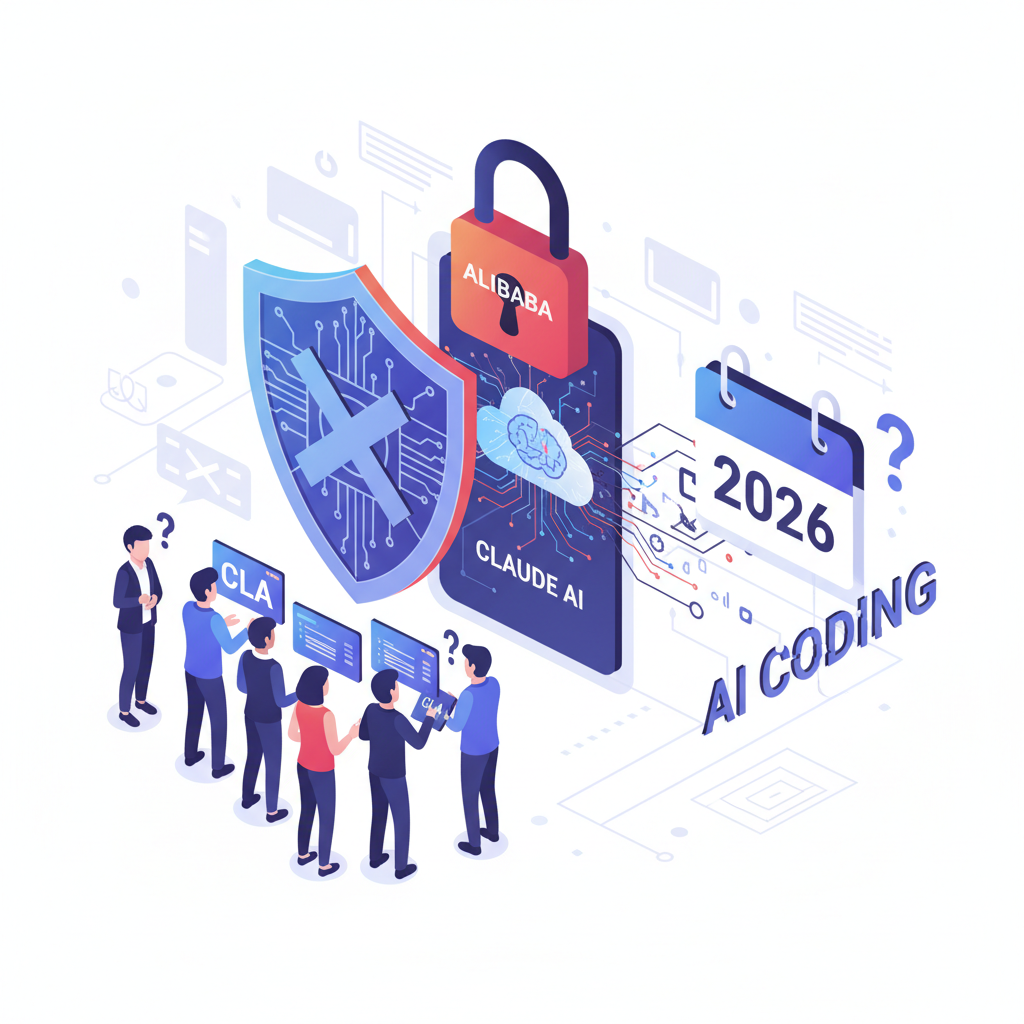
Image: AI-generated
The Technical Underpinnings: Understanding the Alleged Vulnerabilities
While specific technical details remain confidential, security analysts speculate that the concerns relate to Claude Code’s sophisticated context-aware capabilities. Unlike simpler code completion tools, Claude Code maintains extensive context about the codebase it’s working with, which requires sophisticated data handling and potentially creates vectors for exploitation. The alleged vulnerability may involve what some experts call “steganographic request marking,” where seemingly innocent code generation requests could conceal additional functionality.
This incident highlights the inherent tension in modern AI-assisted development: the more context-aware and helpful an AI coding assistant becomes, the more it needs to understand your codebase, and consequently, the greater the potential security surface area. As we’ve explored in our guide on LoRA and AI model customization, the architectural decisions behind AI systems have profound implications for both functionality and security.
Broader Implications for Enterprise AI Adoption
Alibaba’s ban has sent ripples across the global technology sector, with many Fortune 500 companies initiating their own security reviews of AI coding tools. The incident underscores a critical reality of the AI era: productivity gains must be balanced against security considerations. Enterprises are now questioning whether the convenience of AI-assisted coding justifies the potential risks of integrating third-party AI systems into sensitive development environments.
This development is particularly significant given that, as we reported recently in our coverage of enterprise hedging strategies against AI system failures, many organizations had already begun developing contingency plans for AI tool disruptions. The Alibaba ban validates these precautionary measures and will likely accelerate the trend toward diversified AI toolchains rather than reliance on single providers.
The Geopolitical Dimension: AI Sovereignty Intensifies
Beyond immediate security concerns, Alibaba’s decision reflects broader geopolitical tensions in the AI landscape. With the US and China increasingly pursuing technological decoupling, the ban can be interpreted as part of a larger movement toward AI sovereignty—where nations and corporations prioritize domestic or controlled AI solutions over foreign alternatives. This incident may accelerate similar moves in other regions, potentially fragmenting the global AI development ecosystem along national and corporate lines.
The sovereignty question extends beyond just coding tools to fundamental infrastructure. For developers concerned about controlling their AI environment, exploring options for running local AI models has become increasingly relevant. Tools like Contabo VPS can provide the infrastructure needed for more controlled AI deployment scenarios.
Practical Alternatives for Developers in the New Landscape
For development teams now seeking alternatives to Claude Code, the market offers several robust options. Many organizations are turning to hybrid approaches that combine multiple specialized tools rather than relying on a single all-in-one solution. This strategy not only mitigates risk but often yields better results by leveraging the unique strengths of different AI systems.
Among the most promising alternatives are tools that offer greater transparency and control over the AI’s operations. Cursor, for instance, has gained popularity for its privacy-focused approach and flexible model integration. Meanwhile, comprehensive comparisons like our analysis of secure AI coding alternatives after the Alibaba ban provide detailed guidance for teams making transition decisions.
Best Practices for Secure AI-Assisted Development in 2026
In light of the Alibaba-Claude incident, development organizations should reevaluate their AI tool integration strategies. Key considerations now include:
- Comprehensive Security Audits: Regularly assess AI tools for potential vulnerabilities, paying particular attention to data handling and network communications.
- Tool Diversification: Avoid over-reliance on any single AI provider by maintaining a portfolio of approved tools for different use cases.
- Air-Gapped Solutions: For highly sensitive projects, consider locally-hosted AI coding assistants that operate without external network connections.
- Strict Access Controls: Limit AI tool access based on the sensitivity of the codebase and implement rigorous monitoring of AI-generated code changes.
These practices align with broader trends in AI security that extend beyond coding to other domains, such as the sophisticated safeguards needed for AI video generation tools and other content creation platforms.
The Future of AI Coding: More Scrutiny, More Specialization
The Alibaba ban likely represents a turning point rather than an isolated incident. We can expect increased regulatory scrutiny of AI development tools, more sophisticated security requirements from enterprise customers, and accelerated development of specialized AI coding solutions tailored to specific industries or security needs. The era of one-size-fits-all AI coding assistants may be giving way to a more nuanced landscape where tools are selected based on their security profile as much as their capabilities.
This increased specialization mirrors trends we’re seeing across the AI ecosystem. Just as developers need tailored coding assistants, other professionals are benefiting from domain-specific AI tools, such as those featured in our roundup of AI solutions for data analysis and business intelligence.
Conclusion: A Watershed Moment for AI-Assisted Development
Alibaba’s ban on Claude Code represents a watershed moment in the maturation of AI-assisted development. While the specific allegations remain contested, the incident has undeniably shifted the conversation around AI coding tools from pure capability to balanced risk assessment. As we move through 2026, developers and organizations must navigate this new landscape with increased awareness of both the power and the potential pitfalls of AI assistance.
The optimal path forward likely involves a strategic blend of AI tools, rigorous security practices, and maintained human oversight. By learning from incidents like the Alibaba ban, the development community can harness the productivity benefits of AI while safeguarding the integrity of their codebases and the security of their intellectual property.
Looking for Secure AI Coding Solutions?
Explore vetted AI development tools that prioritize security and transparency. Cursor offers a privacy-focused alternative with flexible model integration, while platforms like OpenRouter provide access to multiple AI models with consistent security standards.
What to Read Next
- GLM 5.2 vs GPT-4o Coding Review 2026: Which AI Wins for Developers?
- AI Efficiency Drive: Microsoft, Deepseek, Cloudflare, Perplexity, and Ukraine Shape the Future
- AI Coding Tool Guide: GitHub Copilot vs. Cursor and Beyond
- GLM 5.2 vs Moonshot K2.7 2026: Real-World Code Review Shows Which AI Model Developers Are Choosing Post-Claude Ban
- Browse all AI Stack Digest articles
Bookmark aistackdigest.com for daily AI tools, reviews, and workflow guides.
This article was produced with the assistance of AI tools and reviewed by the AIStackDigest editorial team.