
AI Video & Creative Tools Specialist
The landscape of AI video tools is evolving at an unprecedented pace, transforming how we create, edit, and consume visual content. From generating stunning visuals from text prompts to enhancing existing footage with intelligent algorithms, these tools are empowering creators, marketers, and businesses to push the boundaries of storytelling. In July 2026, we’re seeing an acceleration in capability, offering more intuitive interfaces, advanced customization, and integrations that streamline the production pipeline. This overview dives into some of the leading platforms, highlighting their unique strengths and how they’re shaping the future of video creation.
Google Gemini Omni Flash
Google’s Gemini Omni Flash is quickly becoming a game-changer in enterprise video production. This model allows teams to generate, revise, and edit video content using plain-language instructions, effectively turning complex multi-tool pipelines into an intuitive conversational process. Its entry into the API market signifies a shift towards more accessible and integrated AI video solutions for businesses. Omni Flash aims to replace traditional workflows that often required a full film crew, dedicated editors, and several rounds of revision, offering a much faster and more cost-effective alternative.
Key features include sophisticated text-to-video generation, intelligent scene composition, and dynamic editing capabilities based on natural language commands. Businesses can leverage Gemini Omni Flash for rapid prototyping of ad campaigns, internal communications, training videos, and more, significantly reducing time-to-market. Its ability to interpret nuanced instructions means less technical expertise is required, making advanced video production accessible to a broader range of professionals.
DomoAI
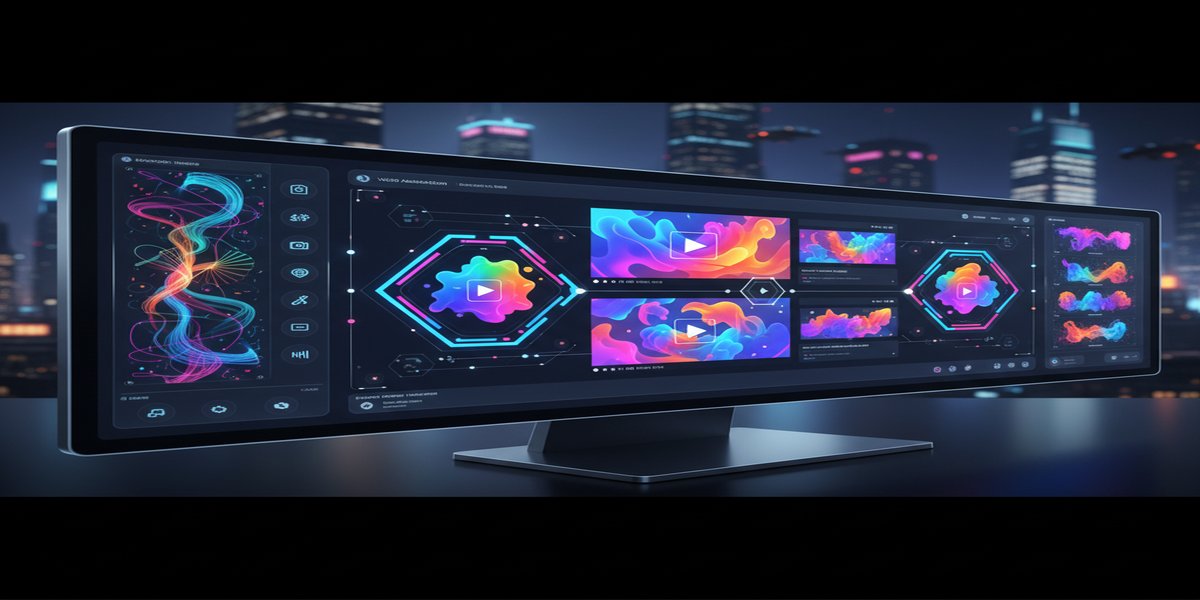
DomoAI stands out as a versatile AI video and animation platform that has rapidly gained popularity, boasting over 4 million users. It offers a comprehensive suite of features including text-to-video, image-to-video, and video-to-video transformations. With over 30 distinct styles available, DomoAI empowers creators to imbue their content with unique artistic flair, from cinematic and anime to abstract and photorealistic aesthetics. The platform prioritizes ease of use, making advanced AI video generation accessible even for beginners.
Its robust capabilities allow users to convert simple text descriptions into engaging video clips, animate still images, or apply transformative styles to existing video footage. DomoAI is ideal for social media content creators, small businesses looking to produce engaging marketing material, and artists experimenting with new forms of digital expression. The platform offers a free plan to get started, with paid subscriptions available from approximately $13.99/month, providing excellent value for its extensive feature set. Find out more about its capabilities and start creating with DomoAI.
Sora (OpenAI)
While still in limited access, OpenAI’s Sora continues to captivate the industry with its breathtaking capabilities in generating realistic and imaginative scenes from text instructions. Sora’s ability to understand the physical world in motion, produce complex scenes with multiple characters, specific types of motion, and accurate details of the subject and background is unparalleled. It can create entire videos or extend existing ones, generating new frames that maintain temporal consistency.
Sora’s potential applications span film production, advertising, and creative arts, offering a new frontier for visual storytelling. Its advanced understanding of prompts allows for the creation of intricate narratives and detailed environments, promising to revolutionize how high-quality video content is produced. As it becomes more widely available, Sora is expected to set new benchmarks for AI video generation.
Kling AI (Kuaishou)

Kling AI, developed by Chinese tech giant Kuaishou, is another formidable entrant in the AI video generation space. Similar to Sora, Kling AI focuses on high-fidelity, realistic video outputs from text prompts. It emphasizes the generation of expressive, lifelike characters and complex scene dynamics, often showcasing sophisticated physics and realistic interactions between elements within the video.
Kling AI is particularly notable for its ability to produce longer, coherent video clips, addressing one of the major challenges in AI video generation: maintaining consistency over extended durations. Its applications are broad, from cinematic shorts and detailed product visualizations to educational content and virtual experiences. Kling AI’s ongoing development promises to further enhance its photorealistic output and controllable attributes, making it a valuable tool for professional video makers.
RunwayML
RunwayML remains a pioneer and leader in the creative AI space, offering a comprehensive suite of magical AI tools for video editing and generation. Its platform supports a wide range of functionalities, including text-to-video, image-to-video, video-to-video, and generative fill. RunwayML’s strength lies in its versatility and its commitment to empowering artists and filmmakers with cutting-edge AI capabilities, often integrating new research findings directly into its user-friendly interface.
Beyond generation, RunwayML provides tools for object removal, background replacement, rotoscoping, and automatic motion tracking, making complex post-production tasks significantly easier. It caters to a diverse user base, from independent filmmakers to large studios, enabling them to achieve cinematic results with unprecedented efficiency. Its frequent updates and active community make it a continually evolving resource for AI-powered creativity.
The Future is Conversational and Creative
The pace of innovation in AI video tools suggests a future where video creation is increasingly democratized, intuitive, and bound only by imagination. We are moving towards systems that not only generate high-quality visuals but also understand context, emotion, and narrative intent through natural language. The rise of tools like Google Gemini Omni Flash indicates a lean towards conversational interfaces, where collaboration with AI feels more like directing a human team.
For creators, this means more time to focus on strategic vision and less on tedious execution. For businesses, it translates to faster content cycles, personalized marketing, and the ability to test creative ideas with unprecedented speed. The competition among these platforms is healthy, driving continuous improvements in realism, control, and accessibility.
Whether you’re a professional filmmaker, a marketing specialist, or a budding enthusiast, exploring these tools is crucial to staying ahead in the content creation game. For more in-depth reviews and the latest updates on AI tools across various categories, make sure to visit aistackdigest.com.
What to Read Next
- GLM 5.2 vs Moonshot K2.7 Code Review 2026: Which AI Model Wins for Developers?
- Top 5 Free AI Tools Dominating 2026
- How to Run Stable Diffusion on VPS for AI Image Generation in 2026: The Complete Guide
- Baidu’s ‘Unlimited OCR’ Leads AI News; Amazon’s Mechanical Turk Fades; Pxpipe Cuts Claude Costs
- Browse all AI Stack Digest articles
Bookmark aistackdigest.com for daily AI tools, reviews, and workflow guides.
This article was produced with the assistance of AI tools and reviewed by the AIStackDigest editorial team.