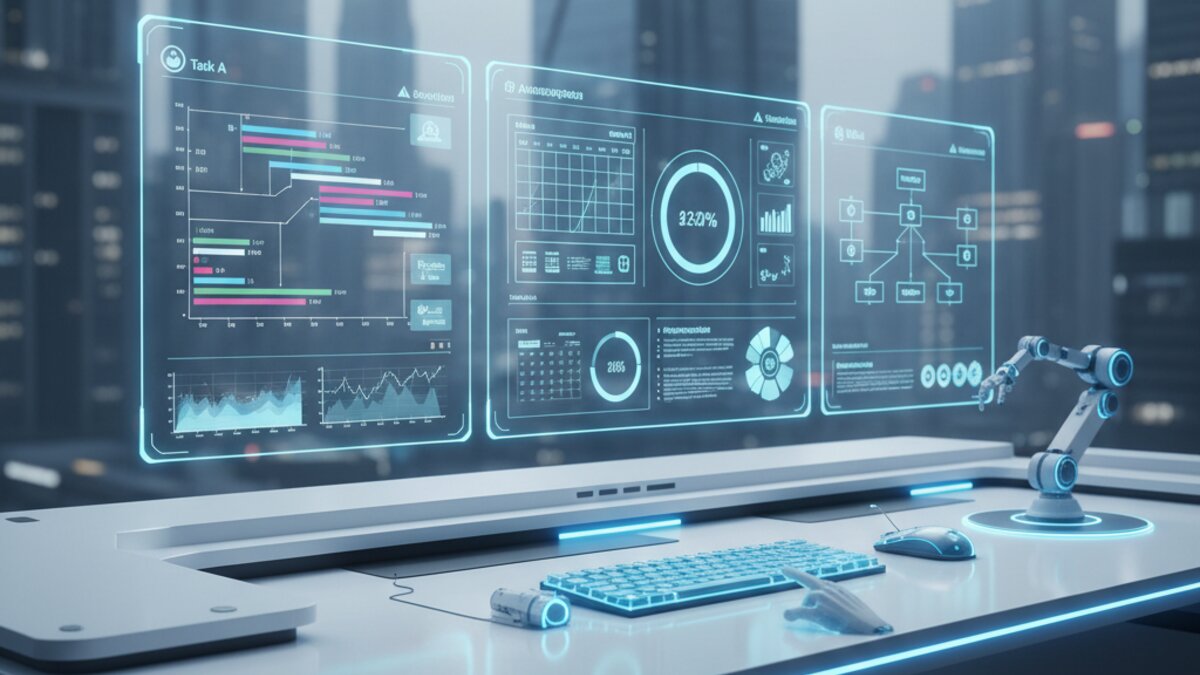

AI Tools & Automation Specialist
In the fast-evolving landscape of 2026, Artificial Intelligence has transitioned from a futuristic concept to an indispensable partner in our daily workflows. Whether you’re a solopreneur juggling multiple tasks, a developer streamlining your coding process, or a marketing professional crafting compelling content, AI tools are no longer just an advantage—they’re a necessity. This article dives into the essential AI tools that are revolutionizing productivity and automation, helping you reclaim hours in your day and supercharge your output.
The Dawn of Hyper-Personalized AI Assistance
The biggest shift in AI tools this year isn’t just about raw power, but about customization and deep integration. Generic AI responses are out; hyper-personalized, context-aware assistance is in. This means tools that learn your habits, preferences, and specific project requirements to deliver truly relevant support.
Intelligent Task Management and Scheduling
Forget static to-do lists. Modern AI-powered task managers go beyond simple reminders, intelligently prioritizing your tasks based on deadlines, dependencies, and even your historical work patterns. They can automatically reschedule meetings, suggest optimal times for focused work, and even delegate routine tasks to other AI sub-agents. Tools like Notion AI (with advanced plugins) and new entrants such as TaskFlow are leading this charge, integrating seamlessly with your calendar and communication platforms.
AI-Powered Content Creation and Curation
Content is still king, and AI is its most prolific advisor. From generating initial drafts to optimizing for SEO and personalizing at scale, AI assistants are transforming how we create and distribute information.
Advanced Writing and Editing Assistants
Beyond basic grammar checks, AI writing tools now offer deep stylistic analysis, tone adjustments, and even suggest structural improvements to long-form content. They can adapt your writing for different audiences and platforms, ensuring consistency and impact. While many options exist, platforms leveraging models like GPT-4o, Claude 3.5 Sonnet, and Gemini 2.5 Pro via services like OpenRouter provide unparalleled versatility for writers who need to switch between various AI models quickly to find the best fit for their specific writing tasks.
Automated Research and Summarization
Drowning in data? AI research tools can scan vast amounts of information—articles, reports, even video transcripts—and distill them into concise, actionable summaries. They can identify key insights, flag relevant statistics, and help you stay on top of industry trends without reading every single word. Perplexity AI, for instance, has evolved into a comprehensive research co-pilot, offering not just summaries but also real-time citations and follow-up questions.
Revolutionizing Workflow Automation
The true power of AI for productivity lies in its ability to automate repetitive, time-consuming tasks. This isn’t just about setting up simple triggers; it’s about creating intelligent, dynamic workflows that adapt to changing conditions.
Intelligent Integration Platforms
Platforms like Make.com and n8n (which now integrate advanced AI capabilities natively) are no longer just IF-THEN switches. They are becoming intelligent orchestration layers, capable of understanding natural language commands to build complex automation sequences. Imagine telling your workflow automation tool: “When a new lead comes in from LinkedIn, analyze their profile for relevant interests, draft a personalized follow-up email based on our CRM data, and schedule it for next Tuesday morning, unless they respond to the initial outreach.” This level of intuitive, AI-driven automation is now standard.
AI-Powered Data Analysis and Reporting
For many, data analysis is a bottleneck. AI tools are breaking this barrier by automating everything from data cleaning and transformation to generating insightful reports. They can identify patterns, forecast trends, and even explain complex statistical relationships in plain language, empowering business users who lack specialized data science skills. Spreadsheet AI add-ons and dedicated business intelligence platforms are making these capabilities accessible to everyone.
AI for Developers: Coding with a Co-Pilot
Developers were among the first to embrace AI, and the tools available to them are continually advancing, turning coding into a more efficient and less error-prone process.
Code Generation and Completion
Beyond simple autocomplete, AI coding assistants can generate entire functions, suggest optimal algorithms, and even translate code between different programming languages. Tools like GitHub Copilot (now deeply integrated into popular IDEs) and specialized AI-native editors like Cursor provide real-time suggestions, debug assistance, and refactoring capabilities that significantly accelerate development cycles.
Automated Testing and Debugging
AI is also taking on the tedious tasks of testing and debugging. It can generate comprehensive test cases, identify potential vulnerabilities, and pinpoint the root cause of errors faster than ever before. This not only improves code quality but also frees up developers to focus on more complex, creative problem-solving.
The Future is Now: Integrating AI into Every Facet of Work
The AI tools available in 2026 are not just standalone applications; they are increasingly designed to integrate seamlessly into existing ecosystems. This interconnectedness creates a symbiotic relationship where each tool enhances the capabilities of the others, leading to an exponential boost in productivity.
Personal AI Agents and Digital Twins
Emerging as a game-changer are personal AI agents—digital twins trained on your specific communication style, knowledge base, and preferences. These agents can handle your email triage, manage your professional network, and even participate in low-stakes virtual meetings on your behalf. This allows you to offload cognitive load and focus on high-value, strategic work, while your AI ensures continuity and presence.
Ethical Considerations and Responsible AI Use
As AI tools become more powerful and pervasive, the ethical considerations around their use are more critical than ever. Issues of data privacy, algorithmic bias, and job displacement require ongoing attention. Responsible AI development and deployment mean prioritizing transparency, accountability, and user control. Always consider the source, verify outputs, and understand the limitations of the AI tools you integrate into your workflow.
Conclusion: Empowering Human Potential
The explosion of AI tools for productivity and workflow automation in 2026 marks a new era of human-computer collaboration. These technologies aren’t here to replace human ingenuity but to augment it, freeing us from mundane tasks and allowing us to focus on creativity, strategy, and empathy. By strategically adopting the right AI tools, individuals and organizations can unlock unprecedented levels of efficiency, innovation, and personal growth.
The key isn’t to use every AI tool, but to identify those that truly address your pain points and align with your goals. Embrace the AI revolution, experiment with new technologies, and discover how these intelligent assistants can transform your work and life.
This article was produced with the assistance of AI tools and reviewed by the AIStackDigest editorial team.