
💡 Hosting tip: For self-hosted setups, Contabo VPS for self-hosted AI agents offers high-performance VPS at excellent value.
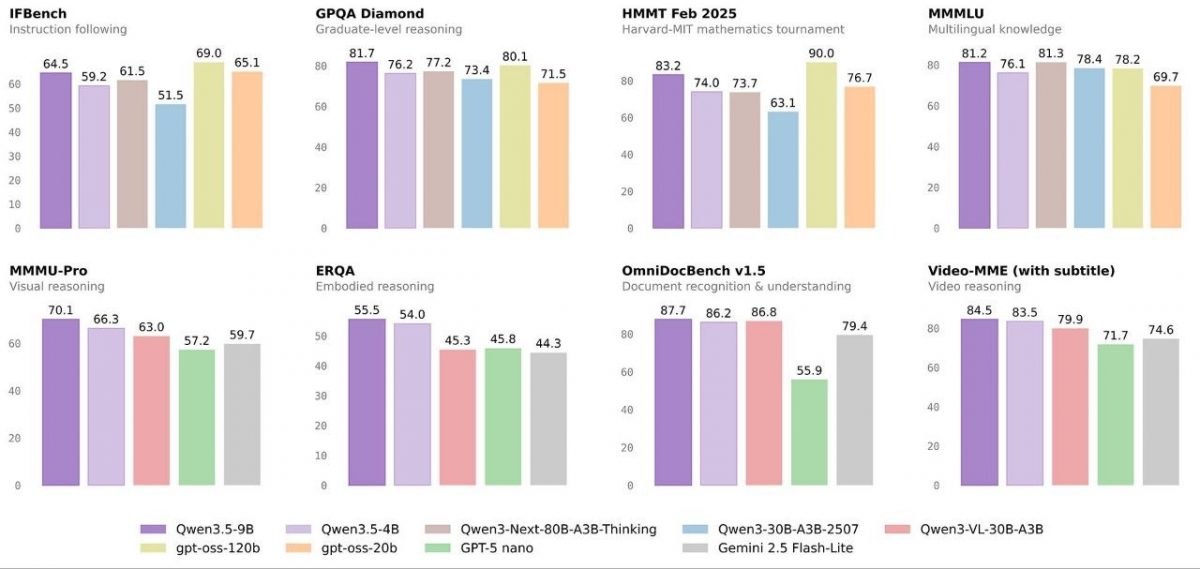
Alibaba’s Qwen team just released the Qwen 3.5 Small Model Series — four compact, powerful models (0.8B, 2B, 4B, and 9B) built on the same Qwen3.5 foundation as their larger counterparts. The pitch: native multimodal, improved architecture, scaled reinforcement learning, and serious performance for their size class.
Analysis
This launch signals a strategic shift from pure parameter count to practical utility. For developers, it means more viable options for resource-constrained environments, potentially accelerating innovation in areas like smart home devices, robotics, and embedded systems. Businesses can now consider deploying sophisticated AI capabilities directly on-device, enhancing data privacy, reducing latency, and cutting cloud inference costs significantly. The focus on a shared foundation across models ensures a consistent development experience, simplifying scaling and migration between different model sizes as project requirements evolve.
What to Watch
The industry will closely observe how these models perform in real-world applications compared to their benchmarks, especially the 4B agent model. This release intensifies the competition in the small model space, pushing other major players to refine their offerings for edge and on-device deployment. Expect to see a new wave of applications that leverage these compact, powerful models for truly localized AI experiences.
Four Models, One Family
The Qwen 3.5 series drops four sizes today, each targeting a different use case:
- Qwen3.5-0.8B — Tiny and fast. Built for edge devices, on-device inference, and latency-critical applications where cloud round-trips aren’t acceptable.
- Qwen3.5-2B — Still small, but meaningfully more capable. Fits comfortably in memory on consumer hardware and embedded systems.
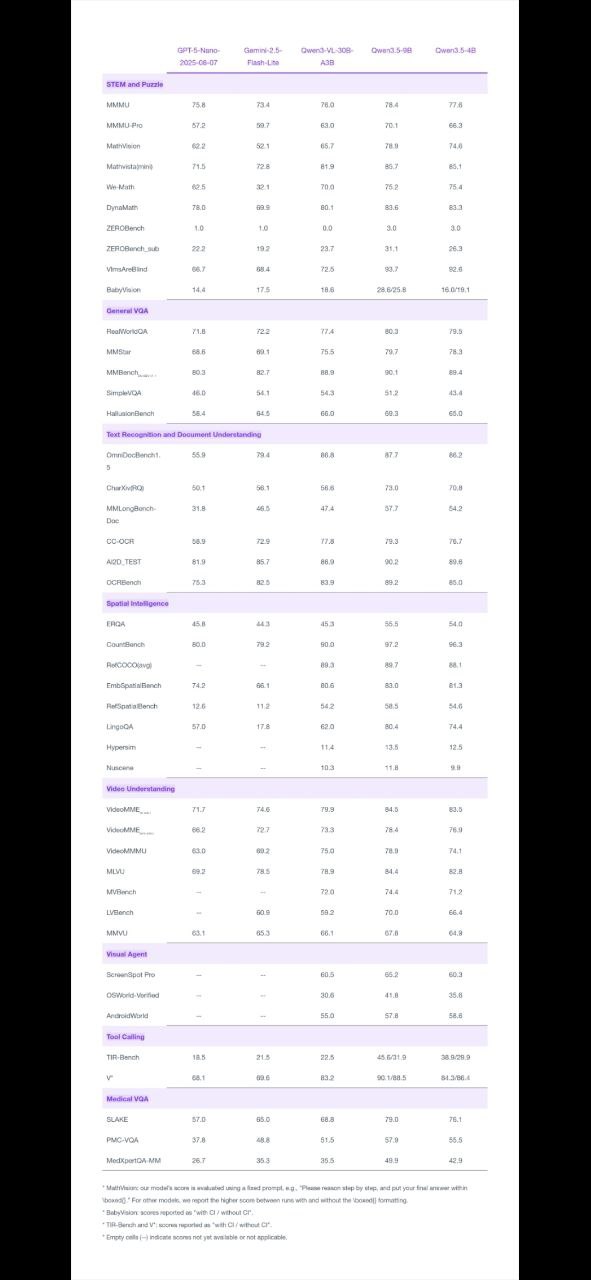
- Qwen3.5-4B — The most interesting size in the lineup. Alibaba calls it “a surprisingly strong multimodal base for lightweight agents” — a big claim for a 4B model. If it delivers on multimodal tasks, this becomes a go-to for developers building on-device AI agents.
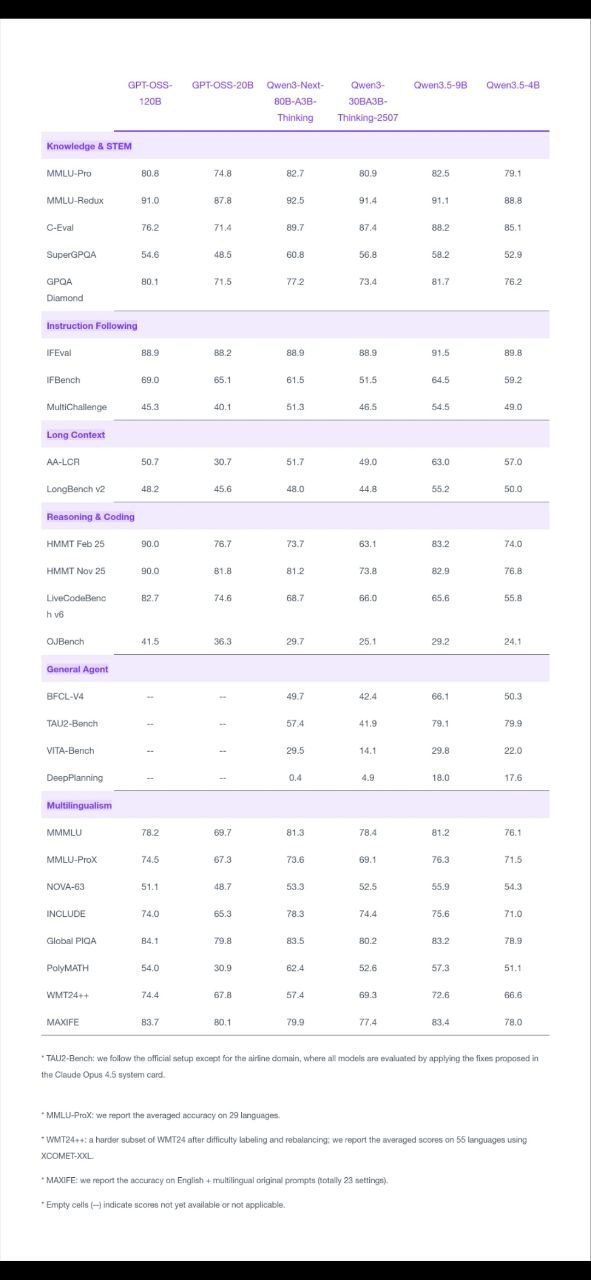
- Qwen3.5-9B — Compact by today’s frontier standards, but Alibaba says it’s “already closing the gap with much larger models.” A 9B that competes with 70B+ outputs would be a genuine breakthrough.
Analysis
This tiered release strategy is highly effective, offering a clear path for developers to select the optimal model based on their specific computational constraints and performance needs. The 0.8B and 2B models are poised to democratize AI, enabling sophisticated functionalities in low-power devices previously limited to basic operations. The 4B model, if it lives up to its multimodal agent potential, could be a game-changer for new product categories, allowing for complex interactive experiences without reliance on constant cloud connectivity. The 9B model’s claim of competing with much larger models suggests a significant leap in efficiency, pushing the boundaries of what’s possible with smaller parameter counts.
What to Watch
The real test for these models will be their performance in diverse, real-world deployment scenarios, particularly the 4B model’s multimodal agent capabilities. We should anticipate a surge in innovative applications leveraging these smaller models, especially in sectors like healthcare, manufacturing, and consumer electronics where on-device processing is highly valued. The industry will be keen to see if the 9B model truly closes the gap with larger alternatives, potentially redefining the cost-performance ratio for advanced AI tasks.
What “Native Multimodal” Means Here
All four models are described as native multimodal — meaning multimodal understanding is baked into the architecture from the start, not retrofitted via adapters or separate vision towers. This avoids the common trap of “multimodal” small models that are really language models with a bolt-on image encoder that degrades text performance.
The 4B model is being positioned as a capable base for lightweight AI agents that can process both text and images without requiring a large model backend — think a phone app that reads a document photo and answers questions about it, all running locally.
Analysis
Native multimodal integration is a critical advancement, ensuring seamless and efficient processing of diverse data types without the compromises often seen in bolt-on approaches. For developers, this means building more robust and intuitive applications, where the AI truly understands context across modalities rather than merely concatenating inputs. Businesses can leverage this for more accurate and comprehensive data analysis, enhanced user experiences, and the creation of truly intelligent agents capable of perceiving and interacting with the world in a richer way. This approach inherently leads to better performance and reduced computational overhead compared to models that graft multimodal capabilities onto a language-centric core.
What to Watch
The success of the “native multimodal” approach will set a new standard for small AI models, challenging competitors to move beyond retrofitted solutions. We can expect to see an explosion of creativity in agentic applications, especially on mobile and IoT devices, as developers gain access to models that inherently understand both visual and textual information. The benchmark for true multimodal intelligence in compact form factors has just been significantly raised.
Scaled RL: The Secret Ingredient
The Qwen team specifically calls out scaled reinforcement learning as a key differentiator. This aligns with the broader industry shift — following DeepSeek R1 and OpenAI’s o-series — of using RL to dramatically improve reasoning quality without simply scaling parameter count. For small models especially, RL training can extract far more capability from limited compute.
Analysis
The emphasis on scaled reinforcement learning highlights a maturing trend in AI development: optimizing performance through advanced training methodologies rather than solely relying on brute-force scaling of model size. This is particularly impactful for small models, as RL can unlock sophisticated reasoning abilities that would otherwise require significantly more parameters and computational resources. For developers and businesses, this means achieving higher quality outputs and more intelligent behavior from compact models, making advanced AI more accessible and cost-effective to deploy even in edge environments. It signifies a move towards smarter, more efficient AI, rather than just bigger AI.
What to Watch
This focus on scaled RL will likely drive further innovation in training techniques across the industry, as other model developers seek similar efficiency gains. We should anticipate more research and practical applications demonstrating how sophisticated RL can elevate the capabilities of smaller models, potentially democratizing access to high-quality AI reasoning. This trend reinforces the idea that model performance is increasingly a function of both architecture and training regimen, not just model size.
Base Models Released Too
Alibaba is also releasing the Base models (pre-instruction-tuning) for all four sizes. This matters for researchers and developers who want to fine-tune on custom data without fighting RLHF preferences — crucial for domain-specific applications in medicine, law, code, or any specialized vertical.
Analysis
The release of base models is a significant boon for the developer ecosystem, empowering researchers and enterprises to create highly specialized AI solutions. By providing pre-instruction-tuning versions, Alibaba acknowledges the need for fine-grained control over model behavior, allowing for domain-specific adaptations without the biases or constraints introduced by general-purpose instruction tuning or RLHF. This facilitates the development of AI in sensitive or highly regulated fields like healthcare and finance, where precision and adherence to specific knowledge bases are paramount. It democratizes access to powerful foundational models for niche applications, fostering innovation beyond generic AI use cases.
What to Watch
This move will likely accelerate the development of highly specialized AI models across various industries, establishing a new benchmark for openness and flexibility in foundational model releases. Expect to see a rise in custom-tailored AI solutions that leverage these base models, potentially leading to breakthroughs in fields where off-the-shelf models struggle. It also puts pressure on other major model providers to offer similar base model access, fostering a more vibrant and adaptable AI development landscape.
Why Small Models Are Having a Moment
The release arrives at a moment when the industry is re-evaluating the race to scale. GPT-5 and Gemini Ultra get the headlines, but real deployment volume — in apps, devices, and enterprise edge infrastructure — is driven by models that are fast, cheap, and small enough to run anywhere. A capable 4B multimodal agent that runs on a phone changes what’s possible for bootstrapped products and resource-constrained research.
Analysis
The resurgence of small models represents a critical shift from theoretical AI prowess to practical, deployable solutions. This isn’t just about cost savings; it’s about enabling a new generation of AI applications that benefit from low latency, enhanced privacy due to on-device processing, and resilience to network outages. For businesses, this means unlocking new product categories and operational efficiencies, particularly in edge computing, IoT, and mobile applications where cloud dependency is a bottleneck. The ability to run sophisticated AI locally dramatically expands the addressable market for AI solutions, moving beyond enterprise data centers to everyday devices and remote environments.
What to Watch
This trend solidifies the “small AI” movement as a counter-narrative to the “frontier AI” race, emphasizing utility and accessibility. Expect continued investment and innovation in model compression, efficient architectures, and edge-optimized hardware. The success of models like Qwen 3.5 will likely drive a more balanced approach to AI development, where both massive foundational models and highly optimized compact models coexist and serve distinct, yet equally important, roles in the AI ecosystem.
Where to Get Them
- Hugging Face: huggingface.co/collections/Qwen/qwen35
- ModelScope: modelscope.cn/collections/Qwen/Qwen35
Curious how Qwen 3.5 stacks up against Phi-4, Gemma 3, and Llama 3.2? Check our free AI Model Comparison tool →
Editor’s Take
Alibaba’s Qwen 3.5 Small Model Series is more than just another set of model releases; it’s a strategic declaration in the ongoing debate about the future of AI. By offering a range of natively multimodal, RL-enhanced models from 0.8B to 9B parameters, Qwen is directly addressing the burgeoning demand for efficient, deployable AI at the edge. The emphasis on native multimodal capabilities and advanced training techniques like scaled reinforcement learning signals a maturity in small model design, moving beyond mere miniaturization to genuinely intelligent and performant solutions for real-world constraints.
This launch is particularly impactful for developers and businesses looking to integrate AI into consumer devices, industrial IoT, or privacy-sensitive applications where cloud round-trips are impractical or undesirable. The provision of base models further empowers custom fine-tuning, ensuring these compact powerhouses can be precisely adapted to niche domains. Qwen 3.5 positions itself as a formidable contender in the race for practical, ubiquitous AI, demonstrating that significant intelligence doesn’t always require a massive footprint, and that the future of AI includes powerful models running directly in our hands and homes.
This article was produced with the assistance of AI tools and reviewed by the AIStackDigest editorial team.