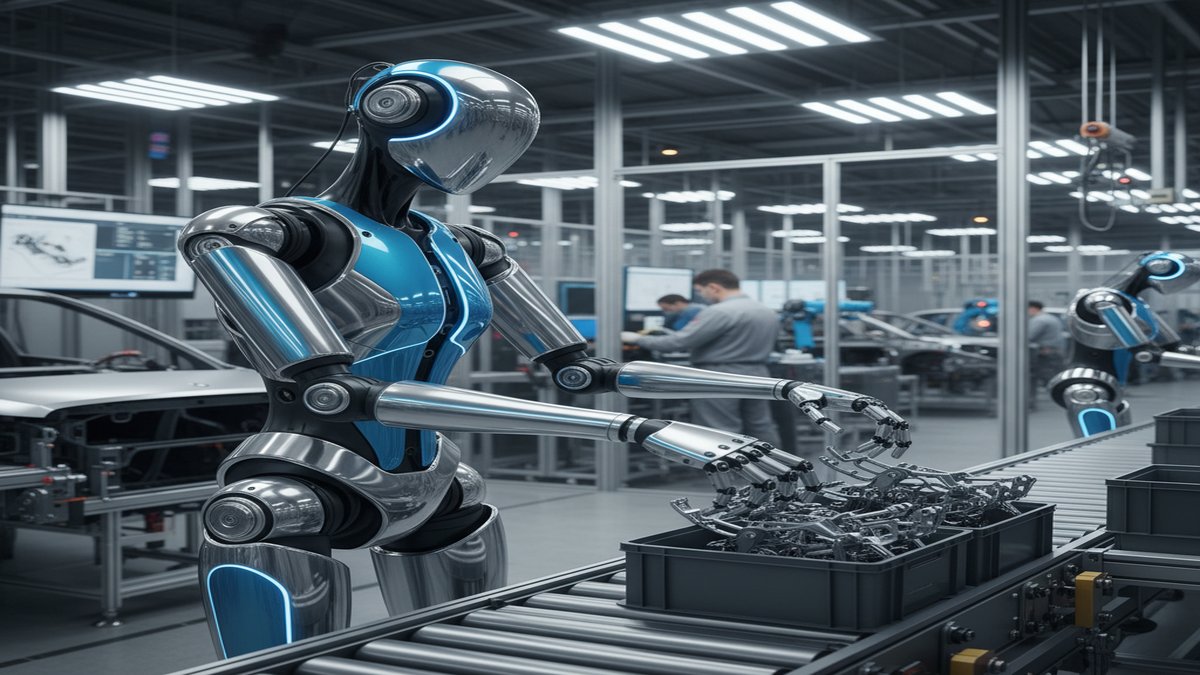
Google DeepMind just released Gemini Robotics 2.5, a major leap forward in physical AI that dramatically improves robot dexterity, reliability, and real-world performance. The new model achieves 30-100% higher success rates than its predecessor and completed real factory work at 96% accuracy—signaling that AI-powered robots are finally ready to work alongside humans in unstructured environments. This isn’t incremental progress; it represents the first time a general-purpose robotic system has demonstrated near-industrial-grade reliability in live production settings.
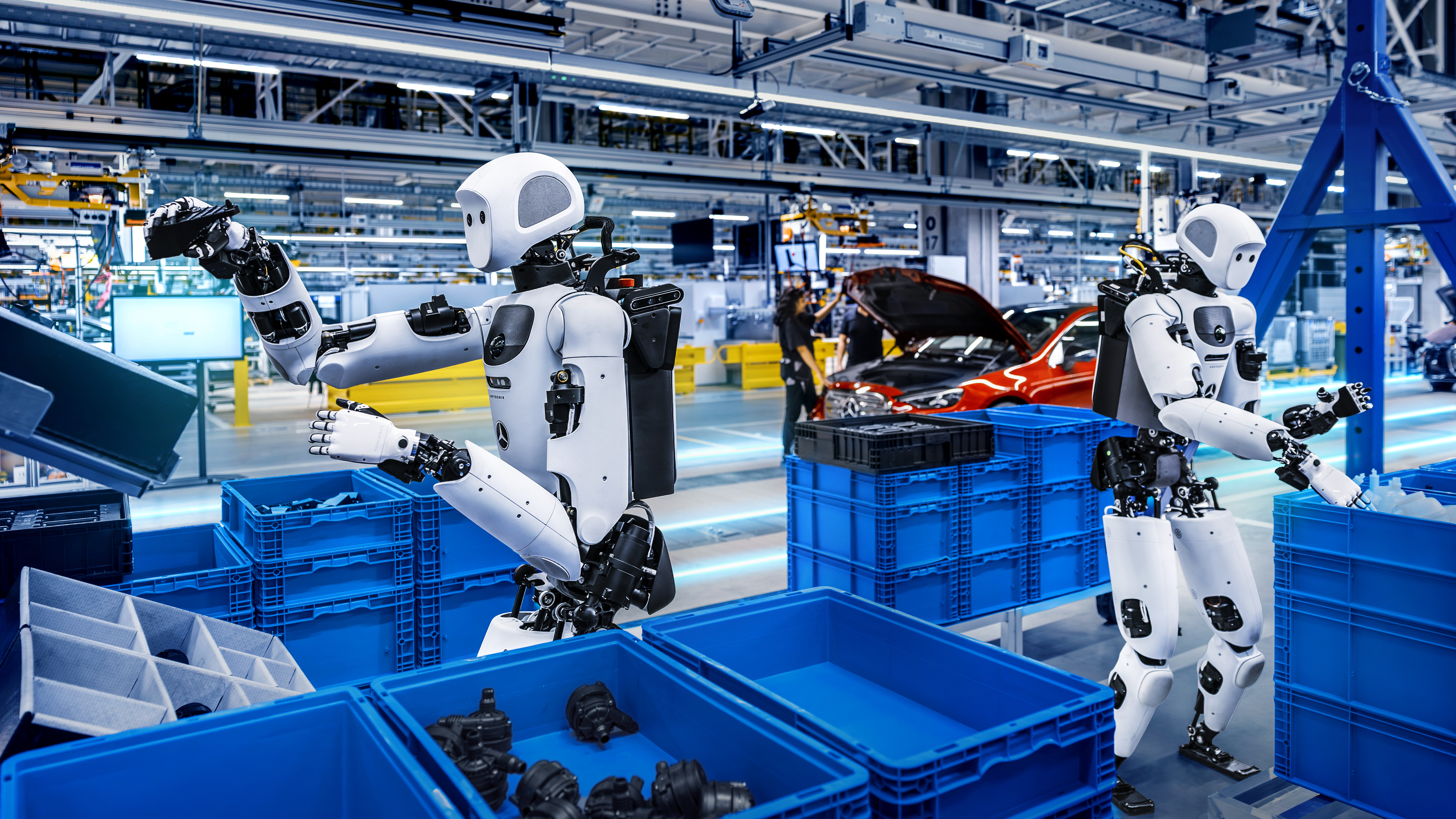
Image: Ars Technica
What Happened
On November 10, 2026, Google DeepMind unveiled Gemini Robotics 2.5, the latest iteration of its vision-language-action (VLA) model designed to control robotic systems with unprecedented dexterity and intelligence. The announcement came during the Conference on Robot Learning in Austin and included live demonstrations of real-world capabilities that significantly exceeded previous benchmarks. The model was evaluated across over 200 distinct tasks ranging from everyday activities like serving food with tongs to complex precision work like tying bows with deformable objects and pipetting liquids in laboratory settings. Notably, the model demonstrated the ability to handle flexible, deformable materials—a category of objects that has traditionally been the Achilles heel of robot manipulation systems. Most impressively, Apptronik’s Apollo 2 humanoid robot powered by Gemini Robotics 2.5 successfully performed automotive parts kitting at Mercedes-Benz production facilities in Hungary and Germany, achieving a 96% success rate on the notoriously challenging automotive assembly task. This involves reaching into bulk bins, identifying individual metal brackets, and placing them in sequencing containers in the exact order needed for each vehicle on the production line. Performance metrics show 30-100% higher success rates compared to previous baselines, with task completion speeds improved by 20-30%. The improvement in speed is significant for factory deployments where throughput directly impacts line efficiency. The model also introduces enhanced safety features including real-time obstacle avoidance, inference-time reasoning guidance, and a new open-source benchmark called ASIMOV-Jailbreak containing 1,500 adversarial prompts designed to test robustness against unsafe requests. DeepMind is rolling out Gemini Robotics 2.5 to robotics partners including Agile Robots, Apptronik, and Boston Dynamics, though it remains unavailable to the general public at launch.
Why This Matters
This release represents a watershed moment for embodied AI and practical robotics deployment. For AI practitioners and robotics researchers, Gemini Robotics 2.5 demonstrates that language-guided robotic systems are now capable of handling the real-world variability and complexity that exists outside controlled laboratory environments. The 96% factory success rate is particularly significant because it shows that AI robots can perform repetitive, physically demanding tasks at a level that approaches industrial viability—though DeepMind acknowledges the final 4% gap to near-human performance will require substantial additional work. The implication is clear: organizations exploring robotics automation can no longer dismiss the technology as experimental. For developers building on these models, the release signals that general-purpose robotics are moving from research curiosity to practical tool, with concrete real-world validation to support the claim. The open-source ASIMOV-Jailbreak benchmark is equally important for the broader industry: it establishes the first shared standard for testing physical AI safety, creating a common vocabulary and methodology for evaluating whether robotic systems will behave safely when deployed in human-occupied spaces. This is crucial because safety validation has been fragmented across different research groups, each using proprietary evaluation methods. For enterprises in manufacturing, logistics, and service industries, this represents a concrete path toward autonomous systems that can handle complex, non-repetitive tasks without extensive custom programming. The Mercedes-Benz partnership demonstrates that major industrial players are already betting serious capital on this technology, suggesting that the transition from pilot projects to production deployment is accelerating.
The Bigger Picture
Gemini Robotics 2.5 arrives at an inflection point in the AI industry’s transition from digital to physical intelligence. Throughout 2025-2026, multiple converging trends have set the stage for this moment: frontier language models like Gemini 4 Argon are now powerful enough to serve as research accelerators, simulation techniques have dramatically reduced the amount of real-world training data needed, and hardware platforms like the Apollo 2 humanoid have matured enough to execute complex multi-step tasks reliably. What’s particularly clever about this release is how it weaponizes Gemini 4 Argon itself—using a frontier model to generate thousands of synthetic training scenarios from real-world camera feeds, create realistic digital twins, and analyze failure modes far faster than traditional robotics research could manage. This creates a virtuous cycle: better reasoning models enable better embodied AI, which in turn drives demand for more capable frontier models. Meanwhile, the performance gains compound because each generation can be used to accelerate research on the next generation. The safety angle is equally important and often overlooked. As robots move from controlled factory floors into human-adjacent spaces, the industry faces a legitimacy crisis around trustworthiness. ASIMOV-Jailbreak and the aggressive safety steerability improvements (33% improvement around obstacles, 43% improvement around people) demonstrate that DeepMind is taking this seriously at the architectural level, not just bolting on safety classifiers after the fact. This matters profoundly because regulatory agencies, insurance companies, and enterprise buyers are increasingly demanding evidence that AI systems won’t fail catastrophically in human environments. Finally, this release underscores the growing importance of embodied AI as a strategic differentiator. While large language models have commodified somewhat—with dozens of capable open-source and commercial options available—physical AI remains concentrated in the hands of deep-research organizations with massive compute budgets and robot fleets. Google’s decision to partner with existing robotics companies rather than building proprietary hardware suggests a deliberate strategy to establish Gemini Robotics as the industry-standard foundation layer for embodied intelligence, similar to how transformers became the de facto foundation for NLP across competing organizations.
What to Watch Next
Several critical questions loom for the next phase of physical AI development. First, how quickly will Gemini Robotics 2.5 move from pilot projects like the Mercedes-Benz factory trial to broader industrial deployment across diverse use cases? The 96% success rate is compelling, but manufacturers typically demand 99%+ reliability before replacing human workers or trusting critical processes—that final 4% gap is neither trivial nor merely incremental. Second, will DeepMind and its partners solve the latency problem? Current Gemini Robotics still relies on cloud-based inference, meaning robots must wait for token generation from frontier models. This creates seconds of delay in real-time decision-making, which is acceptable for parts-kitting but potentially unsafe for tasks requiring immediate responsiveness around humans. Edge deployment of smaller physical-AI models or more aggressive model distillation techniques may be necessary for widespread adoption. Third, what happens when these models encounter tasks outside their training distribution? The 200-task evaluation is comprehensive, but real factories present infinite corner cases—will the system gracefully refuse unsafe actions, or will it confidently attempt tasks it shouldn’t? ASIMOV-Jailbreak is a start, but industry-specific benchmarks will likely follow. Finally, watch for implications on labor economics and policy. While optimists frame robotics as eliminating monotonous work, the Mercedes-Benz case study explicitly targets “monotonous, physically taxing” tasks performed by humans earning middle-class manufacturing wages. If Gemini Robotics scales rapidly, sectors like automotive assembly, warehousing, and food processing will face immediate workforce disruption—creating political and regulatory pressure that could slow adoption or force mandatory retraining programs and wage protection mandates. The technology is advancing faster than policy can keep pace.
The Bottom Line
Gemini Robotics 2.5 is a watershed release for embodied AI and physical intelligence: the first time a general-purpose robotic system has demonstrated near-industrial-grade reliability in real-world production environments without extensive task-specific tuning. The 96% success rate at Mercedes-Benz factories shows that AI-powered robots are transitioning from lab curiosities to practical tools that enterprises can deploy today with confidence. But honesty demands acknowledging the limitations—that final 4% gap to human reliability is steep, infrastructure challenges around latency remain unsolved, and safety frameworks are still maturing. For AI practitioners, the immediate opportunity is crystalline: robotics platforms built on Gemini Robotics will be the foundation of the next wave of AI products and services. For enterprises considering deployment, the message is now or never: companies that integrate embodied AI early will establish competitive moats that are difficult to breach. For society as a whole, the challenge is equally urgent and clear: we need robust safety standards, comprehensive workforce retraining programs, and adaptive policy frameworks before physical AI becomes ubiquitous in human spaces.
This article was produced with the assistance of AI tools and reviewed by the AIStackDigest editorial team.