The year 2026 has firmly cemented AI code generation as a core component of the modern developer’s toolkit. From autocompleting simple functions to architecting entire modules, these powerful assistants are reshaping how software is built. But this rapid adoption has thrust a complex legal and philosophical question into the spotlight: what is the true nature of the code these AIs produce, and should it be considered open source by default? The answer is far from simple, entangled in a web of benefits for collective progress, significant legal risks, and a licensing landscape that is still struggling to catch up.
Defining the Contours of AI-Generated Code
Before debating its licensing, it’s crucial to understand what we mean by “AI-generated code.” This isn’t a monolithic category. It spans a wide spectrum, from a developer using a tool like Cursor to refactor and debug existing work, to an AI agent prompted to create a wholly new library from scratch. The level of human input and creative direction varies dramatically, which is a key factor in the ensuing copyright and ownership debate. Unlike human-written code, which is unequivocally a creative work owned by its author (or their employer), the legal standing of AI output remains murky in many jurisdictions.
The Compelling Case for Open Sourcing AI Code
Proponents of open-sourcing AI-generated code argue from a position of accelerating innovation and fostering transparency. The benefits are substantial and align with the original ethos of the open-source software movement.
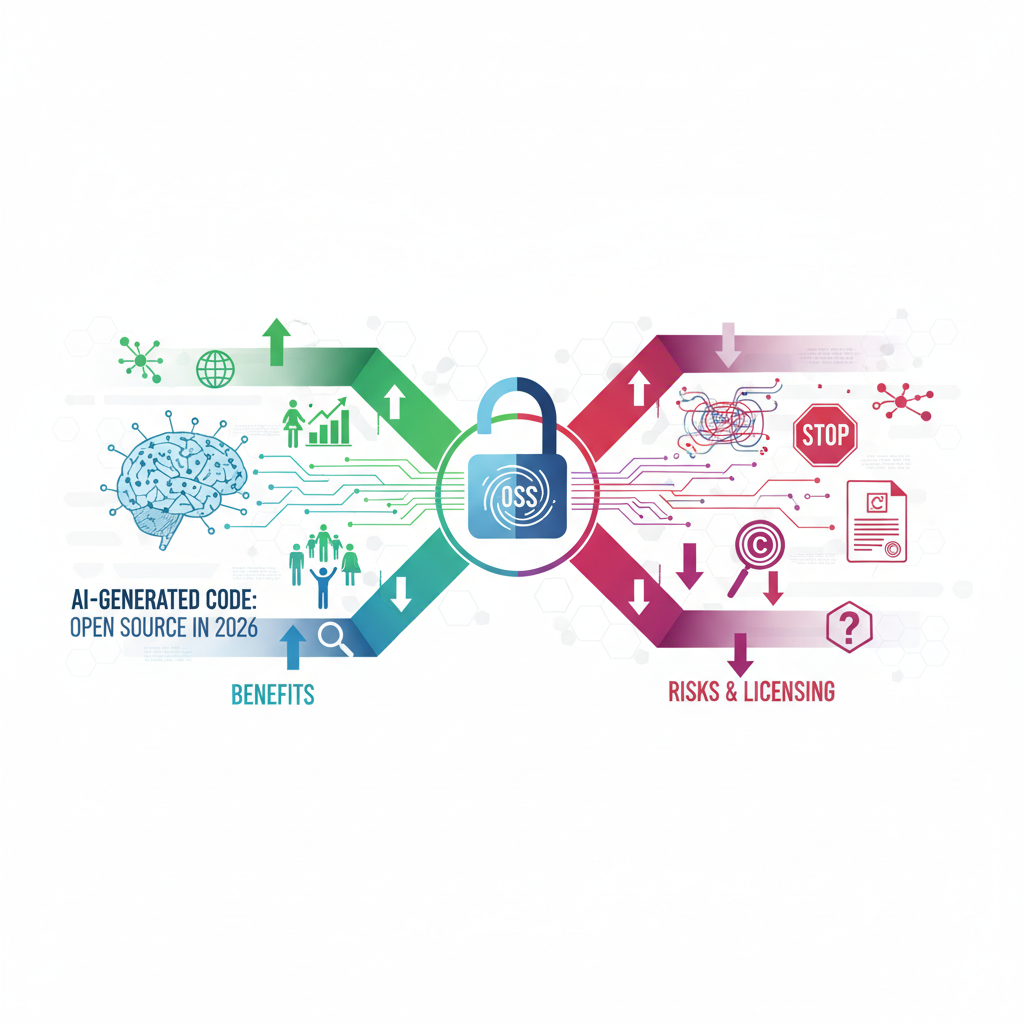
Image: AI-generated
Accelerated Collective Learning and Improvement
When developers share the prompts and outputs of their AI coding sessions, they create a valuable public dataset. This allows others to learn effective prompting strategies, understand the types of solutions AI models generate for specific problems, and collectively identify common pitfalls or inefficiencies. This shared knowledge base helps the entire community become more proficient and critical users of the technology, pushing the boundaries of what’s possible. For developers looking to get started, platforms like OpenRouter provide access to a wide range of models to experiment with.
Enhanced Auditing and Security
One of the biggest concerns with AI-generated code is the potential for introducing subtle bugs, vulnerabilities, or inefficiencies. Making such code open source allows for crowdsourced auditing. A global community of developers can scrutinize the code, identify security flaws, suggest optimizations, and contribute fixes. This “many eyes” approach is a cornerstone of open-source security and could be vital for ensuring the reliability of AI-assisted software projects.
Democratization of Software Development
Open-sourcing powerful AI-generated tools and libraries can lower the barrier to entry for aspiring developers and small startups. They can leverage sophisticated code that would otherwise be beyond their resources to develop in-house, allowing them to compete and innovate more effectively. This can lead to a more vibrant and diverse software ecosystem.
The Significant Risks and Legal Pitfalls
Despite the potential benefits, the path to open-sourcing AI code is fraught with legal ambiguity and risk that cannot be ignored in 2026.
The Licensing Quagmire
This is the most pressing issue. AI models are trained on vast corpora of existing code, much of which is under specific open-source licenses like GPL, MIT, or Apache. There is a persistent risk that an AI might regurgitate licensed code verbatim or produce a derivative work that is substantially similar. If a developer unknowingly incorporates this into a project and open-sources it, they could be in violation of the original license’s terms, potentially leading to legal challenges. The question of whether AI training constitutes copyright infringement is still being debated in courts worldwide, creating a cloud of uncertainty.
Questions of Ownership and Copyright
In several key jurisdictions, copyright offices have stated that works created solely by a machine without human creative input cannot be copyrighted. If an AI generates a block of code autonomously, who owns it? The user who prompted it? The company that built the AI? Or is it public domain by default? This lack of clear ownership makes applying a standard open-source license problematic, as a license requires a copyright holder to grant rights. This fundamental issue must be resolved before widespread open-sourcing can be considered safe.
Liability and Warranties
Open-source licenses typically come with no warranty and disclaim liability. However, if AI-generated code with a hidden flaw causes a critical system failure or a security breach, who is ultimately responsible? The ambiguity of ownership and the complex chain of creation—from the model trainers to the prompt engineer—could create a legal nightmare, making companies hesitant to rely on or contribute to such code for mission-critical applications. This is a key consideration when integrating AI into complex AI workflows and automations.
Navigating the Future: Best Practices for 2026 and Beyond
Given this complex landscape, developers and organizations must adopt cautious and informed practices.
- Treat AI Output as a Draft: Never assume AI-generated code is perfect, original, or legally sound. Always treat it as a first draft that requires rigorous human review, testing, and refactoring. This process is essential for effective AI debugging and validation.
- Use Code Similarity Scanners: Before publishing any code, use tools designed to scan for similarities with existing codebases to mitigate the risk of accidental license violation.
- Understand Your AI’s Policy: Carefully review the terms of service of the AI code generation tool you are using. Some vendors explicitly claim no rights to the output, while others may have different stipulations.
- When in Doubt, Don’t Publish: If there is any uncertainty about the provenance or licensing status of code, the safest course of action is to keep it internal until the legal landscape becomes clearer.
Conclusion: A Call for Clarity and Collaboration
The question of whether AI-generated code should be open source is not one we can answer with a simple yes or no in 2026. The ideological benefits are powerful, but they are currently overshadowed by tangible legal risks. The solution requires a multi-faceted approach: clearer legal precedents from courts, more transparent training data practices from AI vendors, and the potential development of new, AI-specific licenses that address ownership, liability, and attribution. Until then, the principle of “proceed with caution” must guide developers. The goal of harnessing AI for collective innovation is worthy, but it must be built on a foundation of legal and ethical certainty.
As AI coding tools become increasingly sophisticated, the question of how to handle AI-generated code in open source projects remains highly relevant. Developers should carefully consider the implications of using AI assistance in their open source contributions, particularly regarding licensing compatibility and attribution requirements. The evolving nature of AI-generated content continues to present unique challenges for open source communities seeking to maintain transparency and proper licensing practices.
What to Read Next
Explore more insights on the future of AI development on our homepage. Dive deeper into the tools of the trade with our review of Devin Fusion, or learn more about the hardware powering this revolution in our analysis of Nvidia’s leadership. For the latest trends delivered to your inbox, be sure to subscribe to AI Stack Digest.
Ready to Experiment with AI Code Generation?
Platforms like OpenRouter provide a gateway to a multitude of powerful AI coding models. Remember to always review and test any generated code thoroughly before deployment.
This article was produced with the assistance of AI tools and reviewed by the AIStackDigest editorial team.