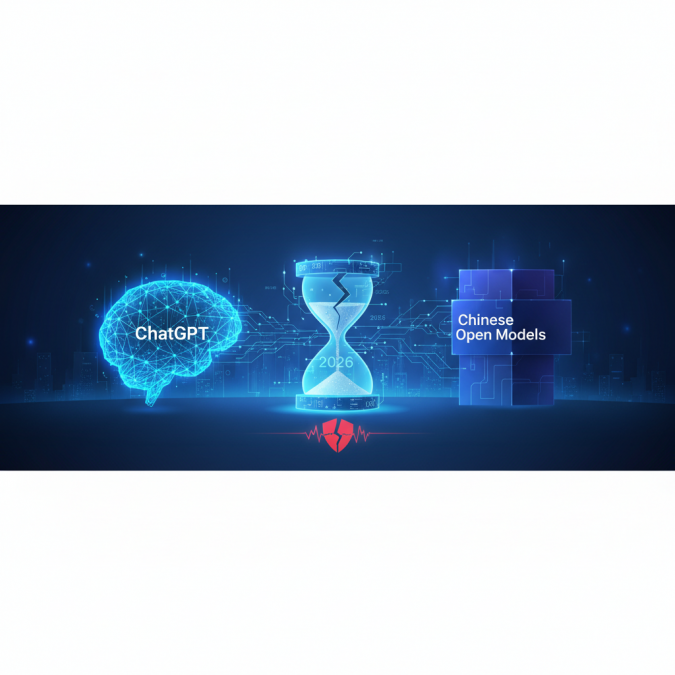
The year 2026 has cemented open-weight AI models as the engines of a new technological revolution, powering innovations from autonomous agents to real-time content creation. Unlike their closed-source counterparts, these models offer transparency, customizability, and freedom from vendor lock-in. However, this open nature has unleashed a Pandora’s box of security, ethical, and geopolitical risks that are reshaping the global AI landscape. The competition is no longer just about capability; it’s a high-stakes race between Western and Chinese AI ecosystems, each with its own philosophy on openness and control.
Defining the Open-Weight Arena in 2026
Open-weight models refer to AI systems where the model’s parameters (the “weights”) are publicly released, allowing anyone to download, run, modify, and redistribute them. This stands in stark contrast to closed models like the commercial versions of ChatGPT or Claude, where only an API is provided. In 2026, the open-weight scene is dominated by two major forces: OpenAI’s recent release of the “ChatGPT Open” model and a formidable array of Chinese models, primarily led by Alibaba’s Qwen series, particularly the powerful Qwen-3.8. The motivations differ: Western releases often aim to foster research and democratic access, while Chinese open-weight strategies are frequently seen as a tool for global influence and technological catch-up.
The Core Risks of Open-Weight Proliferation
The very features that make open-weight AI so attractive are also the source of its greatest dangers. Once a model is downloaded, it operates entirely outside the safety guardrails and content moderation systems enforced by its original creators via an API. This creates a direct pathway for malicious use.
1. Malicious Fine-Tuning and Jailbreaking
With full access to the model weights, bad actors can fine-tune them for nefarious purposes. This includes creating chatbots that disseminate disinformation, generate phishing emails at an industrial scale, or provide detailed instructions for constructing weapons or executing cyberattacks. While models like ChatGPT Open have built-in alignment techniques, they are not impervious to sophisticated jailbreaking and fine-tuning attempts that strip away these safeguards.
2. The Supply Chain Poisoning Threat
A particularly insidious risk in 2026 is the poisoning of the open-source supply chain. Platforms like Hugging Face have become essential repositories, but they are also prime targets. A malicious repository impersonating a legitimate model release can easily trick developers into integrating compromised code into their applications, leading to widespread data breaches and system vulnerabilities. Verifying the authenticity and integrity of a downloaded model has become a critical security skill.
3. Computational and Infrastructure Costs
Running these massive models isn’t free. The computational debt associated with deploying a model like Qwen-3.8 or ChatGPT Open is immense. Organizations must shoulder the cost of the hardware, electricity, and specialized expertise required for inference. For those looking to deploy efficiently, understanding techniques like quantization is essential to reduce model size and cost. Many teams turn to affordable cloud solutions, such as a powerful VPS for Python and AI projects, to manage this burden without breaking the bank.
Head-to-Head: ChatGPT Open vs. Qwen-3.8
The geopolitical dimension of AI is most visible in the comparison between the leading Western and Chinese open-weight offerings.
ChatGPT Open: The Western Standard-Bearer
OpenAI’s decision to release an open-weight version of ChatGPT was driven by pressure from the open-source community and regulators. Its strengths lie in its exceptional fluency in Western languages, strong coding capabilities—a hallmark of OpenAI’s training—and a foundational alignment that prioritizes harm reduction. However, its openness is conditional; its training data and full architectural details remain partially obscured, and its licensing includes clauses restricting certain types of commercial and military use.
Qwen-3.8: China’s Flagship Model
Alibaba’s Qwen-3.8 represents the pinnacle of China’s open-weight efforts. It is aggressively multi-modal, with native strengths in image and audio understanding that often rival or exceed its Western competitors. Crucially, it demonstrates superior performance in Asian languages and cultural contexts. The risks associated with Qwen-3.8 are heavily tied to geopolitical concerns. Analysts consistently warn that its openness could be a strategic tool, potentially embedding biases favorable to the Chinese government’s policies or creating dependencies that benefit China’s tech ecosystem. The ongoing tensions reflected in US sanctions on Chinese AI and the hardware needed to run it directly impact who can deploy models like Qwen-3.8 at scale.
Mitigating Open-Weight Risks: A Practical Guide for 2026
Adopting open-weight AI requires a proactive security posture. Organizations cannot assume these models are safe by default.
First, implement rigorous provenance checks. Always download models from official, verified sources and use cryptographic hashes to validate their integrity. Second, conduct thorough red teaming exercises on any model before deployment. Test its responses to harmful prompts and attempts to bypass its alignment. Third, consider using an intermediary API platform like OpenRouter, which provides access to a curated set of open-weight models alongside commercial ones, often with an added layer of safety filtering and without the need to manage infrastructure. For developers building complex AI workflows, tools like n8n can help orchestrate interactions between different models and APIs while maintaining security and audit trails.
The Future of Openness: A Fragmented World
The trajectory for 2027 and beyond points towards greater fragmentation. We are likely to see a “splinternet” of AI, with different open-weight models dominating different geographic and political spheres. Regulation will struggle to keep pace, leading to a patchwork of laws governing model release and use. The arms race between model capabilities and security mitigation techniques will only intensify, making vigilance the most valuable commodity for any organization working in this space.
What to Read Next
- Running a 28.9M Parameter LLM on an $8 Microcontroller: The Best Ultra-Small Model Guide for 2026
- Grok vs Perplexity vs Gemini 2026: Real-Time AI Search & Analysis Showdown
- AMD Challenges Nvidia with Helios, Anthropic Upgrades Claude Voice, BFL Launches Flux 3 Video, Nvidia Sends GPUs to Moon
- Claude Context Engineering for 2026: The New Rules for Long-Context Prompting (Updated July 2026)
- Browse all AI Stack Digest articles
Bookmark aistackdigest.com for daily AI tools, reviews, and workflow guides.
This article was produced with the assistance of AI tools and reviewed by the AIStackDigest editorial team.