
The year 2026 has become a pivotal moment for the ethical deployment of artificial intelligence, particularly within the sensitive ecosystem of education. A significant internal protest by Google employees has thrust the company’s AI initiatives for schools into the international spotlight, raising fundamental questions about data privacy, algorithmic bias, and the moral responsibilities of tech giants. This employee-led pushback is not an isolated event but a symptom of a larger, industry-wide reckoning on how AI should be developed and integrated into society’s most critical institutions.
The Spark: Understanding the Employee Concerns
At the heart of the 2026 employee dissent are concerns that have long simmered within the tech community. Reports suggest that Google workers, including engineers, ethicists, and product managers, have raised alarms regarding the company’s aggressive push to embed its AI assistants and analytics tools into K-12 and higher education platforms. Their primary objections are believed to center on three core areas.
First is the issue of student data privacy. AI systems, by their nature, require vast amounts of data to train and operate effectively. Employees have reportedly questioned the long-term implications of creating detailed, AI-generated profiles of young students, including their learning patterns, strengths, weaknesses, and even emotional states. The potential for this data to be misused, breached, or repurposed for non-educational means represents a profound ethical risk.

Image: AI-generated
Second is the fear of perpetuating and even automating inequality. AI models can inherit and amplify societal biases present in their training data. In an educational context, this could lead to systems that unfairly label students from certain backgrounds, provide them with lower-quality educational content, or steer them away from advanced opportunities based on flawed algorithmic predictions. Employees are pushing for more transparent and rigorous auditing processes to mitigate these risks before any widespread rollout.
Finally, there is a philosophical concern about the role of technology in human development. The pushback reflects a worry that replacing human-led instruction and guidance with AI-driven interfaces could fundamentally alter the teacher-student relationship and the social experience of learning, potentially to the detriment of student development.
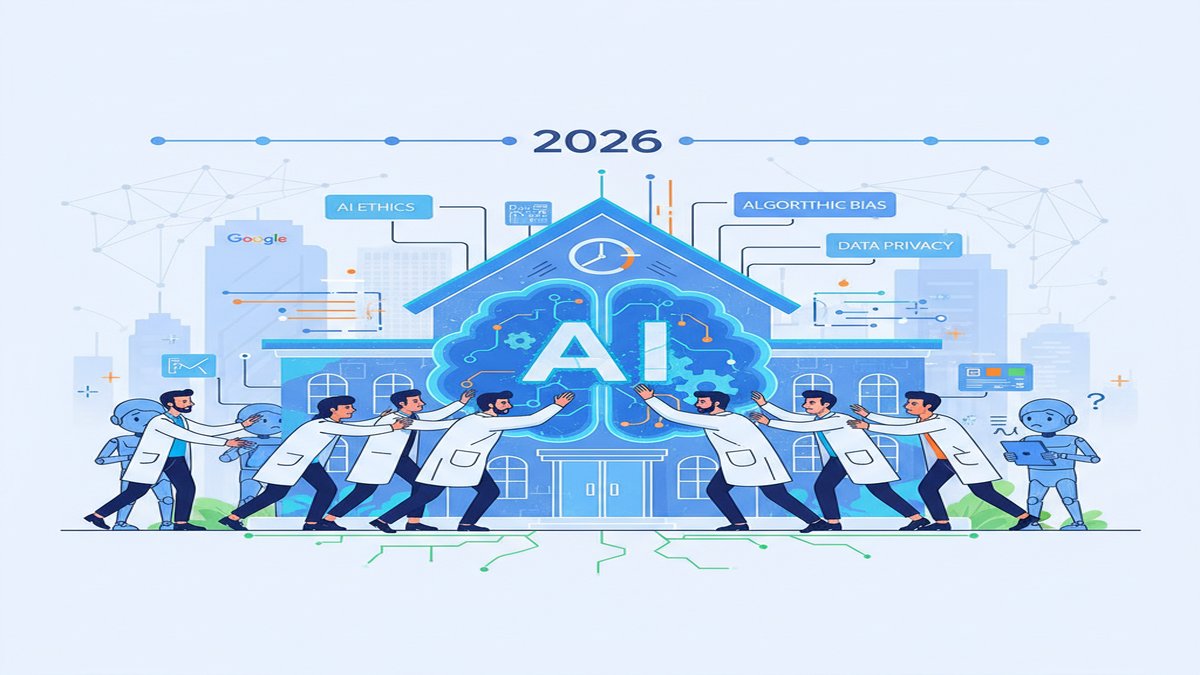
Image: AI-generated
The Bigger Picture: AI Ethics in the Corporate World
This internal conflict at Google is a powerful case study in the growing tension between corporate ambition and ethical responsibility. It highlights a critical shift: employees are no longer silent executors of corporate strategy but are becoming vocal stakeholders in the ethical outcomes of their work. This trend, often called “ethical whistleblowing” or “responsible innovation,” is forcing tech companies to establish more robust internal governance frameworks, including ethics review boards and clearer guidelines for controversial projects.
The revolt also underscores the challenges of self-regulation. When a single company possesses both the AI technology and the platform for its deployment (such as a popular suite of classroom tools), it holds immense power. Internal dissent acts as a crucial counterbalance, prompting necessary public discourse and scrutiny that might otherwise be absent. This event demonstrates that the most effective checks on corporate power may come from within, driven by individuals who understand the technology’s potential and its perils.
For developers and engineers working in this space, the message is clear: building the technology is only half the battle. Understanding its societal impact is equally important. Platforms that facilitate ethical AI development, like OpenRouter, are becoming increasingly vital for those who want to experiment with a wide range of models while considering their implications.
Potential Ramifications for the EdTech Industry in 2026
The reverberations from this internal protest are likely to be felt across the entire educational technology landscape in 2026 and beyond. School districts and governments, already cautious about data privacy, may impose stricter regulations and require more transparency from vendors before adopting AI-powered tools. This could slow down implementation but lead to more thoughtful and secure integrations.
Furthermore, the controversy may accelerate the demand for decentralized and privacy-preserving AI solutions. Technologies like federated learning, where an AI model is trained across multiple decentralized devices without exchanging raw data, could become a selling point for EdTech companies seeking to assure schools and parents that student data remains protected. For institutions looking to maintain control, exploring options for running local AI models might become an attractive alternative to cloud-based services.
The event also serves as a cautionary tale for other tech giants and startups alike. It proves that a failure to address ethical concerns proactively can lead to internal strife, public relations challenges, and a loss of trust among key customers—in this case, educators, parents, and policymakers.
Navigating the Future: A Call for Collaborative Governance
The path forward requires a move away from siloed decision-making and toward a model of collaborative governance. The ethical integration of AI into education cannot be determined by tech companies alone. It necessitates a multidisciplinary approach involving educators, parents, students, ethicists, policymakers, and yes, the employees who build the technology.
This means establishing clear ethical guidelines, audit trails, and opt-in mechanisms that give schools and families real choice and control. It means developing AI not as a replacement for teachers but as an assistive tool that augments human capability and addresses individual student needs without compromising their privacy or future opportunities. As seen in other sectors, such as with specialized enterprise AI models, purpose-built tools with clear boundaries often prove more successful and acceptable than generalized ones.
Ultimately, the 2026 employee revolt at Google is a healthy sign for the industry. It represents a growing awareness and willingness to confront the hard questions about the world we are building with AI. By listening to these internal critics, companies can not only avoid missteps but also forge a more sustainable and trustworthy path for innovation.
Ready to Build Responsibly?
Whether you’re a developer experimenting with AI APIs or an organization implementing automation, using the right tools is key. n8n offers a powerful, open-source workflow automation platform that puts you in control of your data and processes, helping you build ethical and efficient solutions.
The ongoing debate about AI implementation in educational settings continues to highlight broader ethical considerations for technology deployment. As AI systems become more integrated into learning environments, questions about appropriate use, data privacy, and the role of human oversight remain relevant for developers, educators, and policymakers. These discussions often reflect larger industry conversations about responsible AI development and deployment across various sectors.
What to Read Next
This debate is part of a larger conversation about AI’s impact on our digital lives. Explore more on AI Stack Digest, including our analysis on how Google’s AI answers are changing the web ecosystem and the latest on AI’s role in cybersecurity.
Stay informed on the future of AI. Subscribe to our newsletter and never miss an update on the technologies and debates shaping 2026 and beyond.
This article was produced with the assistance of AI tools and reviewed by the AIStackDigest editorial team.