
Senior AI Journalist
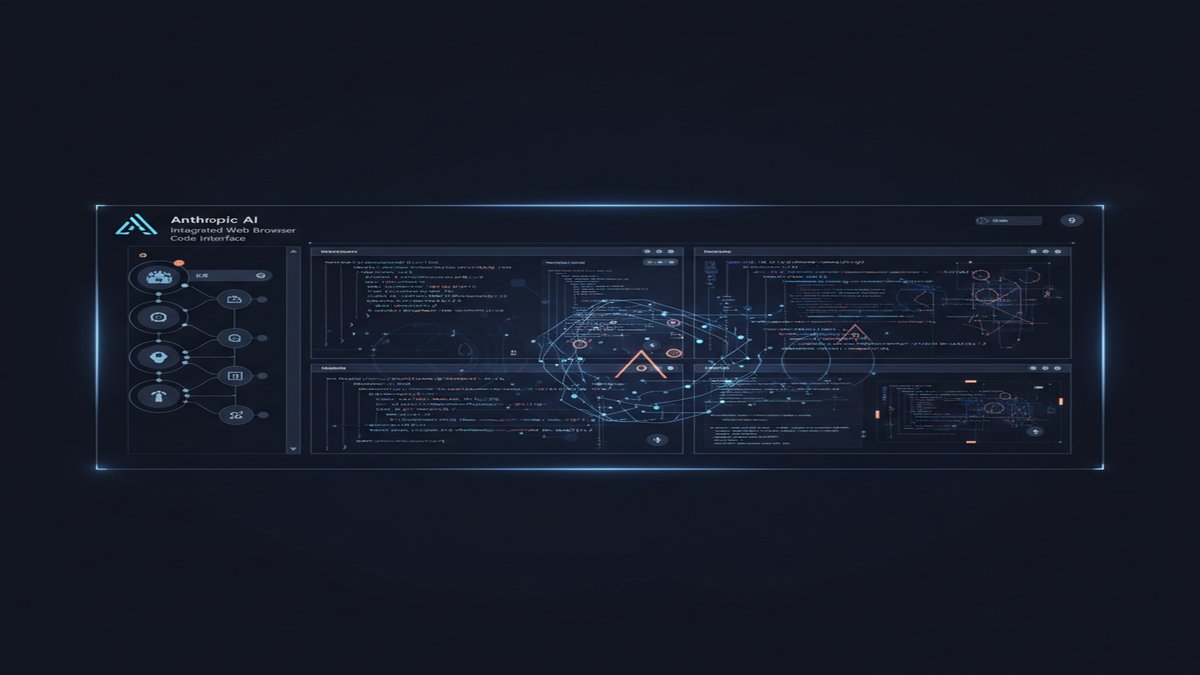
Anthropic Enhances Claude Code with Integrated Browser Functionality
Anthropic has unveiled a significant upgrade to Claude Code, introducing a fully integrated browser window that allows the AI to directly interact with web pages. This new capability enables Claude to open, read, click, and type within external web environments without leaving the application. The feature is designed to streamline development workflows by giving Claude access to documentation sites, issue trackers, and other essential online resources.
The integrated browser operates much like a tab-based web browser, accessible via a simple keyboard shortcut. Anthropic has implemented robust safety checks to ensure secure operation, particularly for write actions on external sites. Claude is prevented from making purchases, creating accounts, or bypassing CAPTCHAs without explicit user consent, mitigating potential misuse risks.
Enterprise users can further customize access by restricting external site interactions through allowlists or by disabling the browser tools entirely. For developers requiring Claude to operate within their pre-existing logged-in sessions, Anthropic recommends utilizing its dedicated Chrome extension, offering flexibility while maintaining security protocols.
Source: The Decoder
Claude Cowork: The AI Tackling Enterprise “Work Around the Work”
A recent analysis by Anthropic of 1.2 million Claude Cowork sessions has shed light on the primary applications of their business-focused AI. The findings indicate that approximately half of all usage is directed towards “work around the work” – essential but often mundane business processes and text creation tasks that are not core to specialized functions. These activities include generating status reports, compiling onboarding checklists, and drafting presentations.
The study highlights a clear division in usage between Claude Cowork and Claude Code, with software development activities predominantly handled by the latter. This distinction underscores the success of Claude Cowork in offloading administrative and organizational burdens from human employees, demonstrating its value in enhancing overall office productivity by managing tasks that traditionally consume significant time and effort.
Anthropic’s data suggests that by automating these ancillary tasks, Claude Cowork empowers organizations to reallocate human resources to more complex and creative endeavors. This strategic deployment of AI aligns with the broader trend of leveraging artificial intelligence to optimize operational efficiency and improve workplace satisfaction by minimizing repetitive, low-value work.
Source: The Decoder
AI Agents Outperform with Structured Memory in Slay the Spire 2
In a groundbreaking development for AI research, the AgenticSTS project has demonstrated significant success with AI agents mastering the card game Slay the Spire 2. Researchers achieved this breakthrough by replacing the traditional, ever-growing chat logs of AI agents with a sophisticated system of five separate memory layers. This innovative approach prevents the token count from ballooning to unmanageable levels—often exceeding 500,000 in conventional setups—and maintains it at a much more efficient 5,000 tokens.
The new structured memory system has dramatically improved the AI agent’s performance, enabling it to win 6 out of 10 games, a stark contrast to competing agents that failed to secure any victories. This research suggests a promising pathway for developing more capable and efficient AI agents by optimizing how they manage and access information, potentially applicable across a wide range of complex tasks beyond gaming environments.
The implications of this research extend beyond card games, offering valuable insights into designing AI systems that can maintain context and make informed decisions more effectively. By moving away from continuous chat log accumulation towards a layered, structured memory, AI agents can process information more strategically, leading to enhanced problem-solving capabilities and more robust autonomous operations. For developers and researchers looking for robust hosting solutions for such memory-intensive AI applications, considering Contabo VPS can provide the necessary infrastructure to scale and manage these advanced AI agents.
Source: The Decoder
What to Read Next
- How to Stop Claude from Saying ‘Load-Bearing’: A 2026 Fix Guide
- ChatGPT Work Review 2026: The Autonomous AI Agent Reshaping Knowledge Work
- Luma Ray3.14 Guide: Faster, Cheaper AI Video with Draft Mode and HDR
- Zig Creator Slams Anthropic’s AI Rust Rewrite vs Manual Reviews: Best AI Coding Agent 2026 Showdown
- Browse all AI Stack Digest articles
Bookmark aistackdigest.com for daily AI tools, reviews, and workflow guides.
This article was produced with the assistance of AI tools and reviewed by the AIStackDigest editorial team.