
Senior AI Journalist
Copilot Goes Lean: Microsoft Phases Out OpenAI and Anthropic Models for Cost-Efficiency
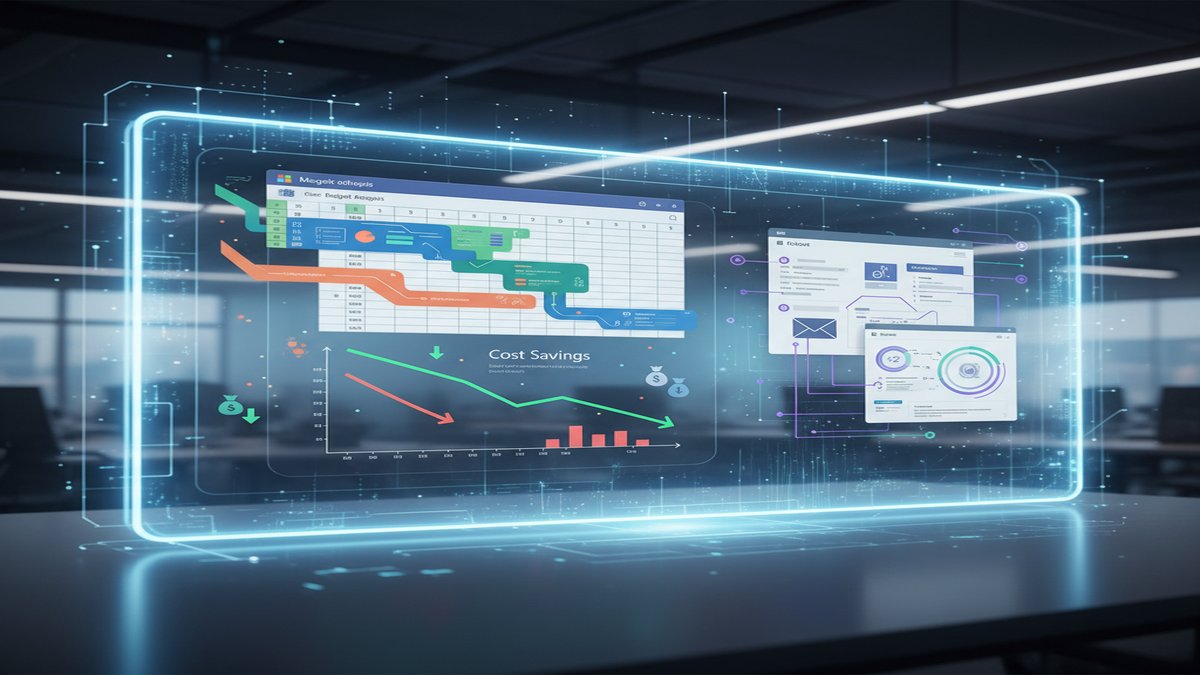
Microsoft is making a significant strategic shift by replacing OpenAI and Anthropic’s AI models with its own proprietary MAI models across key products like Excel and Outlook. This move, driven by a strong desire to reduce operational costs, is already seeing tens of thousands of queries processed through Microsoft’s internal AI infrastructure weekly. AI chief Mustafa Suleyman has explicitly stated a goal to “ultimately eliminate” the expenses associated with external models, signaling a broader trend towards AI self-sufficiency.
While this transition promises considerable cost savings for Microsoft, the implications for Copilot customers are less clear. The concern is that while costs are being cut internally, users might experience a reduction in performance for the same price point as the company moves to less mature models. This strategic pivot underscores the complex balance between cost optimization and maintaining state-of-the-art AI capabilities in a rapidly evolving market.
The decision highlights the economic pressures driving large tech companies to invest heavily in their own AI research and development. By building and deploying their own models, companies like Microsoft aim to gain greater control over their technology stack, enhance security, and reduce reliance on third-party providers. This trend could reshape partnerships within the AI ecosystem as companies vie for dominance through internal innovation.
Source: The Decoder
Deepseek Ventures into Silicon: Chinese Startup to Develop Proprietary AI Chips
Chinese AI startup Deepseek is embarking on an ambitious journey to develop its own AI chips, a move that could significantly alter its operational landscape. Sources familiar with the matter indicate that these chips are primarily designed for inference, the critical phase where trained AI models generate responses. This focus on inference chips suggests an intent to optimize the performance and cost-efficiency of deploying their AI models, rather than solely on training new, foundational models.
The development of in-house AI chips aims to reduce Deepseek’s reliance on external providers such as Nvidia and Huawei, thereby mitigating geopolitical risks and supply chain vulnerabilities. This strategy aligns with a growing global trend among leading AI companies to vertically integrate their hardware and software capabilities. Despite being in its nascent stages, Deepseek has been actively recruiting chip engineers and engaging with chip design and manufacturing firms, underscoring its serious commitment to this endeavor.
The path ahead is not without challenges, particularly given stringent US export controls that restrict access to advanced chip technology for Chinese firms. Nevertheless, Deepseek’s initiative signals a broader push for technological self-reliance within China’s booming AI sector. Concurrently, the company is also seeking its first external capital investment, reportedly aiming to raise $7 billion at a valuation ranging between $52 billion and $59 billion, which would further fuel its chip development and other strategic projects.
Source: The Decoder
Cloudflare Introduces Granular AI Bot Controls: Empowering Site Owners with Enhanced Management
Cloudflare is rolling out a significant enhancement to its AI bot management, introducing granular controls that will allow website owners to manage different types of AI bots with greater precision. This update moves beyond the previous blanket blocking approach, enabling site administrators to differentiate between search bots, training bots, and agent crawlers. This targeted control empowers businesses to optimize their site traffic, protect intellectual property, and enhance security protocols more effectively.
Scheduled to become active on September 15, 2026, the new policy will default to blocking training and agent bots on ad-supported pages. This default setting is a proactive measure designed to protect content creators and publishers from unauthorized scraping and data harvesting, particularly in environments where revenue is tied to viewership and engagement. The ability to fine-tune bot interactions means that legitimate search engine indexing can proceed unimpeded, while potentially malicious or resource-intensive AI activities can be curtailed.
The introduction of these granular controls reflects an industry-wide recognition of the diverse and evolving landscape of AI-driven web activity. As AI agents become more sophisticated, the need for intelligent and flexible moderation mechanisms becomes paramount. Cloudflare’s update provides a crucial toolset for maintaining a healthy and secure online ecosystem, balancing the benefits of AI with the imperative of site integrity and user trust.
Source: The Decoder
Perplexity Eyes Nvidia’s Vera CPU: A Strategic Move for AI Infrastructure
Perplexity, a prominent AI startup, has confirmed its intentions to acquire Nvidia’s Vera CPU, signaling a significant strategic investment in its burgeoning AI infrastructure. This move places Perplexity alongside other industry giants like OpenAI, Anthropic, and Oracle, all of whom are reportedly incorporating Nvidia’s generic-compute roadmap to achieve their ambitious AI goals. The Vera CPU is poised to become a cornerstone of Perplexity’s computing capabilities, enhancing its ability to process complex queries and deliver advanced generative AI services.
Nvidia’s Vera CPU, part of a broader strategy targeting $20 billion in sales, represents a powerful new generation of processors designed to handle the demanding workloads of modern AI. For Perplexity, integrating Vera CPUs is expected to boost the efficiency and speed of its AI models, enabling faster response times and more sophisticated analysis. This acquisition underscores the intense competition among AI companies to secure cutting-edge hardware, which is crucial for maintaining a competitive edge in product development and service delivery.
The decision to invest in Nvidia’s hardware also reflects a wider trend of AI companies opting for specialized, high-performance computing solutions to meet their unique needs. By adopting the Vera CPU, Perplexity aims to optimize its infrastructure for scalability and advanced functionality, ensuring it can continue to innovate and expand its offerings in the rapidly evolving AI landscape. This strategic alignment with Nvidia reinforces the essential role that high-performance chips play in powering the next wave of AI innovation.
Source: U.S. News & World Report
Ukraine Prioritizes Self-Hosted AI Models for National Sovereignty and AI Strategy
Ukraine’s Chief AI Officer has announced a pivotal shift in the nation’s AI strategy, emphasizing a strong preference for self-hosted AI models. This decision comes in the wake of a US directive concerning the use of Anthropic’s AI platforms, highlighting Ukraine’s imperative to maintain national sovereignty over its critical technological infrastructure. By prioritizing self-hosted solutions, Ukraine aims to ensure greater control over data security, privacy, and the strategic deployment of AI in national defense and governance.
The commitment to self-hosting means developing and operating AI models within Ukraine’s own secure environments, reducing reliance on foreign cloud services that could be subject to external influence or disruption. This approach is seen as essential for building a resilient national AI ecosystem, particularly in areas of sensitive information and strategic importance. The move also encourages domestic innovation and the growth of local AI talent, fostering a robust internal industry.
As part of this initiative, Ukraine is reportedly developing a Gemma-based national Large Language Model (LLM) in collaboration with Kyivstar, a leading Ukrainian telecommunications provider. This partnership is expected to leverage local expertise and resources to create an AI model tailored to Ukraine’s specific linguistic and cultural contexts. The emphasis on self-hosting and the development of indigenous AI capabilities also brings into focus the need for reliable and scalable computing infrastructure. Providers like Contabo VPS offer robust virtual private servers that can support national efforts in building and maintaining secure, self-hosted AI models, providing essential resources for countries committed to digital sovereignty.
Source: U.S. News & World Report
What to Read Next
- Apple vs OpenAI Trade Secret Lawsuit 2026: What It Means for AI Hardware & Siri
- Best Free AI Tools for Solopreneurs in 2026: Beat LinkedIn AI Saturation with These Privacy-First Alternatives
- How to Supercharge Your Brainstorming with AI in 2026: A Step-by-Step Guide
- AI News Digest: AI Agents Master Fundraising, Google Mandates AI Ad Disclosure, Meta Debuts Muse Spark 1.1
- Browse all AI Stack Digest articles
Bookmark aistackdigest.com for daily AI tools, reviews, and workflow guides.
This article was produced with the assistance of AI tools and reviewed by the AIStackDigest editorial team.