

AI Productivity & Workflow Expert
In today's fast-paced digital landscape, content is king. But consistently producing high-quality, engaging content can be a monumental task for individuals and businesses alike. The good news? Artificial Intelligence (AI) has revolutionized the way we create, distribute, and optimize content. By strategically integrating AI tools into a streamlined workflow, you can build a powerful AI content pipeline that not only boosts your productivity but also enhances the quality and reach of your output. This guide will walk you through the essential steps and tools to construct such a pipeline, transforming your content creation process from a chore into a seamless, automated engine.
The traditional content creation process often involves extensive research, drafting, editing, and publishing—each step consuming valuable time and resources. Even with a dedicated team, bottlenecks can emerge, slowing down publication schedules and limiting the volume of content produced. AI offers a compelling solution, capable of assisting with everything from generating ideas and outlines to drafting compelling copy, optimizing for SEO, and even scheduling distribution. The key isn't to replace human creativity, but to augment it, allowing creators to focus on strategic thinking, narrative development, and adding that unique human touch that resonates with audiences. A well-designed AI content pipeline allows you to scale your efforts, maintain consistency, and free up creative energy for higher-level tasks.
Whether you're a solo entrepreneur, a marketing team, or a digital agency, understanding how to leverage AI for content is no longer optional—it's a necessity. This article will break down the process into actionable steps, focusing on popular and effective AI tools that can be integrated into a cohesive workflow. We'll cover everything from ideation and drafting to automation, ensuring you have a comprehensive understanding of how to build and manage your own efficient AI content factory. Get ready to transform your content strategy and unlock unprecedented levels of efficiency and impact.
Step 1: Ideation and Outline Generation with AI

Every great piece of content begins with a compelling idea and a clear structure. This is where AI truly shines, accelerating the initial stages of content creation. Instead of staring at a blank page, grappling with topics, or manually brainstorming keywords, AI tools can quickly generate a wealth of ideas, research relevant subtopics, and even construct a detailed outline for your article, blog post, or social media campaign. This dramatically reduces the time spent on preliminary work, allowing you to move to drafting much faster.
To kickstart your ideation process, think about your target audience, your content goals, and the keywords you want to target. For instance, if you're writing about "AI content pipeline," you might feed this core topic into an AI assistant. The AI can then suggest related topics like "AI tools for blog writing," "automating SEO with AI," or "scaling content creation with generative AI." Furthermore, these tools can delve deeper, suggesting common questions users ask around these topics, which can form the basis of your article's subheadings and discussion points. This ensures your content is not only comprehensive but also directly addresses audience needs and search intent.
Tools like ChatGPT are invaluable for this initial phase. You can prompt it with your main topic and ask for: "5 unique angles for an article on 'AI content pipeline,'" or "a detailed outline for a 1200-word article about 'automating content creation with AI', including an introduction, 4-6 main sections, and a conclusion." The AI can then provide a structured response, often including bullet points and brief descriptions for each section, giving you a solid framework to build upon. This level of detail and speed is difficult to achieve manually, especially when dealing with multiple content pieces simultaneously.
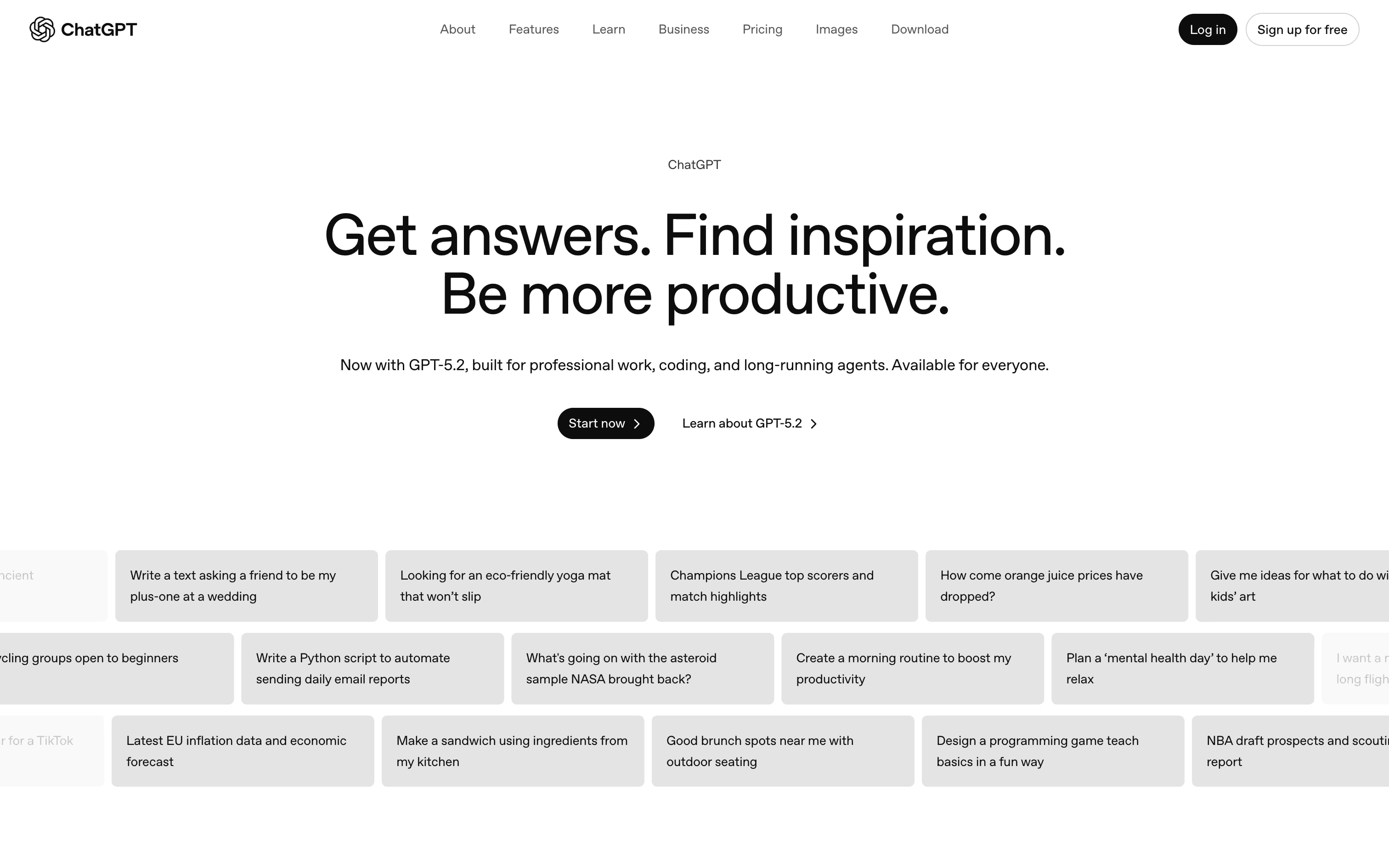
Image: ChatGPT via Gummble.com
Beyond simple outlines, advanced AI prompts can help you refine your angle, identify potential gaps in existing content, and even suggest a unique narrative or tone for your piece. By iterating with the AI, you can quickly move from a broad topic to a highly specific and engaging content plan. This strategic use of AI ensures that your content pipeline starts with a strong foundation, leading to more focused and impactful output downstream. The time saved in this initial stage can be reallocated to deeper research, refining the narrative, or optimizing the content for specific platforms, ultimately enhancing the overall quality and effectiveness of your content strategy.
Step 2: Rapid Drafting and Content Generation

Once you have a solid outline, the next step is to generate the actual content. This is where AI tools truly accelerate the content pipeline. While it's crucial to review and edit AI-generated drafts, these tools can produce substantial blocks of text in a fraction of the time it would take a human writer. This allows you to scale your content production significantly, especially for evergreen topics, informational articles, or routine updates. The goal here is speed and volume, with human oversight ensuring quality and brand voice.
Leveraging your AI-generated outline, you can prompt tools to write sections or even entire articles. For example, feeding each heading and subheading from your outline into an AI writing assistant can yield a complete first draft. The AI can elaborate on points, provide examples, and maintain a coherent flow throughout the text. This is particularly effective for content types that rely on factual information or clear explanations. For marketing copy, product descriptions, or social media posts, AI can generate multiple variations, allowing you to choose the most effective option or blend elements from several suggestions.
Notion AI, integrated directly into your workspace, exemplifies this efficiency. Within a Notion page, you can type a command like "/AI write a paragraph about the benefits of AI in content ideation" under a specific heading. Notion AI will then generate text directly within your document, maintaining context and flow. This seamless integration means less switching between applications, fewer copy-pasting errors, and a more fluid writing experience. For teams, this means everyone can contribute to content generation and refinement in a centralized, collaborative environment, drastically speeding up the drafting process and ensuring consistency across all content pieces.

Image: Notion AI via SaaSUI.design
Remember, AI-generated content should always be seen as a starting point. Human editors play a critical role in fact-checking, refining the language to match your brand's voice, adding nuanced insights, and ensuring the content is engaging and free of AI artifacts. The true power of this step lies in combining the speed of AI generation with the precision and creativity of human editing, creating a synergy that produces high-quality content at an accelerated pace. This allows you to produce a higher volume of content without sacrificing quality, which is essential for maintaining a strong online presence and driving audience engagement.
Step 3: Optimization and Refinement with AI

After generating a draft, the content needs to be optimized for search engines (SEO), readability, and overall impact. AI tools can significantly aid in this refinement stage, ensuring your content performs well across various platforms and resonates with your target audience. From keyword integration to grammar checks and tone adjustments, AI can provide intelligent suggestions and automated improvements that elevate the quality of your content.
SEO optimization is a critical component of any content pipeline. AI-powered SEO tools can analyze your draft against target keywords, suggest natural language integrations, identify long-tail keywords, and even evaluate the competition. This ensures that your content is not only informative but also discoverable by your audience through search engines. Beyond keywords, AI can assess the overall structure of your content, recommending improvements to headings, paragraph length, and internal linking strategies to enhance both user experience and search engine ranking. The iterative process of content generation and AI-powered SEO optimization means your content is always working towards maximum visibility.
Readability and engagement are equally important. AI grammar and style checkers go beyond basic spelling corrections, offering suggestions for sentence structure, conciseness, and tone. Some tools can even analyze your content for emotional resonance and suggest adjustments to better connect with your readers. This is particularly useful for ensuring consistency in brand voice across multiple content pieces and authors. By automating these checks, you can maintain a high standard of quality without manually scrutinizing every sentence, freeing up editors to focus on the more creative and strategic aspects of content review.
Furthermore, AI can assist in repurposing content for different platforms. A long-form blog post can be condensed into social media captions, email snippets, or even video scripts, all with AI's help. This maximizes the return on your content investment, ensuring that a single piece of core content can be distributed widely and effectively across your entire digital ecosystem. This multi-channel approach is crucial for reaching diverse audiences and maintaining a consistent brand message, and AI makes it significantly easier to manage the variations required for each platform.
Step 4: Automation and Distribution with AI Workflow Tools
The true power of an AI content pipeline lies in its ability to automate the repetitive tasks involved in content distribution and management. Once content is drafted and optimized, AI workflow tools can seamlessly move it through the publishing process, schedule social media posts, update databases, and trigger other actions without manual intervention. This dramatically reduces administrative overhead, allowing content teams to focus on strategy and creation rather than manual data entry and scheduling.
Make.com (formerly Integromat) is an excellent example of an AI workflow automation tool that can orchestrate complex content pipelines. With its visual builder, you can connect various applications and services to create intricate scenarios. Imagine a scenario where a newly published article on your website automatically triggers a series of actions: extracting key points, drafting social media posts for Twitter, LinkedIn, and Facebook, scheduling these posts for optimal times, and even updating a content calendar in Notion or Google Sheets. Make.com allows you to design these multi-step workflows with ease, ensuring that your content reaches its audience efficiently and consistently.

Image: Make.com via Allscreenshots.com
The visual nature of Make.com's interface makes it easy to understand and manage even complex automation flows. Each "module" represents an application or an action, and you simply connect them with "wires" to define the data flow. This allows for conditional logic, data transformation, and error handling, ensuring that your content pipeline is robust and adaptable. For example, if a social media post fails to publish, Make.com can be configured to send an alert to your team, or even retry the action automatically. This level of control and automation ensures that your content efforts are always working optimally, without constant manual oversight.
Another powerful use case for Make.com in a content pipeline is integrating with AI video creation platforms. If your workflow involves video creation or animation, you can naturally include DomoAI. DomoAI is an AI video/animation platform that allows text-to-video and image-to-video generation with over 30 styles and boasts over 4 million users. You could set up a Make.com scenario where an optimized article, after publishing, automatically extracts key sentences, feeds them into DomoAI to generate short video snippets, and then publishes these snippets to platforms like TikTok or YouTube Shorts. This kind of integration transforms your content strategy into a dynamic, multi-format powerhouse, reaching audiences across various mediums with minimal additional effort.
For content that requires hosting or robust infrastructure, consider solutions like Contabo VPS. If your AI content pipeline involves heavy data processing, hosting AI models, or managing a large volume of content assets, a reliable and scalable hosting solution is essential. Contabo VPS offers virtual private servers that can provide the necessary computational power and storage for demanding AI workloads, ensuring that your pipeline runs smoothly without performance bottlenecks. Integrating such infrastructure considerations into your overall strategy ensures your content engine is not only automated but also resilient and capable of handling future growth.
The ability to automate these complex tasks is what truly unlocks the scalability of an AI content pipeline. By leveraging tools like Make.com, content creators can move away from manual, time-consuming processes and towards a more strategic, efficient, and impactful approach to content marketing. This ensures that your content is not only generated quickly but also delivered to the right audience, at the right time, and on the right platform, maximizing its potential impact.
Conclusion: The Future is Automated Content
Building an AI content pipeline is no longer a futuristic concept; it's a present-day imperative for anyone serious about content creation. By integrating AI tools at every stage—from ideation and drafting to optimization and distribution—you can dramatically enhance your productivity, scale your output, and maintain a consistent level of quality that sets you apart. The synergy between human creativity and AI efficiency allows you to focus on strategic thinking and unique narrative development, while delegating repetitive tasks to intelligent automation.
The journey to an automated content workflow might seem daunting at first, but with the right tools and a structured approach, it's an achievable goal. Start small, experiment with different AI assistants and automation platforms, and gradually build out your pipeline. The benefits—increased output, improved quality, and more time for creative pursuits—will quickly become evident. Embrace the power of AI to transform your content strategy and stay ahead in the ever-evolving digital landscape.
Ready to supercharge your content efforts? Explore more guides and insights on AI productivity and workflow at aistackdigest.com.
This article was produced with the assistance of AI tools and reviewed by the AIStackDigest editorial team.