
💡 Hosting tip: For self-hosted setups, Contabo VPS for self-hosted n8n offers high-performance VPS at excellent value.
Week of March 23–29, 2026 · ⏱ 8 min read
Some weeks in AI are defined by a single headline. This wasn’t one of them. The seven days from March 23 to 29 were defined by everything happening at once — courtroom battles, policy blueprints, model showdowns, monetization experiments, a documentary in theaters, and a geopolitical fracture in the global research community. If you read our daily digests this week, you already caught the individual stories as they landed. This is where they come together — and where the pattern underneath them becomes visible.
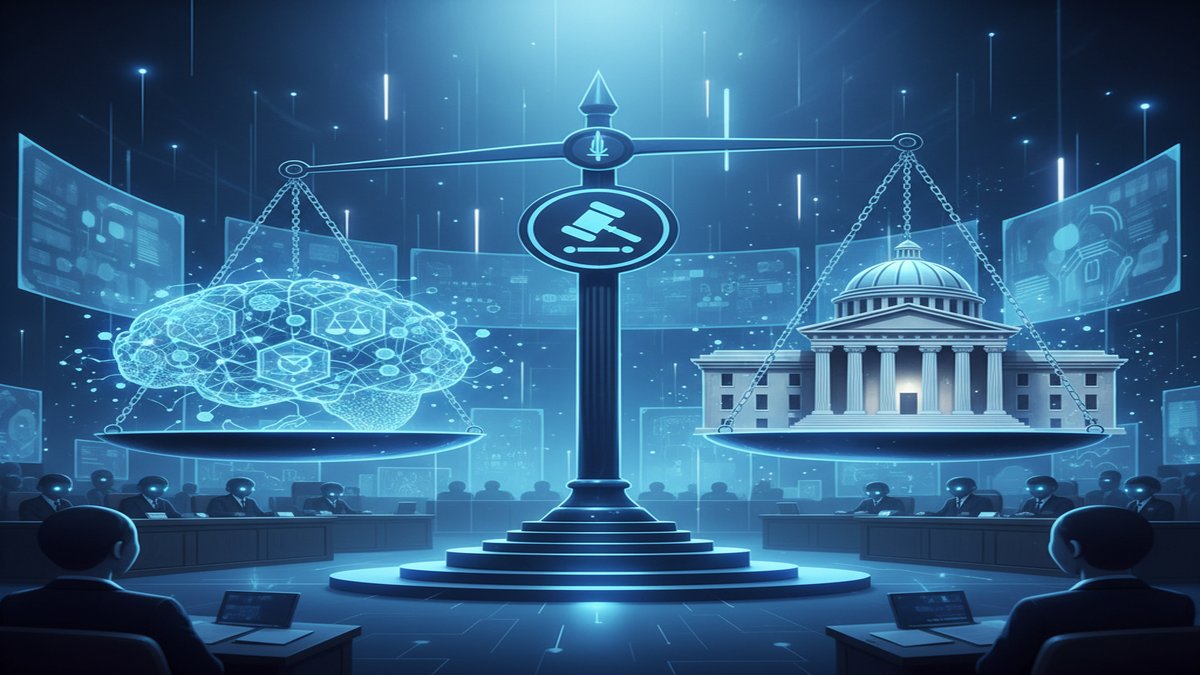
Image: AI-generated
The throughline this week wasn’t any single company or product. It was the collision of AI’s adolescence with the real world — courts, capitals, power grids, and cinemas all registering the technology’s weight for the first time in concrete, consequential ways. Here’s what mattered and why.
1. The Anthropic–Pentagon Standoff Finally Got a Verdict
The biggest legal drama of the week reached a resolution that surprised almost no one who had been following it closely, but still carried real weight. A federal judge issued a preliminary injunction blocking the Pentagon’s “supply-chain risk” designation against Anthropic — the label that, had it gone into effect on March 31, would have effectively frozen the company out of significant government contracts pending a security review.
The backstory, which we covered in depth in our Monday morning digest and Monday afternoon digest, is extraordinary: Pentagon officials alleged that Anthropic could theoretically manipulate its models mid-deployment in a wartime scenario — essentially turning Claude into an instrument of sabotage. Anthropic executives responded with rare bluntness, calling the allegation technically impossible and a fundamental misunderstanding of how large language models work.
The injunction buys Anthropic time. But the deeper issue — how much the U.S. military actually trusts its AI vendors when the stakes are highest — isn’t going away. The DoD putting these concerns in writing signals that government clients are now actively stress-testing AI vendors for adversarial scenarios. That’s a new phase of scrutiny, and every major AI company doing government work should be paying attention. Our Saturday afternoon digest captured the aftermath as the injunction was formally confirmed.
2. Washington Rewrites the AI Rulebook — and Blocks the States
The Trump administration’s AI policy blueprint, released mid-week, is the most significant U.S. governance document since the Biden executive orders were rescinded. The framework calls for a “light-touch” federal approach — but the real story is what it does to state authority. If enacted, individual states would be explicitly blocked from enforcing their own AI regulations, preempting the growing patchwork of laws advancing in California, Colorado, Texas, and elsewhere.
As our Tuesday afternoon digest laid out, the blueprint has drawn fire from a remarkably diverse coalition: AI safety researchers, civil liberties groups, and — in a detail that deserves more attention — a populist wing of the MAGA coalition itself, which has begun arguing that unchecked AI threatens American workers. The framework contains no mention of mandatory safety evaluations, watermarking requirements, or liability standards. Critics call it a blank check to the industry. Supporters say it’s the only way to stay competitive with China.
What’s missing from most coverage: this isn’t just a U.S. story. If federal law preempts state AI rules, it also creates a single negotiating surface for international AI agreements — which matters enormously given the geopolitical fragmentation happening in parallel (more on that below).
3. The Model Landscape Gets More Interesting — and More Crowded
Two deep-dive comparisons this week put the current state of AI model competition in sharp relief. Our Saturday feature on Grok-4.20 vs. Nemotron-3 Super found two fundamentally different design philosophies colliding at the top of the capability ladder: xAI’s Grok betting on speed and personality, NVIDIA’s Nemotron betting on raw reasoning depth for multi-agent systems. Neither dominates cleanly across every use case — which is itself the story. The era of a single obviously-best model is over.

Image: AI-generated
Earlier in the week, our Monday model roundup added Reka Edge and Xiaomi’s Mimo to the mix — models that don’t top any single benchmark but offer cost-efficiency profiles that make them genuinely compelling for high-volume applications. For developers routing requests through platforms like OpenRouter, the practical question isn’t “which model is best” but “which model is best for this task at this price point” — and the answer is increasingly fragmented by workload type.
Meanwhile, Google’s TurboQuant compression breakthrough, covered Thursday, adds another dimension: it’s not just about which model is most capable, but which models can be deployed most efficiently at scale. TurboQuant’s KV-cache compression approach could meaningfully shift the economics of running frontier models — an underreported story with large downstream implications for enterprise deployment.
4. OpenAI Codex Goes Marketplace — and Eyes Knowledge Work
The week’s most product-focused story came Sunday morning: OpenAI officially added plugin support to Codex, its agentic coding assistant, creating a searchable marketplace of integrations — GitHub, Gmail, Box, Cloudflare, and Vercel among the launch partners. As our Sunday digest noted, this is partly a catch-up to Claude Code’s plugin ecosystem, which set the standard earlier this year.
But the more interesting angle is directional. Several of the new Codex plugins are only tangentially related to coding. OpenAI appears to be testing whether Codex can expand from a developer tool into a broader knowledge-work platform — something Anthropic and Perplexity have been building toward for months. The boundary between “coding assistant” and “general AI agent” is dissolving. Workflow automation tools like n8n and what coding assistants are becoming are converging. The practical distinction between “AI that writes code” and “AI that does things” is narrowing fast.
5. Monetization Gets Real — and Users Are Noticing
Two data points from this week put AI’s monetization moment in uncomfortable focus. Our Friday evening digest flagged fresh data showing that 1 in 5 ChatGPT prompts on the free tier now triggers an ad — the result of a rollout that OpenAI has been quiet about even as the numbers have become significant. A parallel study tested 500+ ChatGPT questions for patterns in how ads are surfaced; the results suggested the system optimizes for commercial intent in ways that aren’t always transparent to users.
Sunday’s morning digest added more context: OpenAI’s ad strategy appears designed to avoid the blunt interruptive model of social media, instead embedding commercial suggestions into the fabric of responses. What’s clear is that the “free AI” era is ending, and the terms of the tradeoff — your attention, your data, your queries as training signals — are still being negotiated without users having much say.
6. The Global Research Community Fractures
The NeurIPS reversal story, which our Saturday morning digest covered, may have seemed like a procedural footnote — but it’s actually a significant signal. The conference reversed a controversial policy on international participation restrictions within days of Chinese researchers threatening a mass boycott. The speed of the reversal underscores how dependent the global AI research community remains on Chinese researchers, even as governments on both sides push for decoupling.
This tension played out across multiple stories this week: the White House AI blueprint’s explicit China-framing, the Pentagon’s vendor-trust scrutiny, and data center energy constraints in Europe partly driven by AI companies navigating a more fragmented supply chain. The AI world increasingly looks like two parallel ecosystems trying to maintain the appearance of one — and the cracks are widening.
7. Culture Catches Up — AI Goes to the Cinema
Perhaps the most culturally significant development of the week had nothing to do with benchmarks or product launches. The AI Doc: Or How I Became an Apocaloptimist hit theaters Friday — and as our Friday evening recap noted, it’s the first major documentary to land genuine sit-down interviews with Sam Altman, Dario Amodei, and Demis Hassabis. The title’s neologism — “apocaloptimist” — captures the mainstream cultural mood: convinced the stakes are existential, but betting on the optimists anyway.
When AI lab CEOs start appearing in documentary cinema, the technology has crossed a cultural threshold. The stories we cover every day are becoming the stories that shape how a broader public understands and responds to AI. That matters for policy, for regulation, and for the social license that will ultimately determine how much runway the industry actually has.
What to Watch Next Week
The Anthropic injunction is temporary — the underlying hearing is scheduled, and the Pentagon’s position hasn’t changed, only been paused. Watch for more detail on what DoD’s “supply chain risk” framework actually means in practice, and whether other AI vendors start receiving similar scrutiny.
On the policy front, the White House AI blueprint moves to Congress. Initial committee hearings are expected within weeks, and the state preemption clause is likely to be the most contested element. Track California’s response — the state has been the most aggressive in pursuing its own AI rules, and Sacramento will not go quietly.
The NeurIPS situation also bears watching. The reversal was fast, but the underlying question — how international AI research collaboration survives a geopolitical decoupling — hasn’t been answered. Expect more friction ahead of the conference season.
And keep an eye on the ChatGPT ad rollout. If 1 in 5 free-tier prompts already triggers a commercial signal, the question of what “free AI” actually means — and whether users have meaningful alternatives — is going to get louder. The monetization moment is here. How it plays out will shape AI’s relationship with the public for years.
This weekly digest synthesizes the top stories from our daily AI news digests published March 23–29, 2026. Follow AIStackDigest.com for morning, afternoon, and evening coverage every day.
Image: AI-generated
The rising focus on AI geopolitics in 2026 reflects how artificial intelligence has become a central battleground for global influence. As nations compete for technological supremacy, strategic investments in AI infrastructure and regulatory frameworks are creating new fault lines in international relations. This week’s developments highlight the ongoing tension between innovation collaboration and national security concerns that define the current AI landscape.
Policy makers worldwide are grappling with balancing AI advancement against ethical considerations and economic competitiveness. The fragmentation of AI research along geopolitical boundaries, as seen in the NeurIPS controversy, demonstrates how technology is increasingly becoming weaponized in broader geopolitical conflicts. Understanding these dynamics is essential for anyone tracking the long-term trajectory of AI development and its impact on global power structures.
What to Read Next
- Police AI Facial Recognition Wrongful Arrests 2026: A Crisis of Justice
- Morning AI News Digest — Tuesday, March 31, 2026
- Evening AI News Recap — Monday, March 30, 2026
- Afternoon AI News Digest — Monday, March 30, 2026
- Browse all AI Stack Digest articles
Bookmark aistackdigest.com for daily AI tools, reviews, and workflow guides.
This article was produced with the assistance of AI tools and reviewed by the AIStackDigest editorial team.