
Senior AI Journalist
Half of Claude users say AI can already handle half their work according to Anthropic survey
Anthropic’s recent survey of approximately 9,700 Claude users indicates a significant portion believe AI can already manage a substantial part of their professional duties. Thirty-three percent of respondents reported that AI could handle 30% to 60% of their tasks, while another 14% estimated AI’s capacity at 60% to 90%. A small but notable 4% felt Claude could perform their entire job.
The survey data highlights key work-related applications, with Claude’s Artifacts feature being heavily utilized for marketing content creation (80%), writing blog posts and articles (81%), and performing database queries (82%). Interestingly, expectations regarding the rapid advancement of AI capabilities were remarkably consistent across diverse demographics, including user experience levels, geographic locations, and professional fields.
Despite these findings, there’s a nuanced perspective among users. While early-career professionals expressed higher concerns about potential job displacement, the most active Claude users were paradoxically more optimistic, believing their skills are becoming increasingly valuable through AI collaboration. The overarching sentiment was a desire to work alongside AI, leveraging it to automate mundane tasks rather than being completely replaced.
Source: The Decoder
Major Tech Companies Fund $1 Billion Program to Retrain Workers for AI Era
Former US Commerce Secretary Gina Raimondo and former Indiana Governor Eric Holcomb have co-launched “Raise Us,” a new bipartisan nonprofit. This initiative aims to raise $1 billion to equip American workers for the evolving AI-driven economy. It boasts significant backing from tech giants such as Amazon, Anthropic, Microsoft, and the OpenAI Foundation, marking an unprecedented joint effort by leading AI developers to support workforce transitions.
“Raise Us” plans to implement various strategies, including establishing new corporate incentives for retraining and talent retention, initiating pilot programs in collaboration with state governors, and adapting training models to align with changing employer demands. Initial pilot projects are set to roll out in Arkansas, Connecticut, Maryland, and Utah, focusing on career navigation platforms and innovative career transition models.
However, the program faces scrutiny regarding its independence, given that its primary funders are the very companies driving the AI disruption it seeks to mitigate. Despite its noble objectives, the long-term effectiveness of such large-scale retraining initiatives in the US remains a subject of debate, particularly considering the mixed track record of similar past programs. Organizations providing the infrastructure for AI to run, like those offering Contabo VPS, are crucial to this technological advancement but are not involved in such retraining initiatives at this scale.
Source: The Decoder
From OpenAI to SpaceX: The Race to Build Custom AI Chips Intensifies, Challenging Nvidia’s Reign
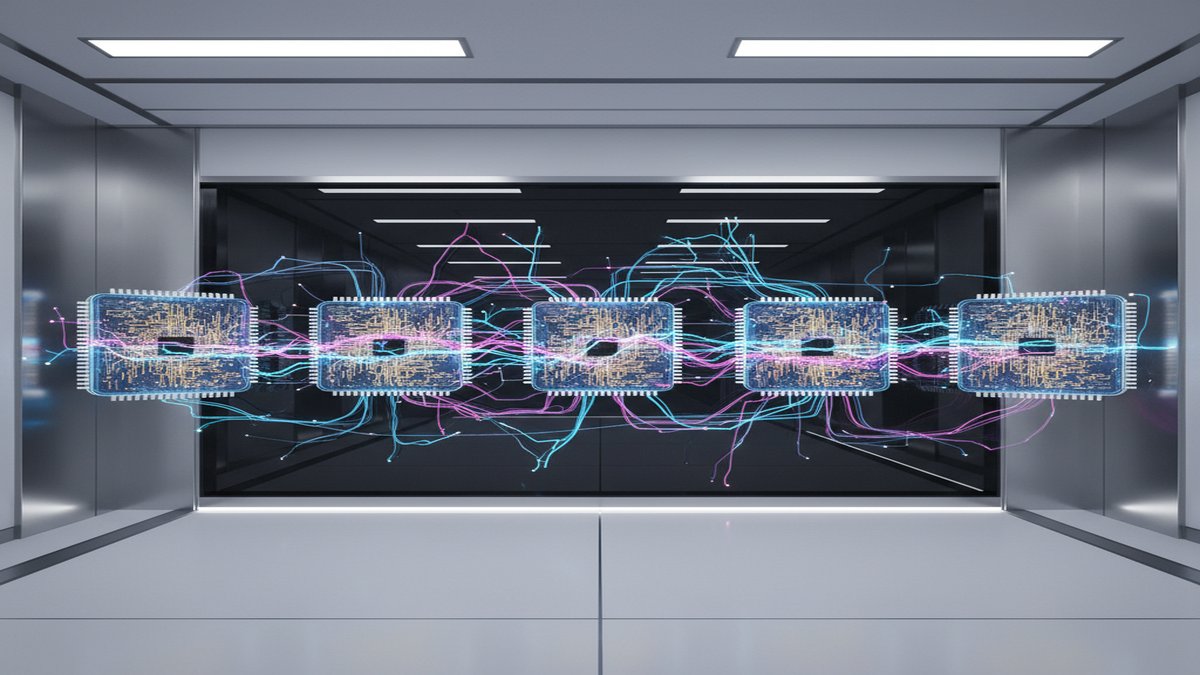
Nvidia’s long-standing dominance in the artificial intelligence chip market is now under significant pressure as a growing number of industry titans, including OpenAI, Google, Apple, and SpaceX, accelerate their efforts to develop proprietary custom inference chips. This strategic shift is epitomized by OpenAI’s “Jalapeño” chip, a collaboration with Broadcom, designed to provide enhanced control, bespoke hardware optimization, and ultimately, superior performance crucial for advanced AI workloads.
This burgeoning trend is driven by a desire to mitigate dependence on a single external supplier and to fine-tune hardware precisely for unique AI operational demands. By investing in custom silicon, these technology leaders aim to achieve new levels of efficiency and computational power that off-the-shelf solutions may not offer, echoing Apple’s successful transition away from Intel for its Mac lineup. This move marks a critical evolution in how AI infrastructure is being conceived and implemented.
The movement toward in-house AI chip development signifies a broader vertical integration strategy within the tech industry, where companies are increasingly seeking to control every layer of their AI infrastructure, from foundational models to the underlying silicon. This internal innovation not only fuels fierce competition but also compels established chipmakers like Nvidia to continuously innovate and adapt to a landscape where specialized, tailored hardware solutions are becoming paramount.
Source: TechCrunch
What to Read Next
- Claude Code Steganographic Request Marking: How It Works and Why It Matters in 2026
- Best AI Automation Platforms: Streamline Your Workflows in 2026
- Anthropic Launches Claude Sonnet 5: The Most Agentic Sonnet Yet, at a Lower Price
- AI Coding Tool Guide: Supercharge Your Development Workflow
- Browse all AI Stack Digest articles
Bookmark aistackdigest.com for daily AI tools, reviews, and workflow guides.
This article was produced with the assistance of AI tools and reviewed by the AIStackDigest editorial team.