The classroom of 2026 looks nothing like its predecessor from just a few years ago. Artificial intelligence, once a futuristic concept, is now the cornerstone of modern pedagogy, deeply integrated into curriculum delivery, student support, and administrative function. Its impact is profound and multifaceted, creating a new educational paradigm defined by hyper-personalized learning, unprecedented data-driven insights, and a complex set of ethical challenges. This deep dive explores how AI is reshaping student outcomes in grades and math skills, while simultaneously forcing a long-overdue revolution in how we define and prevent academic dishonesty.
The Rise of the AI Tutor: Personalized Learning and Skyrocketing Proficiency
Perhaps the most significant positive impact of AI in 2026 is the democratization of high-quality, one-on-one tutoring. Adaptive learning platforms powered by sophisticated large language models (LLMs) can now diagnose a student’s exact knowledge gaps in real-time. Unlike a human teacher managing a classroom of thirty, an AI tutor provides infinite patience and tailors its explanations to the individual’s learning style. The results, particularly in structured subjects like mathematics, have been staggering.
Schools that have integrated these AI productivity powerhouses report marked improvements in standardized test scores and overall subject comprehension. Students are no longer left behind because a class moved too quickly; their AI assistant works with them until the concept is mastered. This shift from a one-pace-fits-all model to a competency-based progression is arguably the most important educational advancement of the decade.
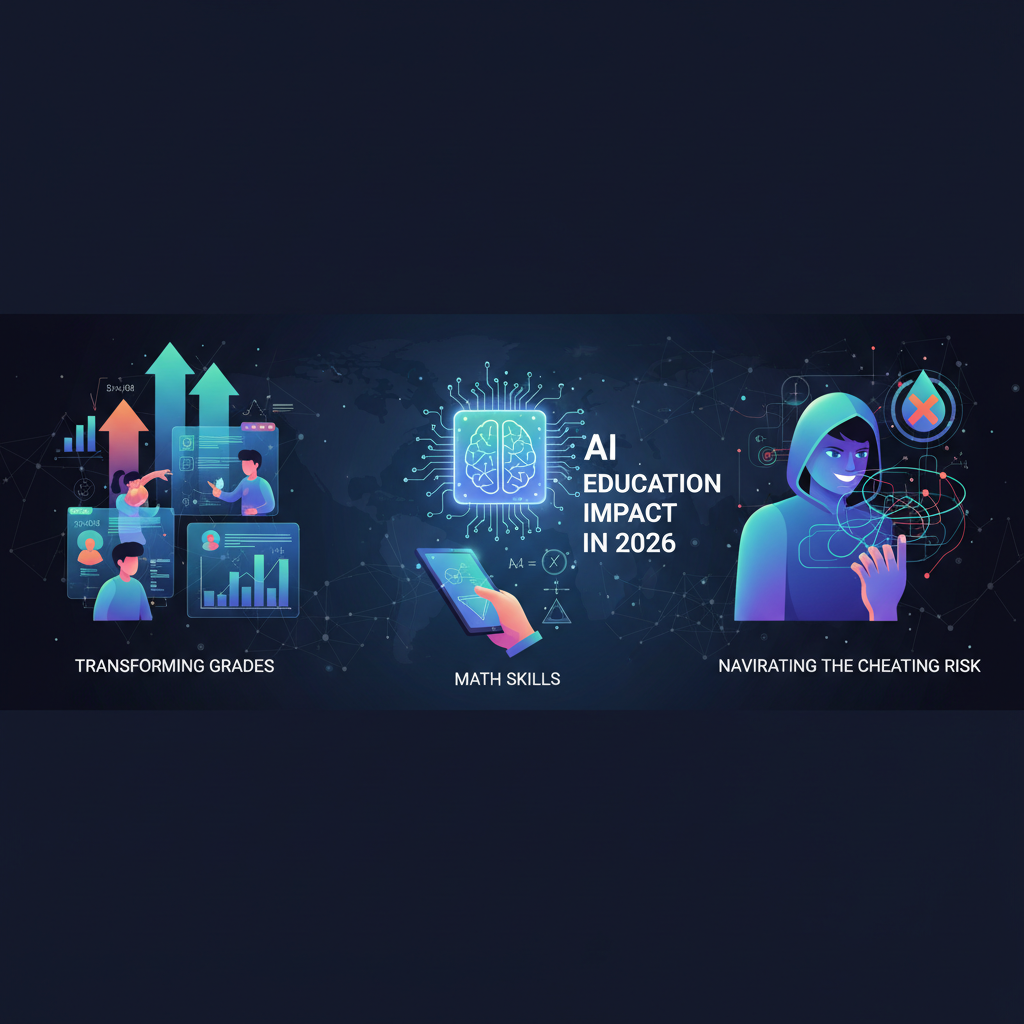
Image: AI-generated
Beyond the Answer: AI’s Role in Developing Critical Thinking in Math
The initial fear that AI would make students lazy—simply handing them answers—has given way to a more nuanced reality. By 2026, the best educational tools are not answer engines but thinking partners. Instead of just solving a problem, an AI math tutor might ask a student: “What is your first step?” or “Why did you choose that formula?” It focuses on the process, guiding the learner through the problem-solving journey.
This aligns with a broader shift in educational philosophy, moving away from rote memorization and toward the development of critical reasoning and analytical skills. The goal is no longer to produce students who can compute quickly (a task machines excel at) but to nurture students who can frame problems, identify which computational tools to use, and interpret the results. This is the true future of math education, and AI is its indispensable facilitator. For those interested in the underlying technology powering these advances, the rise of powerful open-weight models like the one discussed in our MiniMax M3 review has been crucial in making these tools more accessible.
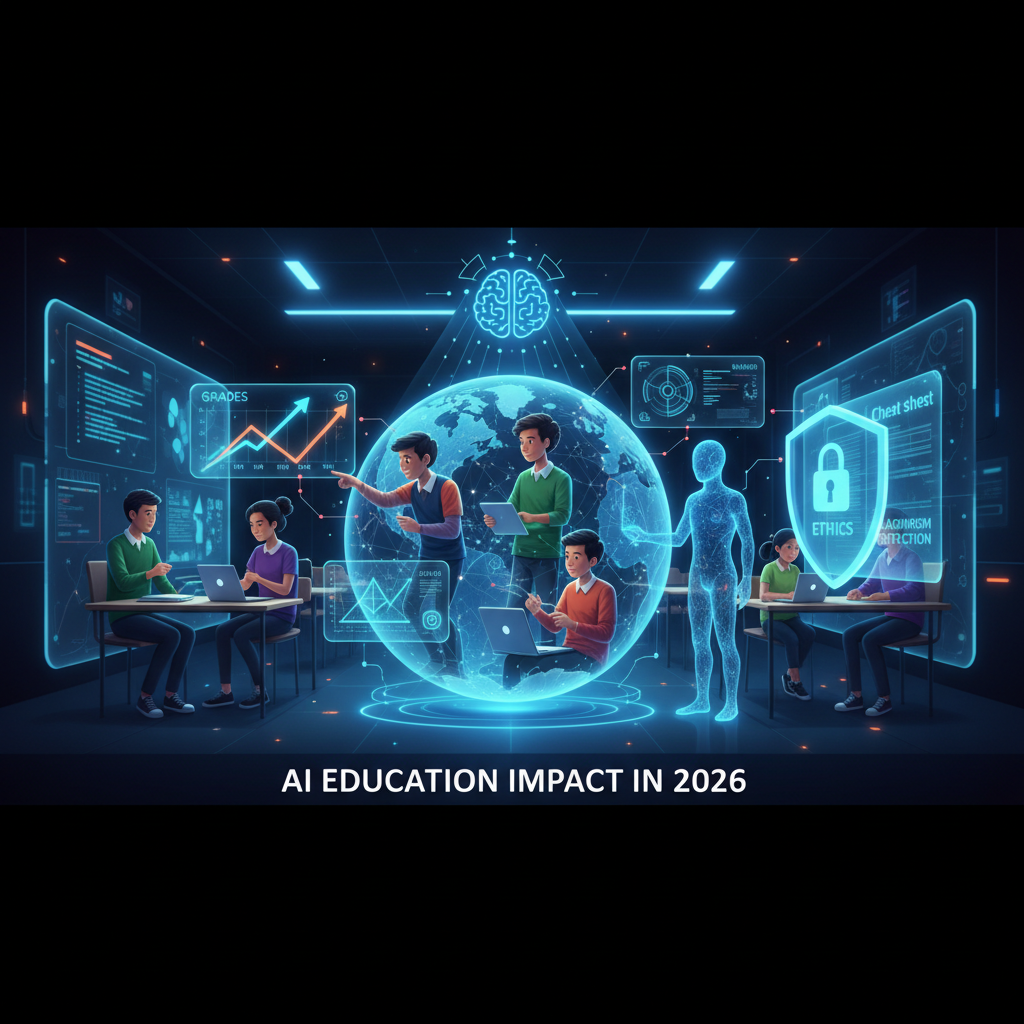
Image: AI-generated
The Dark Side: Sophisticated Cheating and the Erosion of Traditional Assessment
However, the same technology that powers patient tutors also enables a new era of academic dishonesty. The cheating risk in 2026 is not about glancing at a neighbor’s paper; it’s about sophisticated, undetectable outsourcing. Students can use AI to generate entire essays, solve complex problem sets, and even complete coding assignments with minimal original input. The line between “using a tool” and “cheating” has become dangerously blurred.
This presents an existential threat to traditional take-home assignments and standardized testing. If an essay can be generated flawlessly by an AI, what does grading it actually measure? The old models of assessment are breaking down, creating a cat-and-mouse game between educators and students. This challenge echoes the pricing complexities emerging in the enterprise world, where companies are struggling to manage AI costs effectively, as highlighted in our analysis of Uber’s AI spend cap—both are about managing powerful, disruptive technology.
The Academic Integrity Arms Race: Detection and Redesign
In response, the educational sector has been forced to innovate rapidly. AI detection software has become a standard part of an educator’s toolkit, but it is an imperfect solution, often prone to false positives and easy to circumvent with slightly sophisticated prompts. The more effective, long-term strategy has been a fundamental redesign of assessment methods.
Educators in 2026 are increasingly relying on:
- In-person, oral assessments: Defending one’s work in real-time remains a powerful measure of understanding.
- Project-based learning: Long-term projects with multiple milestones and drafts make it harder to outsource the entire process.
- AI-integrated assignments: Instead of banning AI, some educators ask students to use an AI tool like OpenRouter to generate a first draft, which they must then critique, improve, and source—teaching critical evaluation of AI output.
- Focus on process over product: Grading based on annotated drafts, research logs, and explanations of reasoning.
This shift requires more from educators, but it ultimately leads to more meaningful and authentic evaluation of student learning. It teaches students to use AI ethically as a collaborator, not a crutch—a skill absolutely critical for their future careers.
The Future of Credentialing and the Human Element
Looking beyond 2026, the very nature of diplomas and degrees may change. With AI enabling personalized learning paths, micro-credentials and skill-based certifications that are verifiable on a blockchain (or similar technology) could become more valuable than a traditional transcript. These would provide a tamper-proof record of specific competencies mastered, a direct outcome of the AI-driven, competency-based learning model.
Despite the advanced technology, the role of the human teacher is more important than ever. AI handles content delivery and personalized practice, freeing up educators to do what they do best: inspire, mentor, foster social-emotional skills, and guide students through complex ethical dilemmas—like the very one posed by the AI tools in their hands. The teacher becomes the conductor of an orchestra of technological and human resources.
Conclusion: A Tool, Not a Panacea
The impact of AI on education in 2026 is a story of incredible potential tempered by significant challenge. It is a powerful tool for leveling the educational playing field and boosting proficiency in key areas like mathematics. However, its arrival has forced a painful but necessary reckoning with outdated assessment models and definitions of cheating. The successful educational institutions of the future will not be those that ban AI, but those that learn to integrate it thoughtfully, ethically, and transparently, preparing students for a world where human-machine collaboration is the norm.
What to Read Next
- Claude Desktop for Linux Review 2026: Is the Offline AI Assistant a Linux Power User’s Dream?
- S&P 500 Rejects SpaceX, OpenAI and Anthropic: What the 2026 Fast-Track Rules Mean for AI IPOs and Investor Strategy
- GitHub Copilot vs. Cursor: Advanced AI for Software Development (2026 Review)
- Microsoft AI Chief: Company “Set Free” From OpenAI to Pursue Superintelligence
- Browse all AI Stack Digest articles
Bookmark aistackdigest.com for daily AI tools, reviews, and workflow guides.
This article was produced with the assistance of AI tools and reviewed by the AIStackDigest editorial team.