

AI Business & Strategy Analyst
What is Inference?
Inference is the process of using a trained AI model to make predictions or generate outputs on new, unseen data. While training teaches a model patterns from historical data, inference applies those learned patterns to solve real problems. It’s the operational phase where a model earns its value—whether that’s answering a customer question, generating an image, or predicting tomorrow’s weather.
In simpler terms: training is learning; inference is doing.
Why Inference Matters in AI Today

Inference is where AI creates actual business value and user impact. A language model that cost millions to train becomes worthless if it can’t efficiently serve millions of inference requests in production. For companies, inference cost often dwarfs training cost over time—especially for high-traffic applications.
In 2026, inference efficiency directly impacts:
- Cost per user: Cheaper inference = profitable AI products
- Response latency: Faster inference = better user experience
- Scalability: Efficient inference = handling peak traffic without infrastructure collapse
- Privacy: Local inference = data stays on device, never reaches external servers
This is why companies like OpenRouter abstract the complexity of multi-model inference—letting developers route requests to the most cost-effective or performant inference option without managing infrastructure.
How Inference Works (The Simple Version)
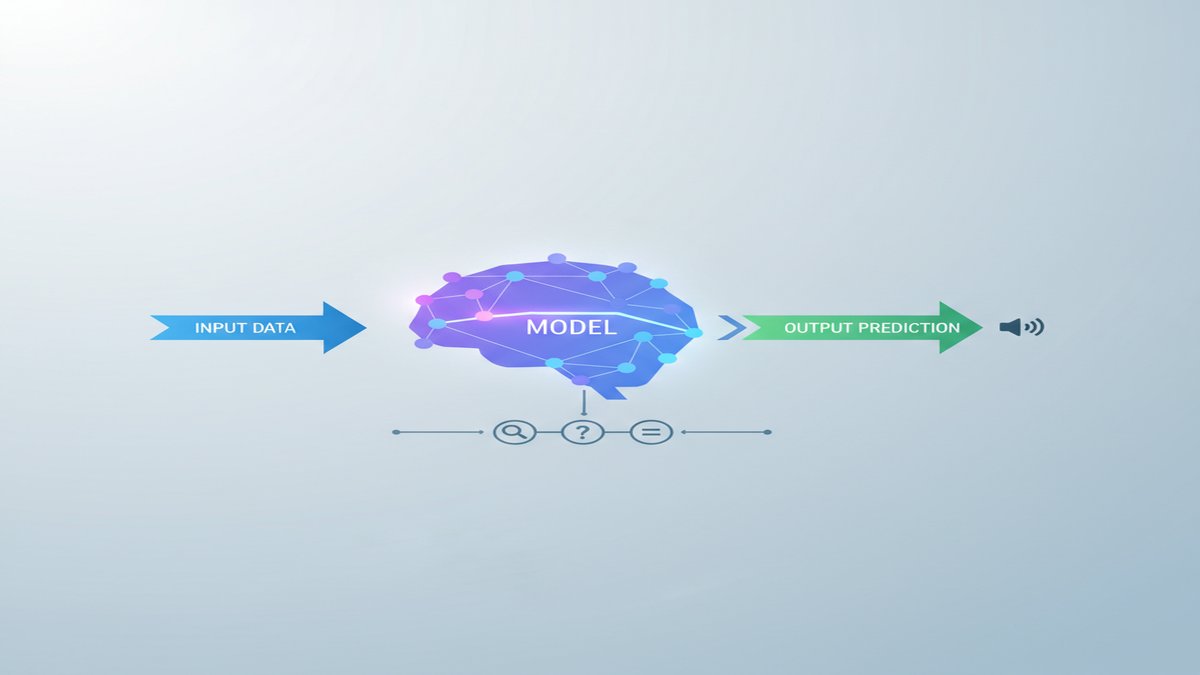
Think of a trained model as a set of mathematical rules frozen in time. Inference feeds new input through those rules and out comes a prediction:
User Question → (Tokenization) → Embedding → (Model Weights) → Prediction → Output TextFor a language model like Claude or GPT-4:
- You send a prompt (text)
- The model breaks it into tokens (small units)
- These tokens pass through billions of neural network layers
- Each layer applies learned weights to transform the data
- The final layer produces probabilities for the next token
- The model picks the most likely token and repeats (token-by-token generation)
- Output is streamed back as readable text
This entire process happens in milliseconds to seconds, depending on response length and hardware.
Real-World Examples of Inference

Example 1: Customer Support Chatbot
A company deploys a fine-tuned LLM to answer customer questions 24/7. Every time a user types a message, that’s an inference call. If they get 10,000 customer messages per day, they’re running 10,000 inferences. At $0.001 per 1,000 tokens, this inference workload might cost $10–100/day. During training (one-time), they spent $5,000–$50,000. Over a year, inference becomes the dominant cost—making inference efficiency critical.
Example 2: Real-Time Image Generation
A design platform lets users generate product mockups using Stable Diffusion. When a user clicks “Generate,” that triggers an inference request. The model loads, processes the text prompt, and outputs an image. Each inference takes 5–30 seconds and costs about $0.01–0.05. With 100 users generating images daily, that’s $1–5/day in inference cost alone. Slow inference = users waiting; expensive inference = unprofitable product.
Example 3: Recommendation Engine
Netflix recommends movies. YouTube recommends videos. Spotify recommends songs. Each recommendation system runs inference millions of times per day—often in real-time. A 100ms inference latency across 1 million users = 100 seconds total lag system-wide. Faster, cheaper inference here is the difference between a smooth experience and frustrated users switching platforms.
Common Misconceptions About Inference
Misconception 1: “Inference is instant.”
Reality: Inference takes time. A large language model generating a 500-token response might take 5–30 seconds depending on hardware. This is why “time-to-first-token” (latency) matters so much in practice.
Misconception 2: “Once trained, inference costs nothing.”
Reality: Inference requires compute (GPU, CPU, memory). At scale, inference cost becomes the primary expense. A model generating billions of tokens annually for users means billions in compute infrastructure.
Misconception 3: “All inference is the same.”
Reality: Inference quality varies based on hardware, model optimization, and batching. A quantized model runs 3–5x faster but with slightly reduced accuracy. A model on an A100 GPU runs 10x faster than a T4. Infrastructure matters.
Related Glossary Terms
If you’re learning about inference, these related concepts are worth exploring:
- Tokenization: Breaking text into units before inference
- Hallucination: When inference produces false or made-up outputs
- Latency: How fast inference completes (critical for user experience)
- Throughput: How many inference requests you can process simultaneously
- Quantization: Compressing models to speed up inference
The Bottom Line
Inference is where trained AI models earn their value in the real world. Whether you’re building a chatbot, generating images, or powering a recommendation engine, inference efficiency—speed and cost—determines whether your AI product is viable or not. In 2026, as AI adoption accelerates and inference workloads explode, understanding and optimizing inference is no longer optional for anyone building AI applications.
Train once. Infer forever. That’s the economics of AI.
This article was produced with the assistance of AI tools and reviewed by the AIStackDigest editorial team.