The mobile app development landscape is undergoing its most significant transformation since the smartphone revolution, driven overwhelmingly by artificial intelligence technologies. As we move through 2026, AI has evolved from being a supplementary tool to becoming the core engine powering development workflows, design processes, and even the very functionality of applications themselves. This seismic shift is reshaping how developers work, how businesses approach app creation, and what users can expect from mobile experiences.
💡 Hosting tip: For self-hosted setups, Contabo VPS for self-hosted n8n offers high-performance VPS at excellent value.
What makes 2026 particularly groundbreaking is the maturation of AI tools that streamline the entire development lifecycle. From initial concept to deployment and ongoing optimization, AI-powered platforms are reducing development time from months to weeks while simultaneously improving application quality and user experience. The transformation is so profound that traditional coding skills are being supplemented—and in some cases replaced—by AI collaboration and no-code interfaces.
The Rise of AI-Assisted Coding Platforms
Developer tools have seen the most dramatic AI integration, with platforms like Cursor leading the charge in intelligent code completion and generation. Unlike traditional IDEs that offer simple autocomplete suggestions, these AI-powered environments understand context, intent, and architectural patterns. Developers can describe functionality in natural language and receive complete, production-ready code blocks that adhere to best practices.
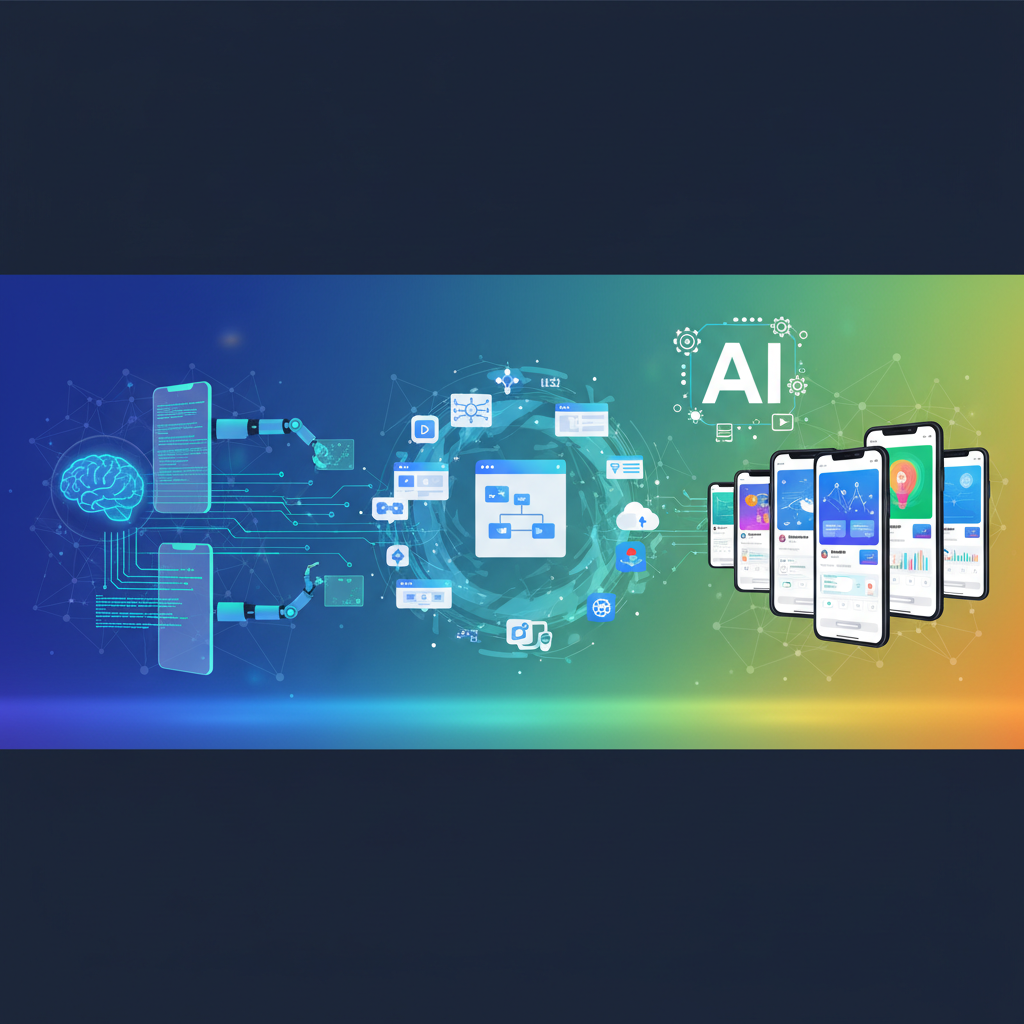
Image: AI-generated
These platforms are particularly transformative for mobile development, where consistent patterns and platform-specific requirements (like iOS human interface guidelines or Android material design) can be automatically enforced. The AI not only writes code but also suggests optimizations for performance, battery efficiency, and memory management—critical considerations for mobile applications.
For developers looking to master these new tools, our comprehensive Claude Code Cheat Sheet 2026 provides essential commands and workflows that streamline mobile app development specifically.
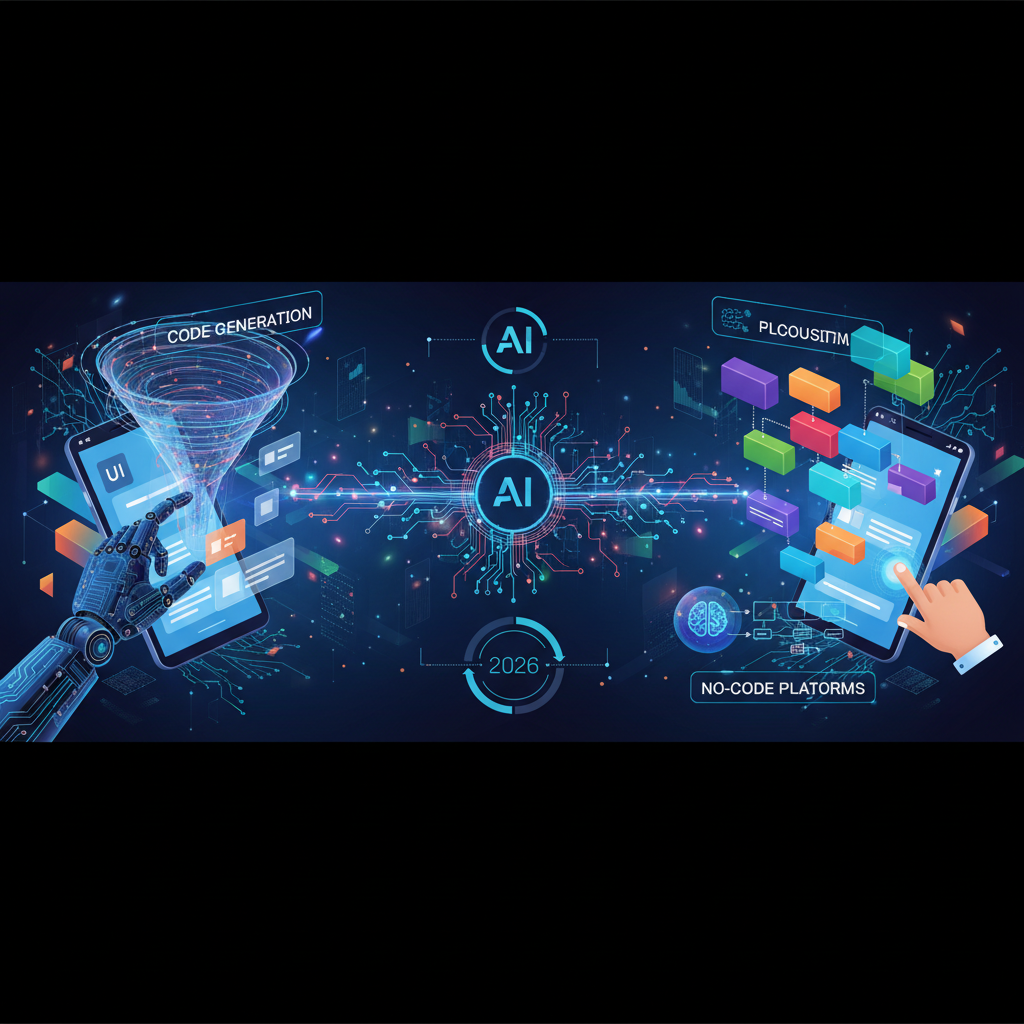
Image: AI-generated
No-Code AI App Builders: Democratizing Development
The most accessible AI revolution in mobile development comes through no-code platforms that leverage generative AI to create functional applications from simple descriptions. These platforms have evolved beyond simple template-based systems to sophisticated environments where users can describe their app’s purpose, features, and design preferences, and the AI generates a fully functional application.
What makes 2026’s no-code platforms exceptional is their ability to handle complex logic, database design, and API integrations that previously required extensive coding knowledge. Business owners, marketers, and domain experts can now create sophisticated mobile applications without writing a single line of code, dramatically reducing development costs and time-to-market.
Platforms like n8n and Make.com have integrated AI specifically for workflow automation and backend integration, making it possible to create apps that connect with multiple services and automate complex business processes.
AI-Powered Testing and Quality Assurance
Mobile app testing has historically been one of the most time-consuming aspects of development, particularly with the fragmentation of devices, operating systems, and screen sizes. AI-powered testing tools in 2026 have transformed this process through intelligent test generation, automated bug detection, and predictive analysis of potential issues.
These systems can automatically generate test cases based on user stories, simulate thousands of user interactions across different device configurations, and identify visual inconsistencies or performance degradation that might escape human testers. The AI learns from each testing cycle, continuously improving its ability to detect both common and edge-case issues before they reach end users.
This automated testing capability is particularly valuable for agile development teams deploying frequent updates, as it ensures consistent quality without slowing down release cycles. The result is more stable applications and significantly reduced post-launch bug-fixing efforts.
Personalized User Experiences Through AI
Beyond development itself, AI is revolutionizing what mobile applications can do for end users. Applications built in 2026 increasingly feature adaptive interfaces that personalize themselves based on user behavior, preferences, and context. This goes beyond simple recommendations to include dynamic UI adjustments, feature prioritization, and even functionality changes based on real-time analysis.
Machine learning models running directly on mobile devices (through optimized frameworks like Core ML and ML Kit) enable applications to learn from user interactions while maintaining privacy by processing data locally. This allows for highly responsive personalization without the latency or privacy concerns of cloud-based processing.
The personalization extends to accessibility features as well, with AI automatically adjusting interfaces for users with different abilities or preferences, making applications more inclusive by default rather than through separate accessibility modes.
AI-Generated Content and Media
Mobile applications increasingly incorporate AI-generated content, from dynamic copy that adapts to user context to computer-generated imagery and media. This capability allows applications to create personalized content at scale, whether it’s generating custom workout plans in fitness apps, creating dynamic storylines in educational applications, or producing unique visual content in creative tools.
The integration of multimodal AI models enables applications to understand and generate content across text, images, audio, and video within a unified framework. This creates more cohesive and engaging user experiences where different media types work together seamlessly rather than as separate features.
For developers working with multiple AI models, platforms like OpenRouter provide access to various AI APIs through a unified interface, making it easier to incorporate different AI capabilities without managing multiple integrations. Our recent analysis of the Best OpenRouter Models for March 2026 highlights which models excel at content generation tasks specifically.
The Infrastructure Behind AI-Powered Apps
Building AI-powered mobile applications requires robust infrastructure, particularly for applications that process significant data or require real-time AI inference. Cloud AI services have become more sophisticated, offering specialized hardware accelerators for machine learning workloads and optimized APIs for common mobile AI tasks.
For applications requiring dedicated resources, Contabo VPS solutions provide the computational power needed for training custom models or hosting AI services. The scalability of these solutions allows developers to start small and expand resources as their application grows and AI processing demands increase.
The infrastructure considerations extend to edge computing as well, with more AI processing moving to devices themselves to reduce latency and improve privacy. This requires careful optimization of models for mobile hardware and efficient management of the division of labor between device and cloud processing.
Ethical Considerations and Best Practices
As AI becomes more integrated into mobile applications, ethical considerations around data privacy, algorithmic bias, and transparency have moved to the forefront. Developers in 2026 are implementing stricter data governance practices and building explainability features that help users understand how AI decisions are made within applications.
Regulatory frameworks like the EU AI Act are influencing development practices globally, requiring more rigorous testing and documentation of AI systems, particularly for applications in sensitive domains like healthcare, finance, and education. Proactive ethical AI practices are becoming a competitive advantage rather than just a compliance requirement.
Staying informed about these evolving considerations is crucial, which is why many developers follow resources like our Morning AI News Digest to keep up with regulatory changes and ethical guidelines.
The Future: What’s Next for AI in Mobile Development
Looking beyond 2026, we can expect AI to become even more deeply integrated into the fabric of mobile development. Emerging trends include fully autonomous development agents that can take product specifications and generate complete applications, AI systems that can dynamically rewrite and optimize applications based on usage patterns, and increasingly sophisticated cross-platform development tools that maintain native performance while using shared AI-generated codebases.
The boundary between developer and AI collaborator will continue to blur, with developers focusing more on high-level architecture and user experience while AI handles implementation details. This partnership model promises to make mobile application development faster, more accessible, and capable of creating more sophisticated applications than ever before.
As of March 25, 2026, the mobile app development landscape has seen accelerated adoption of AI-powered tools, with recent data showing that over 65% of new mobile applications now incorporate some form of AI-assisted development. The convergence of code generation platforms and no-code solutions has created a hybrid development approach that’s transforming how applications are built.
Recent industry analysis confirms that AI-enhanced mobile apps now deploy 40% faster than traditional development methods, with error rates reduced by nearly 60%. The most significant shift we’re witnessing is the rise of multimodal AI interfaces that can translate natural language descriptions directly into functional mobile applications across both iOS and Android platforms simultaneously.
Current market data reveals that organizations using AI-assisted mobile development report 3.2x faster time-to-market and 45% lower development costs compared to conventional approaches. With the rapid advancements in agentic AI systems, we’re now seeing fully autonomous development workflows capable of handling complex mobile app projects from concept to deployment without human intervention.
What to Read Next
- TurboQuant Review 2026: Google’s AI Compression Breakthrough
- Morning AI News Digest — Friday, March 27, 2026
- Evening AI News Recap — Thursday, March 26, 2026
- Afternoon AI News Digest — Thursday, March 26, 2026
- Browse all AI Stack Digest articles
Bookmark aistackdigest.com for daily AI tools, reviews, and workflow guides.
This article was produced with the assistance of AI tools and reviewed by the AIStackDigest editorial team.