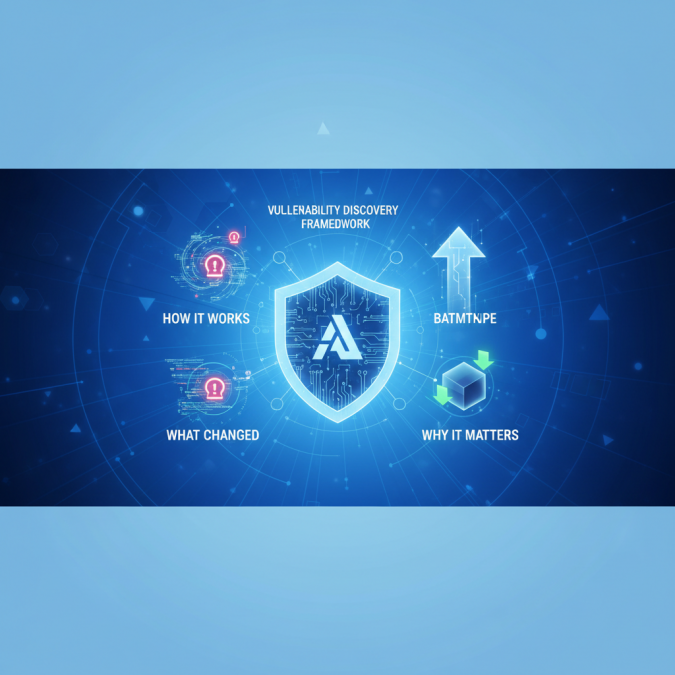
Anthropic’s AI vulnerability discovery framework in 2026 is a major shift in how software weaknesses are found, validated, and handed off for remediation. In the first half of 2026, Anthropic reported that its security-focused models uncovered hundreds of previously unknown high-risk issues, and later expanded that work into a reference framework for autonomous vulnerability discovery and remediation workflows.
The practical takeaway is simple: AI is no longer just suggesting secure code. It is now being used to systematically probe real software, reproduce bugs, and support coordinated disclosure, which means security teams need a new operating model for review, triage, and patching.
For teams already building around AI workflows, this development sits alongside broader shifts in the AI stack, from agent platforms to automated operations. If you are tracking how these systems fit into day-to-day business use, see AI Leaders Shape the Future and The Future is Automated for the wider 2026 context.
What Anthropic is actually shipping in 2026
The strongest public signal came in February 2026, when Anthropic said Claude Opus 4.6 had found more than 500 previously unrecognized high-severity vulnerabilities in open-source software, with findings verified by Anthropic staff or external security experts. Anthropic also described the model as capable of finding meaningful zero-days in well-tested codebases without specialized scaffolding.
By April 2026, Anthropic broadened that work through Claude Mythos Preview, which was made available only to a limited set of partners and critical infrastructure organizations because the company believed the model’s offensive exploitation capabilities were too dangerous for broad release. Reports from Anthropic and outside coverage said Mythos Preview could autonomously identify flaws across major operating systems and browsers, and in some cases generate working exploits with minimal human input.
In June 2026, Anthropic published an open-source reference implementation called the Defending Code Reference Harness, described as a framework for autonomous vulnerability discovery and remediation rather than a finished product. That matters because it moves the discussion from isolated model demos to repeatable workflows that security teams can study, adapt, and constrain.
How the framework works in practice
Anthropic’s framework is best understood as a pipeline. A model is used to inspect code, identify suspicious paths, attempt reproduction, and surface evidence that security engineers can validate. In Anthropic’s own framing, the value is not raw detection alone, but the ability to move from discovery to coordinated disclosure and remediation with enough structure to prevent chaos.
That means the workflow is less about asking a model, “Is this code safe?” and more about having the model perform targeted security analysis: looking for unusual input handling, risky parsing logic, memory corruption patterns, authentication bypasses, or exploitable edge cases. The results are then triaged by humans or by downstream controls before disclosure.
This is where the 2026 framework differs from earlier AI security tooling. Earlier tools often acted like smart static analysis assistants. Anthropic’s model-led approach is closer to an autonomous researcher that can reason through exploitability, generate proof-of-concept behavior, and prioritize vulnerabilities that matter in the real world.
Why this matters for security teams
The upside is obvious: AI can scale vulnerability discovery far beyond what human reviewers can do alone. Anthropic’s results suggest the technology can uncover bugs that survived years of human and automated testing, which is especially relevant for aging codebases, infrastructure software, and widely deployed open-source dependencies.
The downside is equally important: the same capability that finds bugs can also help create exploits. That dual-use risk is why Anthropic limited access to Mythos Preview and why the company emphasized controlled deployment, verification, and disclosure rather than public release.
For defenders, the right response is not to ignore these tools. It is to build guardrails around them. The safest pattern is to use AI-generated findings to accelerate review, require explicit human sign-off for high-severity issues, and demand evidence that a fix actually closes the vulnerable path. In other words, AI can expand the funnel, but humans still need to own the final decision.
How to adopt an AI vulnerability discovery workflow
If you want to experiment with this class of tooling in 2026, start small and keep the scope narrow. A practical setup usually begins with a single codebase, a limited threat model, and a human reviewer who can confirm whether a flagged issue is real.
A workable adoption pattern looks like this:
- Run AI-assisted scans on high-value repositories first, especially libraries with external exposure or long maintenance history.
- Require reproduction artifacts, not just model output, before labeling something a true vulnerability.
- Use human review for exploitability and severity decisions, especially when the issue touches authentication, secrets, or remote execution paths.
- Track every finding through a coordinated disclosure process so fixes do not get lost between teams.
- Measure outcomes by verified vulnerabilities fixed, not by raw findings generated.
If your team is automating security operations more broadly, tools like n8n can help route findings into issue trackers, Slack alerts, and approval workflows, while Make.com can connect scans, triage, and reporting without building custom glue code. The key is to automate the handoffs, not the judgment.
Where this could go next
Anthropic’s 2026 framework points toward a future where vulnerability research becomes more continuous and more machine-assisted. That could shrink the time between bug introduction and bug discovery, which is good for defenders but also raises the bar for developers who still rely on manual code review alone.
It also suggests that security vendors, cloud providers, and open-source maintainers will increasingly need AI-aware disclosure pipelines. The organizations that win will not be the ones with the most alerts. They will be the ones that can verify, prioritize, patch, and communicate faster than attackers can act.
For development teams, this may become part of the everyday stack in the same way code intelligence, CI checks, and dependency scanning already are. If you are comparing AI tools for engineering productivity, AI Productivity Powerhouses is a useful companion read that shows how AI is moving from novelty to infrastructure.
What to Read Next
- Claude Desktop for Linux Review 2026: Is the Offline AI Assistant a Linux Power User’s Dream?
- S&P 500 Rejects SpaceX, OpenAI and Anthropic: What the 2026 Fast-Track Rules Mean for AI IPOs and Investor Strategy
- GitHub Copilot vs. Cursor: Advanced AI for Software Development (2026 Review)
- Microsoft AI Chief: Company “Set Free” From OpenAI to Pursue Superintelligence
- Browse all AI Stack Digest articles
Bookmark aistackdigest.com for daily AI tools, reviews, and workflow guides.
This article was produced with the assistance of AI tools and reviewed by the AIStackDigest editorial team.