

AI Tools & Automation Specialist
Mastering the AI Toolkit: Essential Tools for Creators and Businesses in 2026

In 2026, artificial intelligence is no longer a futuristic concept but a fundamental pillar of productivity and innovation. For creators, entrepreneurs, and established businesses alike, leveraging the right AI tools can mean the difference between staying ahead and falling behind. This guide delves into the essential AI tools shaping the landscape, helping you navigate the options and integrate them seamlessly into your workflow.
Why AI Tools are Indispensable in Today’s Landscape

The acceleration of AI development has transformed how we work, create, and strategize. AI tools offer unprecedented capabilities:
- Enhanced Efficiency: Automate repetitive tasks, freeing up human talent for more complex and creative endeavors.
- Boosted Creativity: Generate novel ideas, explore diverse artistic styles, and overcome creative blocks with intelligent assistance.
- Data-Driven Insights: Analyze vast datasets in moments, revealing patterns and predictions that inform strategic decisions.
- Competitive Advantage: Outperform competitors by delivering faster, smarter, and more personalized solutions.
- Scalability: Expand operations and output without proportionally increasing human resources.
Key Categories of AI Tools for Every Professional
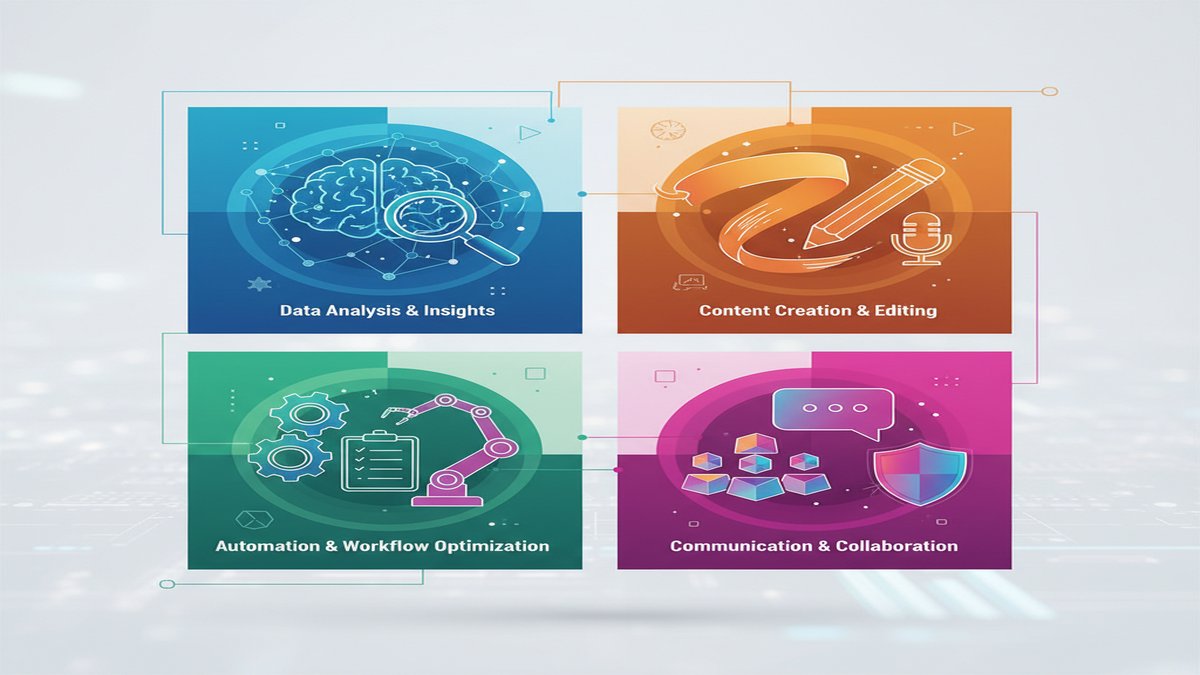
AI tools can be broadly categorized based on their primary function. Understanding these categories is the first step to building a powerful AI toolkit.
1. Content Generation & Curation
These tools are revolutionizing marketing, journalism, and creative writing. They excel at drafting text, summarizing information, and even crafting compelling narratives.
- Large Language Models (LLMs): Platforms like Gemini and ChatGPT are adept at generating articles, social media posts, emails, and even code snippets based on prompts. They can also assist with research, brainstorming, and translation.
- Writing Assistants: Specialized tools focus on grammar, style, and tone, ensuring your content is polished and professional.
- Content Summarizers: Quickly distill long articles or reports into concise summaries, saving valuable time.
2. Creative Arts & Design
From visual masterpieces to immersive soundscapes, AI is empowering artists and designers to push boundaries.
- AI Image Generators: Tools like Midjourney and DALL-E (and models available via OpenRouter) can create stunning visuals from text prompts, ideal for marketing, digital art, and presentations.
- Video Generation Platforms: AI can now create short video clips, animate still images, and even generate entire scenes, opening new avenues for filmmakers and marketers. Runway and Pika are leading this charge.
- Music & Audio Production: Generate original scores, sound effects, or customize existing audio tracks with AI-powered music composition tools.
3. Automation & Workflow Orchestration
Integrating AI into your existing systems can streamline operations and eliminate manual bottlenecks.
- Integration Platforms: Tools like Make.com and n8n allow you to connect various apps and services, creating complex automated workflows. Imagine automatically generating social media posts from blog articles or updating CRM records from email inquiries.
- Robotic Process Automation (RPA): AI-powered RPA bots can mimic human interactions with software, automating tasks across different applications.
4. Data Analysis & Business Intelligence
Unlock hidden insights from your data with AI, turning raw information into actionable strategies.
- Predictive Analytics: Forecast market trends, customer behavior, and sales figures with greater accuracy.
- Natural Language Processing (NLP) for Data: Extract insights from unstructured text data like customer reviews, social media comments, and emails.
- Data Visualization Tools: AI assists in presenting complex data in understandable and engaging visual formats.
5. Code Generation & Development
AI is transforming software development, making coding faster, more efficient, and accessible.
- AI Coding Assistants: Tools like Cursor and GitHub Copilot provide intelligent code suggestions, generate boilerplate code, debug errors, and even translate code between languages. This significantly accelerates development cycles and reduces the burden on developers.
- Automated Testing: AI can generate test cases and identify vulnerabilities, ensuring robust and secure software.
Choosing the Right AI Tools for Your Needs
With so many options available, selecting the ideal tools can be challenging. Consider the following factors:
- Define Your Goals: Clearly identify the problems you want to solve or the efficiencies you aim to achieve.
- Ease of Use: Opt for tools with intuitive interfaces and comprehensive documentation, especially if your team is new to AI.
- Integration Capabilities: Ensure the tools can seamlessly integrate with your existing software and workflows.
- Scalability: Choose solutions that can grow with your needs, handling increasing data volumes or user demands.
- Cost-Effectiveness: Evaluate pricing models, considering both subscription costs and potential ROI.
- Security & Privacy: Verify that the tools comply with relevant data protection regulations and offer robust security features.
The Future of AI Tools: Trends to Watch
The AI landscape is continuously evolving. Here are some trends to keep an eye on:
- Hyper-Personalization: AI will enable even deeper levels of personalization across all touchpoints, from marketing to customer service.
- No-Code/Low-Code AI: More accessible AI tools will empower non-technical users to build and deploy sophisticated AI solutions.
- Ethical AI: Increased focus on fairness, transparency, and accountability in AI development and deployment.
- Multimodal AI: AI systems that can seamlessly process and generate information across various modalities (text, images, audio, video) will become more prevalent.
- Edge AI: AI processing will increasingly move to local devices, enabling real-time applications and enhanced privacy.
Conclusion
Embracing AI tools is no longer optional for those aiming to thrive in 2026 and beyond. By understanding the diverse categories, carefully selecting solutions that align with your objectives, and staying abreast of emerging trends, you can unlock unparalleled levels of efficiency, creativity, and strategic advantage. Start exploring your AI toolkit today and transform how you work and create.
This article was produced with the assistance of AI tools and reviewed by the AIStackDigest editorial team.