
In a landmark move set to reshape the rental market, New York City has enacted a pioneering law that will require landlords to fully disclose any and all artificial intelligence tools used in their rental operations, effective January 1st, 2026. This legislation, the first of its kind in the United States, directly addresses the growing and often opaque use of AI for tenant screening, dynamic pricing, and property management. For renters, real estate agents, and property owners alike, understanding the implications of the NYC AI listing disclosure mandate for 2026 is no longer optional—it’s essential for navigating the modern housing landscape.
Decoding the 2026 NYC AI Disclosure Mandate
The core of the new regulation is transparency. By 2026, any rental listing for a property in New York City’s five boroughs must explicitly state if AI or automated decision-making systems are utilized in any of the following key areas:
- Tenant Screening & Application Processing: This includes AI-powered services that analyze credit scores, criminal history, rental history, or even social media data to generate a tenant score or recommend approval/denial. Landlords must name the specific screening service used.
- Rent Pricing & Optimization: If a landlord uses algorithmic pricing software (often similar to the models used by airlines or ride-sharing apps) to dynamically set or adjust rent based on market demand, supply, and other data points, this must be disclosed.
- Property Management & Surveillance: The use of AI-powered security systems, such as facial recognition for building access or automated noise/complaint monitoring systems, must also be declared in the listing.
The disclosure must be “clear and conspicuous,” meaning it cannot be buried in fine print. Failure to comply can result in significant fines from the NYC Department of Housing Preservation and Development (HPD), starting with violations in the thousands of dollars.
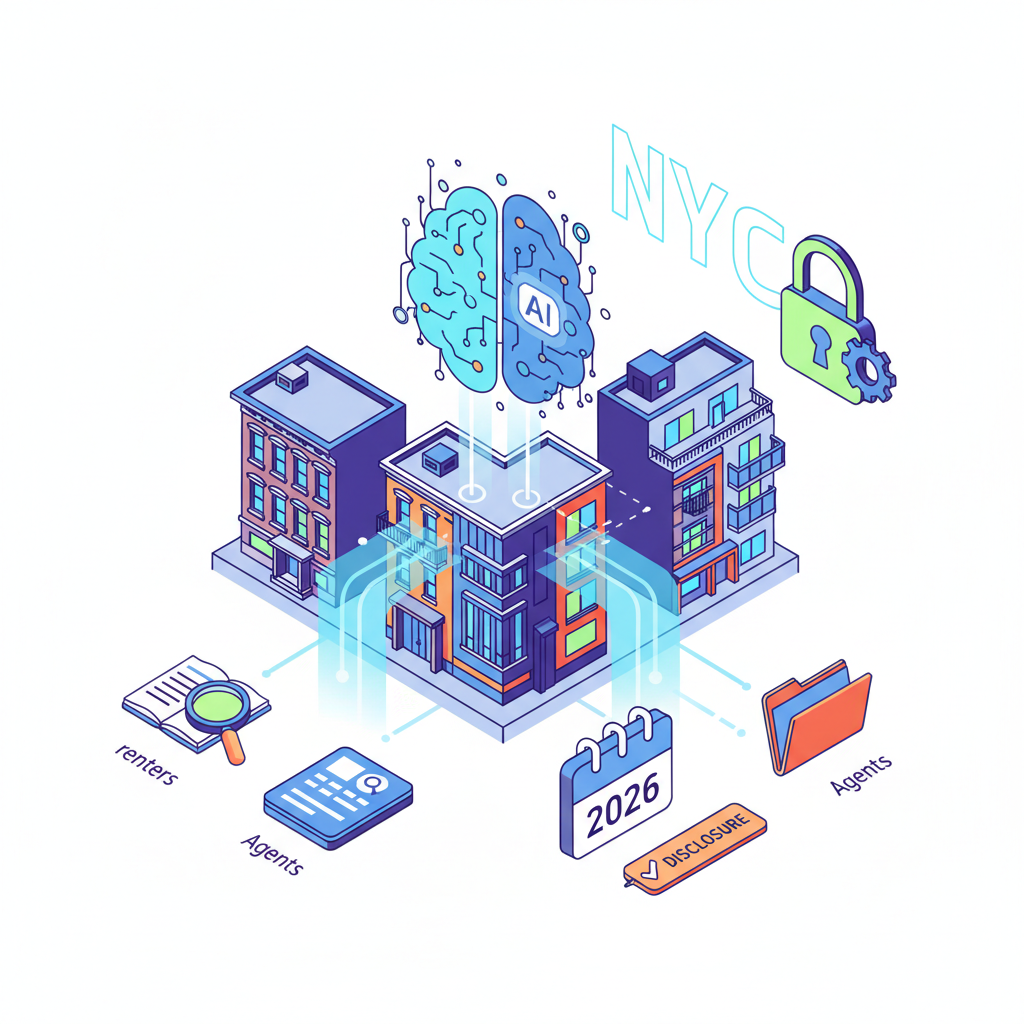
Image: AI-generated
Why This Law Matters: Power, Bias, and Transparency
This legislative push didn’t occur in a vacuum. It is a direct response to rising concerns over algorithmic bias and a lack of accountability in automated systems that directly impact people’s lives and access to housing. AI models are trained on historical data, which can encode and perpetuate existing societal biases related to race, gender, zip code, and socioeconomic status. A tenant screening algorithm might unfairly penalize applicants from certain neighborhoods or with non-traditional credit histories.
By forcing disclosure, the law aims to achieve two primary goals. First, it empowers tenants with knowledge. A prospective renter has the right to know if an algorithm, rather than a human, is making a pivotal decision about their housing future. This allows them to ask informed questions and, if necessary, contest a decision. Second, it introduces a layer of accountability for landlords and prop-tech companies. The sunlight of transparency is a powerful disinfectant, encouraging the development of fairer, more auditable AI systems. This shift towards regulatory compliance for real estate professionals mirrors a broader global trend, as seen in recent moves by the EU and other jurisdictions to reign in powerful AI.

Image: AI-generated
Action Steps for Real Estate Professionals and Landlords
For property managers, leasing agents, and landlords, the clock is ticking towards the 2026 deadline. Proactive compliance is the only strategy. The first step is conducting a full audit of all software and services used in the rental process. It’s crucial to read the terms of service for every prop-tech tool; many now utilize machine learning components that would fall under this new law.
Next, standardized language for listings must be developed. Legal counsel should be consulted to ensure disclosures are accurate and compliant. Training for leasing staff is also critical—they must be prepared to explain what these disclosures mean to potential tenants. Finally, this is an opportunity to vet current AI vendors. Landlords should be asking providers about bias audits, explainability of their models, and their data governance policies. Choosing ethical AI isn’t just good practice; it’s becoming a legal requirement and a competitive advantage in a conscious market.
For developers and tech professionals building the tools that power this industry, the mandate underscores the critical need for secure and transparent AI development. Platforms that offer robust AI code review and workflow orchestration will be in high demand to ensure these systems are built responsibly from the ground up.
A New Era of Informed Renting: Rights and Resources for Tenants
For renters, this law is a powerful new tool. Starting in 2026, you have the right to know the rules of the game. When you see a disclosure, don’t ignore it. Use it as a starting point for conversation. Ask the leasing agent how the AI system works and what data it considers. If you are denied tenancy based on an algorithmic screening, you have the right to an explanation and to challenge inaccurate data, much like with a traditional credit report.
Be aware that while AI can introduce bias, its disclosure is a step towards mitigating it. You can now make more informed choices about which properties to apply to based on their use of technology. This level of tenant awareness is unprecedented and marks a significant shift towards a more balanced and equitable rental market. This push for clarity in complex systems is reminiscent of the effort to explain advanced AI concepts like chain-of-thought reasoning to a broader audience—demystifying the technology is the first step to wielding it effectively.
The Bigger Picture: AI Regulation and the Future of Real Estate
New York City’s law is likely a bellwether, not an anomaly. Other major cities and states are almost certainly watching its implementation closely and drafting similar legislation. The NYC AI listing disclosure for 2026 represents a foundational step in the broader regulation of AI’s role in our everyday lives.
For the real estate industry, this signifies a permanent shift. The wild west days of deploying black-box algorithms are ending. The future belongs to transparent, accountable, and ethical AI that can be audited and explained. This will require new skills for professionals and new expectations from consumers. The conversation will increasingly focus on the strategic implementation of AI workflows over autonomous agents, prioritizing human oversight and control. The industry must adapt to this new reality, where trust and transparency are as valuable as any algorithm.
Streamline Your Tech Stack with Trusted Tools
For landlords and property managers looking to audit and organize their technology systems in preparation for the 2026 mandate, a powerful workflow automation platform is essential. We recommend n8n for its robust, self-hostable capabilities that give you full control over your data and automation processes, ensuring compliance and efficiency.
What to Read Next
- How to Choose the Best OpenRouter Model in 2026 for Coding and Agents
- Best AI Video Generation Tools in 2026: Kling, Runway, Pika, Veo 3 and More Reviewed
- AI News: Alibaba’s Qwen-Image 3.0, Microsoft/Mistral Infrastructure, and US Sanctions on Chinese AI
- Cursor Power-User Workflows: Composer, Rules & Multi-File AI Editing
- Browse all AI Stack Digest articles
Bookmark aistackdigest.com for daily AI tools, reviews, and workflow guides.
This article was produced with the assistance of AI tools and reviewed by the AIStackDigest editorial team.