
AI in 2026: The Plagiarism Paradox
As we move deeper into 2026, artificial intelligence has woven itself into the fabric of content creation, software development, research, and art. Yet, a persistent, thorny question continues to spark fierce debate in courtrooms, online forums, and academic halls: Is AI, in its essence, just sophisticated, unauthorized plagiarism? Is the helpful chatbot, the stunning image generator, or the efficient code assistant simply a machine for remixing and regurgitating human creativity without permission or payment? This guide isn’t here to give you a simplistic yes or no. Instead, we’ll dissect the multifaceted 2026 debate, examining the legal, ethical, and technological arguments from all sides to help you form an informed opinion.
Deconstructing the Core Argument: What Does “Plagiarism” Even Mean for a Machine?
At the heart of the accusation lies a fundamental tension between human and machine learning. Human plagiarism is an act of intentional deception: copying someone else’s work and presenting it as your own. AI models, however, learn by identifying statistical patterns across massive datasets—often scraped from the public internet—comprising billions of text documents, images, and code repositories. They don’t “copy” in the traditional sense; they internalize structures, styles, and relationships to generate novel outputs.
Proponents of the “plagiarism” label argue this process is inherently exploitative. The training data is the collective intellectual property of millions, used without explicit consent, license, or compensation. The resulting model’s value is built directly upon this uncredited foundation. Detractors counter that this is how all learning works, human or artificial. We read books, study art, and analyze code, then synthesize those influences into new ideas. The AI is just doing this at an unprecedented scale and speed. The key legal battleground in 2026 has become “transformative use”—does the model’s output transform the training data into something new, or is it merely a derivative copy?
The Legal Landscape in 2026: Precedent, Fair Use, and New Frontiers
The legal framework is struggling to keep pace. By 2026, several landmark cases have set important, if conflicting, precedents. Some rulings have sided with AI companies under broad interpretations of “fair use,” especially for models whose outputs are not direct substitutes for the original training works. Others, particularly in cases involving highly distinctive artistic styles or proprietary code, have found infringement, leading to hefty settlements and mandated filtering systems.
This evolving landscape makes tools that respect boundaries more crucial than ever. For writers seeking ethical AI assistance, it’s worth exploring our tested roundup of the Best AI Writing Tools Worth Paying For in 2026, which evaluates not just output quality but also data sourcing policies.
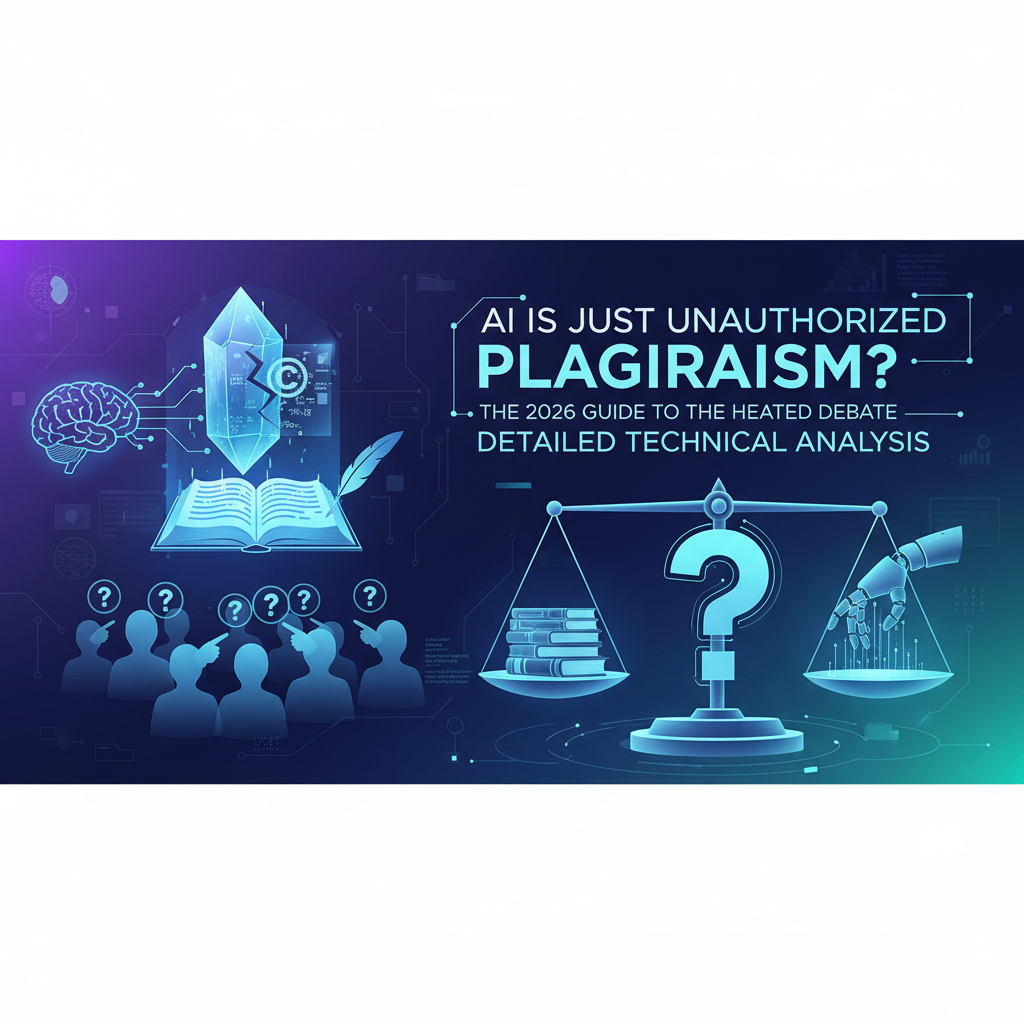
Image: AI-generated
Beyond Text: The Plagiarism Debate in Code and Media
The issue extends far beyond articles and blog posts.
- AI Coding Assistants: When a model suggests a code snippet, is it pulling from a licensed open-source library or copying proprietary logic from a private codebase it was trained on? The risk of inadvertently incorporating licensed code has made transparency in training data a top demand from developers in 2026. Understanding the building blocks of AI code is key; delve deeper with our guide on Tokenization: What It Means in AI and Why It Matters.
- Image and Video Generation: This is perhaps the most visceral arena. An AI generating an image “in the style of” a living artist using their name as a prompt feels, to many, like direct stylistic theft. The 2026 response has been the rise of robust opt-out mechanisms for artists and the development of models trained exclusively on licensed or synthetic data.
For a look at how this competition is playing out in video, check out our comparison: Veo 3 vs Kling 3.0 vs Sora 2: Which AI Video Generator Wins in 2026?
Ethical AI Use: How to Navigate the Gray Areas in 2026
While the law catches up, the onus is on users to adopt ethical practices. Here’s how to use AI responsibly:
- Transparency is Non-Negotiable: Always disclose AI assistance. Passing off AI-generated text as purely human-authored is where the debate shifts from training ethics to user-level plagiarism.
- Use AI as a Brainstorming Partner, Not a Ghostwriter: Leverage AI for ideation, structure, and overcoming blocks, but inject your own expertise, analysis, and unique voice. The final product should be undeniably yours.
- Fact-Check and Verify Relentlessly: AI can “hallucinate” facts, quotes, and citations. Never trust its output blindly. Verify every claim from authoritative sources.
- Respect Opt-Outs and Licenses: Use tools and models that respect creator opt-out lists and are trained on properly licensed data. Support platforms that build ethical partnerships with content creators.
- Automate Ethically: When building AI-augmented workflows, choose tools that prioritize secure and transparent data handling. Platforms like n8n offer powerful workflow automation while letting you maintain control over your data and processes.
The Future: Synthetic Data, Licensing, and A New Social Contract
The path forward in 2026 and beyond lies in innovation that addresses the root concerns. The industry is rapidly moving towards several key solutions:
- Synthetic Data Training: Models trained entirely on AI-generated data, creating a “closed loop” that avoids copyrighted material altogether.
- Direct Licensing and Revenue Sharing: AI companies partnering with publishers, stock agencies, and art platforms to license training data and share revenue with creators, similar to music streaming models.
- Advanced Provenance Tracking: Technologies like watermarking and cryptographic ledgers to track the origin of training data elements and generated outputs, ensuring attribution is possible.
- Agentic Ethics: As AI becomes more autonomous, building ethical principles directly into agentic systems is critical. For a deep dive into this next frontier, explore our resource on Mastering OpenClaw: Your Guide to Advanced Automation with AI Agents.
This shift is evident in major industry moves, such as the Anthropic acquisition of Stainless in 2026, signaling a focus on robust, developer-friendly infrastructure that can support these new ethical and legal requirements.
Build With Confidence in 2026
Navigating the ethical use of AI in your projects requires the right tools. For developers looking to integrate cutting-edge models from multiple providers with transparency and control, OpenRouter provides a unified platform to access and compare a wide range of AI models, helping you make informed choices about the technology behind your work.
What to Read Next
- Claude Is Not Your Architect: How to Use Claude for Code Generation Safely in 2026
- GitHub Copilot vs. Cursor: Head-to-Head for AI-Powered Code Assistance in 2026
- AI Unveils Cutting-Edge Debugging, Talent Shifts, and Open-Source Breakthroughs
- Is AI Profitable Yet in 2026? New ROI Data Reveals Where Businesses Are Winning
- Browse all AI Stack Digest articles
Bookmark aistackdigest.com for daily AI tools, reviews, and workflow guides.
This article was produced with the assistance of AI tools and reviewed by the AIStackDigest editorial team.