

The year 2026 marks a potential turning point for the artificial intelligence industry, not with a breakthrough model, but with groundbreaking legislation. The proposed OpenAI Liability Bill, currently making its way through congressional committees, represents the most significant attempt to date to assign legal responsibility for AI-generated outcomes. For developers, businesses, and anyone leveraging AI tools, understanding this pending legislation is no longer optional—it’s a critical component of risk management.
The bill, officially titled the “Algorithmic Accountability and Developer Liability Act of 2026,” emerged from a series of high-profile incidents where AI systems caused demonstrable harm, from flawed medical diagnoses to financial trading errors, with no clear legal path for recourse. The core principle challenging existing tort law is simple: if an AI model you developed or deployed causes harm, who is ultimately liable—the developer, the user, or the model itself?
The Core Provisions of the 2026 Bill: A Breakdown
The proposed legislation introduces a tiered framework for liability, moving away from the traditional “black box” defense where companies could claim the model’s complexity made outcomes unpredictable.
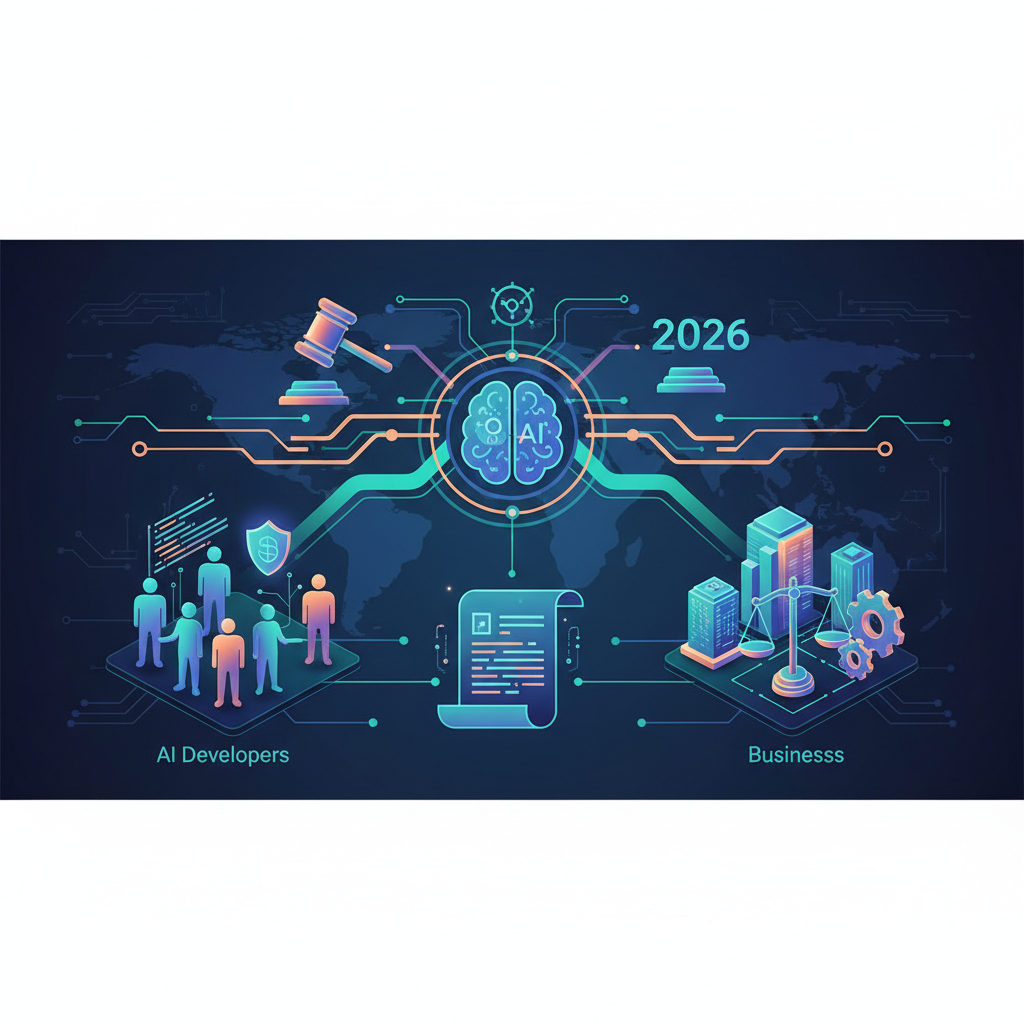
Image: AI-generated
1. Strict Liability for Foundational Model Developers
The bill places a heightened burden on the creators of large-scale foundational models (LFMs). If an LFM contains a known or knowable defect that causes direct harm—such as generating dangerously inaccurate medical advice or vulnerable code—the developing entity can be held strictly liable. This means affected parties wouldn’t need to prove negligence, only that the defect existed and caused harm. This provision has sent shockwaves through major AI labs, forcing a massive internal review of model testing and documentation practices.
2. Negligence Standard for Fine-Tuners and Deployers
For companies and developers who fine-tune a base model for a specific application (e.g., creating a customer service chatbot), the standard shifts to negligence. Were industry-standard safety tests performed? Was the model monitored for drift or degradation? Did the deployer ignore known limitations? Failure to take reasonable care in deployment and monitoring could result in liability. This makes robust robust testing and evaluation pipelines essential. High-risk domains include financial advising, legal counsel, operating heavy machinery, and cybersecurity. Using AI in these domains without adequate safeguards invites significant legal scrutiny. A simple “use at your own risk” clause will likely be deemed unenforceable in these contexts come 2026.
Implications for AI Developers in 2026
For the development community, this bill fundamentally changes the calculus of building and shipping AI products.
Documentation is Paramount: The phrase “audit trail” will become a developer mantra. Comprehensive logging of training data provenance, model decisions (where possible), testing results, and user interactions will be the primary defense against liability claims. Tools that facilitate this tracking will see a surge in demand.
The Rise of “Liability-Shielding” Tools: Expect a new category of AI development tools focused explicitly on compliance and risk mitigation. This could include more sophisticated model evaluation platforms and integrated monitoring services. Using a platform like OpenRouter can provide an added layer of abstraction and choice, allowing developers to select models with better-documented safety profiles and performance benchmarks, which could be a factor in demonstrating due care.
The open-source community is particularly concerned. The fear is that liability risk associated with releasing a powerful model could stifle innovation — will developers only feel safe releasing models that have undergone prohibitively expensive auditing processes? The debate is fierce.
What This Means for Businesses Using AI
Companies that are consumers of AI technology, not developers, must also evolve their strategies. The era of blindly integrating a third-party AI API into a customer-facing product is ending.
Vendor Vetting Just Got Serious: Procurement processes will need to include rigorous questionnaires about a vendor’s model testing, data governance, and liability insurance. The cheapest API option may become the riskiest.
Internal Policy Overhaul: Businesses must establish clear AI use policies defining approved and prohibited use cases. Rolling out an AI coding assistant like Cursor for internal developer productivity is low-risk. Using an AI to automatically deny insurance claims is high-risk. Knowing the difference is essential.
Insurance and indemnification: The market for AI liability insurance is poised to explode. Businesses will increasingly demand that AI vendors provide contractual indemnification against third-party claims arising from the use of their models.
Proactive Steps to Prepare for 2026
While the bill is not yet law, its principles are a clear signal of the regulatory direction. Waiting until 2026 to prepare is a strategic mistake. Here’s what you can do now:
- Conduct an AI Audit: Catalog every place AI is used in your products or operations. Categorize them by potential risk.
- Review Contracts: Scrutinize terms of service for AI APIs and tools. Understand what liabilities the vendor assumes and what they pass on to you.
- Invest in Explainability: Prioritize models and tools that offer some degree of interpretability over pure performance. Being able to explain why an AI made a decision is a powerful legal shield.
- Stay Informed: The language of the bill will evolve. Follow trusted legal and technical analysis to keep your policies current. Resources like our Morning AI News Digest are designed to keep you on top of these developments.
Update — April 12, 2026: The conversation around the proposed OpenAI Liability Bill continues to intensify, with recent discussions on HackerNews highlighting critical new angles. The core debate has shifted from general liability to specific concerns about AI-assisted development tools and their role in creating vulnerable systems. Developers are now scrutinizing clauses that could assign liability for code generated or reviewed by models like Claude Code or GitHub Copilot, especially when used in open-source or critical infrastructure projects.
Furthermore, new benchmark data emerging for AI agents is influencing the legal framework. Proponents of the bill argue that as agentic systems become more autonomous—capable of executing complex, multi-step tasks without human intervention—the lines of responsibility must be clearly defined in statute. The latest draft reportedly includes a “safe harbor” provision for developers using certified, audited AI tools, but the criteria for certification remains a point of contention within the tech community. Staying ahead of these developments isn’t just about legal compliance; it’s a strategic necessity for any business or developer building with AI in 2026.
What to Read Next
The regulatory landscape for AI is changing faster than ever. Staying informed is your best defense. For more insights on the tools and strategies that will define AI development in 2026, head to our homepage for the latest reviews and news. If you’re a developer, our deep dive into the latest coding assistant capabilities is essential reading.
Bookmark AI Stack Digest and subscribe to our newsletter to ensure you never miss a critical update that could impact your business.
This article was produced with the assistance of AI tools and reviewed by the AIStackDigest editorial team.